Portuguese
  Spanish


Space fragments cross European sky and reach the ground in inhabited areas, mobilizing authorities, emergency teams, and space agency in an operation connecting orbital re-entry to concrete risks on Earth.
Suspected fragments of a SpaceX Falcon 9 rocket were found in different parts of Poland after an uncontrolled re-entry recorded over the country on February 19, 2025, which quickly mobilized security forces and technical agencies.
Given the initial uncertainty about the origin and risks involved, police, firefighters, and specialized services worked together with the Polish space agency, POLSA, to cordon off areas and begin detailed analyses of the located objects.
Falcon 9 Fragments Appear in Different Regions
Initially, the incidents were recorded near Poznań, in the west of the country, where an object resembling a container was located on the premises of a company in Komorniki, immediately drawing attention due to its unusual appearance and possible external origin.
-
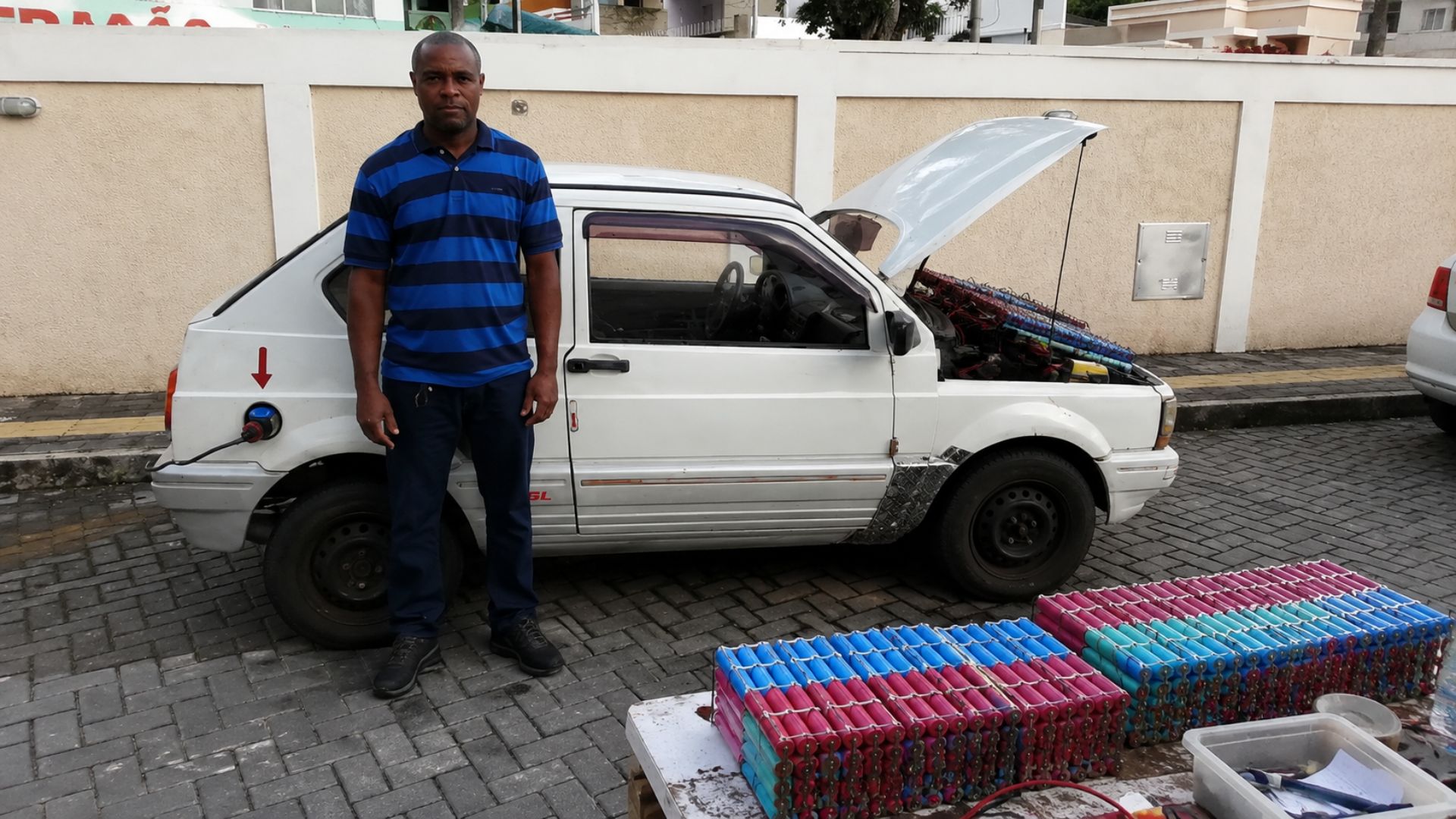
Brazilian Innovator Converts Old Car into Electric Vehicle Using Laptop Batteries and Forklift Motor, Achieves Nearly 90 km/h in Urban Settings

-
Samsung Unveils Smart Oven with Built-In Camera, AI Food Recognition, and Real-Time Monitoring via Smartphone.
-
Ocean Transformed into Sci-Fi Lab: 87-Meter Structure with Submarines, Deep-Sea Robots, Helicopter, Genetic Labs, and 8K Cameras Unveils Rare Creatures
-
11-Year-Old Develops Solar Water Purifier to Aid Communities in Kenya and Gambia




Subsequently, teams identified another item in a wooded area in the village of Wiry, located about 30 kilometers away, which increased the suspicion that multiple fragments might have hit the ground after the same event.
As searches progressed, police confirmed the discovery of a new object in Czersk, in northwestern Poland, reinforcing the dispersion hypothesis and leading authorities to treat the case as a broader, connected incident.
Re-entry Monitored by Polish Space Agency

According to POLSA, there was already prior monitoring of the re-entry of a body identified as Falcon 9 R/B, with an approximate mass of 4 tons, which provided a technical basis for the investigation and guided initial analyses.
This stage was linked to the Starlink Group 11-4 mission, launched by SpaceX on February 1, 2025, from Vandenberg Space Force Base, California, according to information released by the agency itself.
Still during the early morning, residents reported flashes in the sky, a phenomenon later associated with the moment of re-entry, which occurred between 4:46 AM and 4:48 AM local time, according to official records.
Even with trajectory tracking by European space surveillance systems, definitive confirmation depended on physical analysis of the collected materials and comparison with known rocket components.
Isolated Areas and Emergency Response on the Ground
As soon as the objects were found, authorities chose to isolate the sites and classify them as potential risk occurrences, a standard procedure in situations involving materials of unknown origin or possibly contaminants.
In the case of Komorniki, the presence of the item within a business area led to the immediate activation of emergency teams, who worked to ensure the safety of workers and prevent any direct exposure.
Furthermore, a chemical and ecological rescue group was mobilized for initial verification, with the aim of ruling out environmental risks or the presence of hazardous substances associated with the fragment.
In parallel, POLSA announced that it would share images and data of the objects with SpaceX, seeking to identify correspondence with structural parts of the Falcon 9 and advance in confirming the origin of the materials.

When Space Activity Reaches Everyday Life
The repercussion of the episode is largely due to the fact that a routine space operation began to have a direct impact on inhabited areas, bringing a phenomenon usually distant closer to the daily reality of the population.
What was initially perceived as a visual event in the sky quickly transformed into a concrete operation on the ground, involving area isolation, technical investigation, and coordinated action by different public institutions.
Furthermore, the incident reignited discussions about the risks associated with the re-entry of artificial objects, since, although many disintegrate, some components can withstand extreme heat and reach the ground with partial integrity.
Considering the recent history of alerts in Polish airspace, authorities adopted a cautious stance, especially given the identification of fragments at multiple geographical points within a short period.
In this context, the rapid and coordinated response sought to minimize risks and ensure control of the situation, even before definitive technical confirmation about the origin of the found objects.
To date, there is no official record of injuries related to the incident, nor confirmation of significant damage beyond the areas isolated for analysis and removal of materials.
Despite orbital monitoring reducing uncertainties about trajectories, the episode showed that the arrival of fragments on the ground requires immediate response and integration between different services, expanding the practical scope of space events.
Finally, the investigation remained focused on verifying the origin of the objects and their direct relationship with the Falcon 9 stage, keeping safety protocols active until the conclusion of technical analyses.