





 Portuguese
  English
  Spanish
  2 min of reading
  0 comments


Beyond The Laws Of Physics, Newton Dedicated Himself To Theology And Predicted Deep Changes For Humanity In The Year 2060
Isaac Newton is known for the laws of motion and universal gravitation. Beyond physics and mathematics, he also devoted part of his life to theology and biblical studies. Among his most curious analyses, there is a prediction for the year 2060, recorded in a letter written in 1704.
This prediction, preserved today in the National Library of Israel, does not speak of a literal end of the world. Isaac Newton understood the apocalypse as the end of one era and the beginning of a new divine phase, marked by the return of Christ and the restoration of true faith.
Interpreting The Future
Newton believed that apocalyptic events could be viewed differently in his time. In his prediction, devastating plagues could be compared to uncontrollable digital viruses, with the potential to paralyze essential sectors such as energy and finance.
-
Storm in Rio Grande do Sul leaves more than 500 displaced, affects 19 cities, floods 225 homes in Rosário do Sul, and maintains a landslide alert after 324 mm of rain in just seven hours.

-
Santa Catarina registered negative temperatures of up to -3.3°C this Tuesday, and the landscapes of the Serra Catarinense woke up covered in frost on the coldest day of the year so far.

-
Microsoft does something it had never done in over 50 years and launches a voluntary layoff plan that could affect thousands of employees in the United States, while Meta cuts 10% of its staff and eliminates jobs in a move that raises questions about the future of the industry.

-
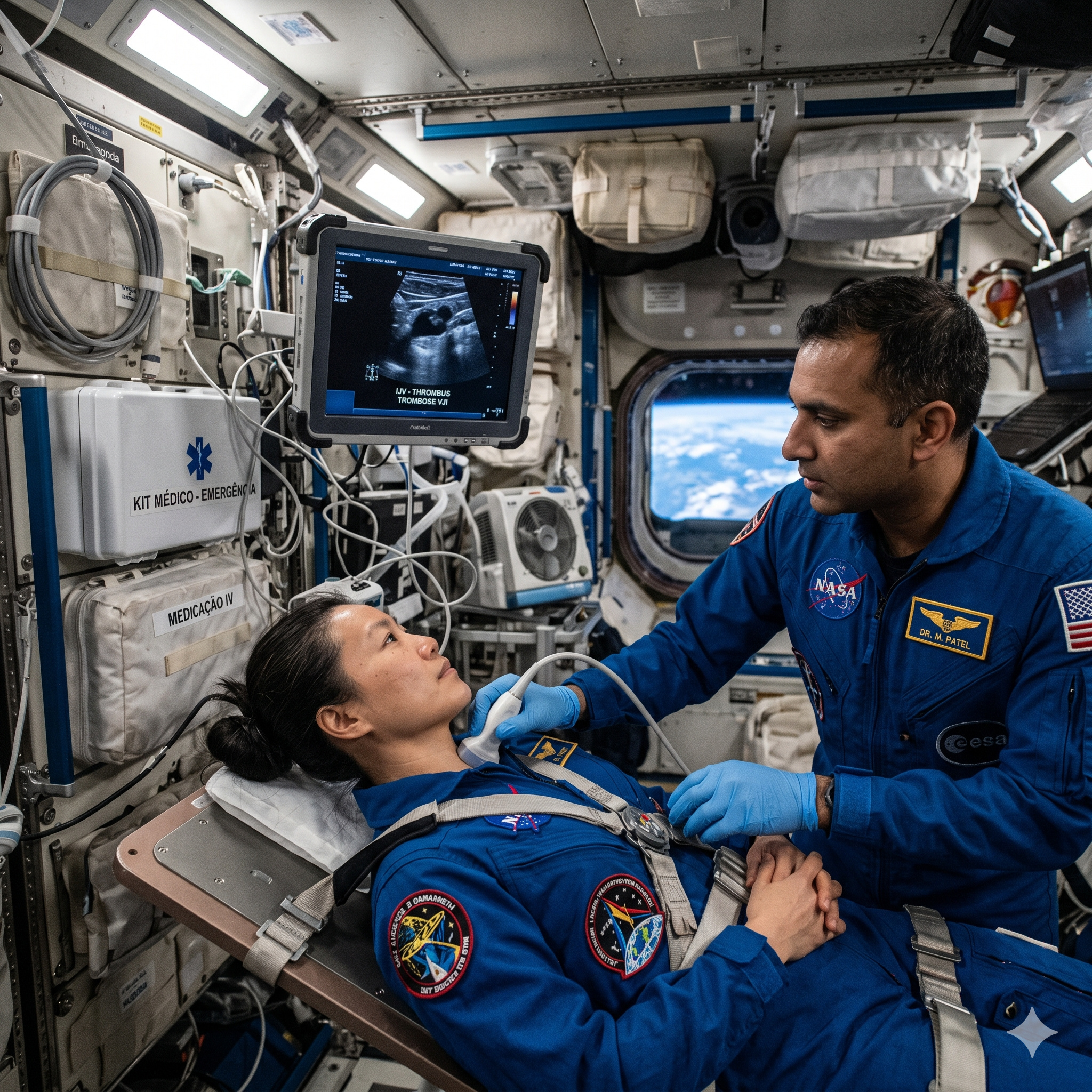
A clot silently formed in the jugular of an astronaut in orbit, NASA had to treat a thrombosis hundreds of kilometers from Earth without a hospital, and the episode exposed an invisible risk that could decide the future of missions to Mars.



Additionally, he predicted that future conflicts could occur in cyberspace, where nations would compete not only for territories but also for digital sovereignty.
Newton imagined that these technological clashes could directly impact the physical world, weakening political and economic systems through data manipulation and misinformation.
The Foundations Of Newton’s Calculus
To reach these conclusions, Newton used the Book of Daniel from the Bible as a reference. He interpreted passages that speak of “time, times, and half a time,” as well as 1290 and 1335 days, transforming these periods into prophetic years.
Applying astronomical calculations and theological analyses, Newton sought to estimate key moments in future history. His goal was to find patterns that indicated the arrival of a new spiritual era for humanity.
The Union Between Science And Religion
Newton’s approach reflects his effort to unite science and religion. He believed that biblical scriptures could be understood through reason, using scientific methods to interpret ancient prophecies.
This stance reveals that Newton did not see conflict between faith and science. On the contrary, he perceived the possibility for both areas to work together to explain the world and future events.
The Legacy Of An Inquisitive Mind
Newton’s predictions continue to spark interest. Even if they seem speculative, they show his desire to understand humanity’s destiny in a broad and profound way.
Newton’s legacy goes beyond his scientific discoveries. He also left an intellectual heritage that combines faith, reason, and an unrelenting curiosity about the future of civilization.
With information from Correio Braziliense.





-

-

3 people reacted to this.