






 Portuguese
  Spanish


Geothermal energy enters a new phase with Project Obsidian, which is already under construction in Oregon and aims to prove that superheated rocks above 300°C can sustain continuous generation of clean, renewable electricity on a relevant scale using only a few wells
Superhot geothermal energy is at the core of Quaise Energy’s bet to build, in Oregon, the world’s first power plant based on this type of resource. The company reported that the first phase of Project Obsidian is already under construction and that operation is expected to begin by 2030, with an initial goal of at least 50 megawatts of clean, renewable electricity.
The project draws attention because it attempts to transform a long-standing promise into a real generation asset. According to the analysis presented by the company at the 2026 Stanford Geothermal Energy Workshop, this initial production could be achieved with just a few wells, in a system designed to operate 24 hours a day, 7 days a week, and then advance to a second phase of 250 MW at the same location.
Superhot geothermal energy is the basis of a bet that aims to change the scale of firm energy
Quaise’s proposal revolves around geothermal energy extracted from rocks with temperatures exceeding 300 degrees Celsius. This threshold is treated by the company as a game-changer, because higher underground temperatures substantially increase energy production per system.
-
Petrobras Explores Entry into Corn Ethanol Market, Aiming to Become a Biofuel Giant

-
Brazil’s $8.5 Billion Auction Secures New Power Plants to Prevent Peak Hour Energy Shortages
-
Why Gasoline Prices Remain Stable: How Petrobras’ Subsidies and Pricing Policies Control Fuel Costs in Brazil
-
Brazil Aims to Become a Global Exporter of Green Hydrogen, the Clean Fuel Set to Generate Billions


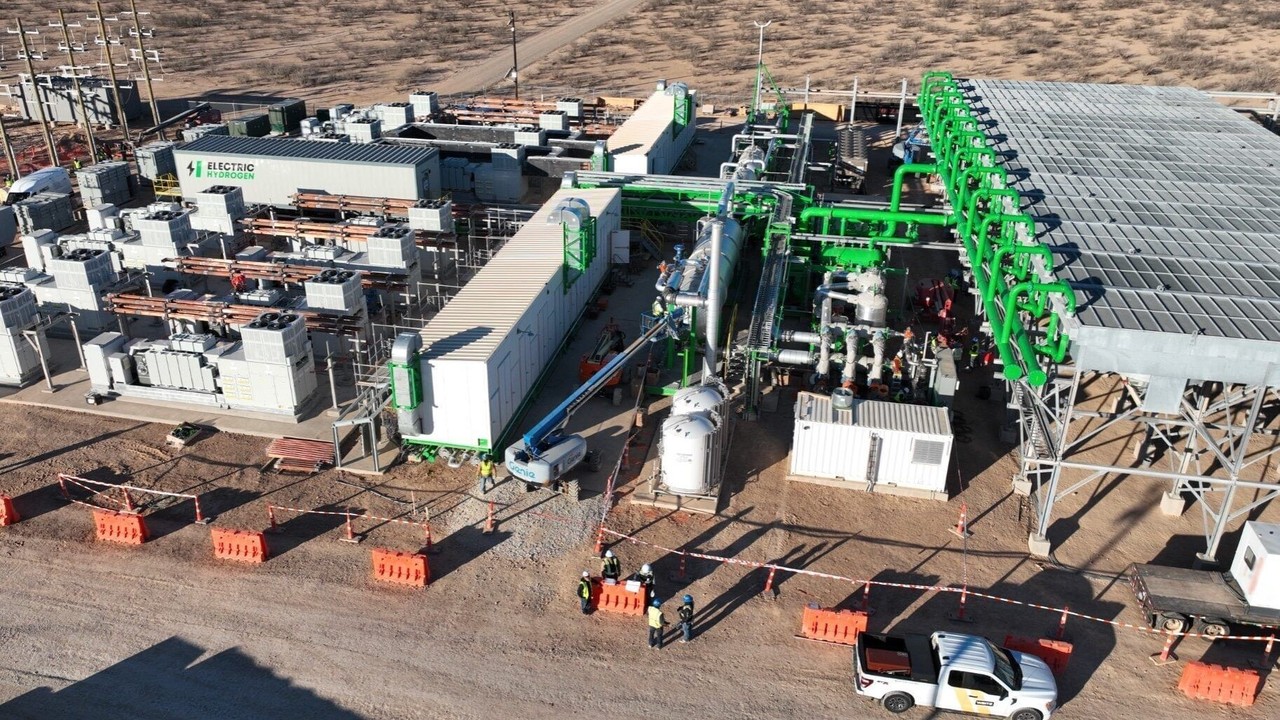
The central conclusion of the analysis presented by Daniel W. Dichter, Quaise’s senior mechanical engineer, is straightforward: the company can achieve 50 MW with this arrangement. According to him, if the first wells perform as expected, they could be on par with exceptionally productive oil and gas wells in terms of equivalent energy.
What makes Project Obsidian different from traditional geothermal power plants
Project Obsidian was conceived as the first of its kind and, therefore, also functions as a learning platform. The company admits that important unknowns still exist, such as the geochemistry of the rock to be explored and the behavior of the geothermal fluid at depth.
Even so, the modeling and simulation analysis presented at Stanford reinforced the company’s vision that superhot geothermal energy can generate much more electricity from just a few wells. Based on this result, the project is now treated not only as an experiment but as a concrete attempt to open a new front for firm, carbon-free generation.
The numbers that explain the size of the bet in Oregon
The first phase of Project Obsidian targets 50 MW of capacity. Subsequent expansions at the same location have a goal of 250 MW. Quaise’s broader objective is even larger: to build a one-gigawatt capacity power plant in the region.
The initial structure will occupy an area of 20 acres. In this phase, the project will consist of two distinct geothermal well systems, each composed of three wells. In addition, there will be a seventh well, called a confirmation well, which will be the first to come into operation later this year.
How Project Obsidian’s geothermal energy will work in practice

Each well system will have a well-defined function. Water will be pumped through one of the wells to the hot rock. After passing through the heated formation, the hot water will be captured by two lateral wells. This arrangement will sustain the conversion of subterranean heat into electricity generation.
The physical dimension of the project itself reinforces one of the advantages highlighted by the company. The pipes that transport water to and from the superhot formation have a maximum internal diameter of about ten inches, which helps keep land occupation at a reduced level.
Why the company will target two different temperature ranges
The first phase of the project will work with two separate systems to reduce technical risk and expand learning. One will seek rocks with temperatures up to 365 degrees Celsius, with an average of 315 degrees Celsius. The other will attempt to reach rocks with temperatures up to 415 degrees Celsius, with an average of 365 degrees Celsius.
According to Dichter, the system aimed at an average of 315 degrees Celsius is at the limit of what is achievable today and, therefore, presents lower technical risk. The idea is to use what is learned in this stage to later advance to the higher temperature system, which is riskier.
Hybrid drilling is central to reaching hotter rocks
The largest geothermal energy reserve, according to the company’s material, is between 3 and 19 kilometers below the surface. The problem is that conventional tools used by the oil and gas industry do not withstand the extreme temperatures and pressures found at these depths well, which causes drilling costs to grow exponentially.
To overcome this barrier, Quaise is betting on a hybrid approach. First, conventional drilling removes the rock closest to the surface, a stage for which it has already been optimized. Then, millimeter waves come into play, described by the company as similar to microwaves used for cooking, capable of melting and vaporizing basement rocks at depth.
Project Obsidian is just the beginning of a much larger plan
Quaise organizes its strategy into three levels of development, based on geothermal gradients and the distance between the resource and the surface. Project Obsidian is classified as a Level I area, where extremely high temperatures can be accessed at about five kilometers deep.
In Level II projects, the goal will be to reach rocks in intermediate geothermal gradients, a category that covers almost 40% of the planet. Level III projects will involve drilling up to 19 kilometers deep, and the company states that this stage is key to transforming superhot geothermal into a truly global energy source.
What the company still needs to discover before scaling the plant
Despite the progress, Project Obsidian still needs to answer decisive questions. Among them are the heat content of the geothermal fluid at depth, the impurities present in the water from the superhot rock, the best plant design, and even whether what will come out of the pipes will be water or steam.
The company states that the data obtained should lead to many adjustments in the project. The internal reading is clear: not all the answers are available yet, but there is already enough potential to justify the path to a generation asset considered very useful.
Why the small land footprint also favors geothermal energy
One of the project’s strongest arguments is the relationship between generation capacity and occupied area. According to the presented basis, geothermal systems use less than 3% of the area required for similar solar and wind energy installations, based on data from the University of Texas at Austin.
This helps explain why geothermal energy is seen as a strategic source for firm generation. In the case of Project Obsidian, two well systems and initial infrastructure occupy a relatively compact area, which reinforces the model’s appeal for future expansion.
The global potential behind superhot rock
Quaise’s bet is not restricted to Oregon. A 2025 report by the Clean Air Task Force cited in the basis states that, if successfully developed, superhot rock could provide 63 terawatts of firm, carbon-free energy using only 1% of the world’s resources of this type, a volume more than eight times current global electricity generation.
Today, rocks at these temperatures can only be accessed in a few places, such as Iceland, where they are closer to the surface. Still, according to the basis, no such plant is in operation yet. It is precisely this gap that Project Obsidian seeks to fill.
The next steps until operation begins in 2030
The most immediate step is the commissioning of the confirmation well later this year. It will be crucial to provide physical and geomechanical information about the superheated rock and guide decisions on how the team will fracture the formation at depth to create pathways for water flow.
From there, the company intends to use the lessons learned to consolidate the first phase of the plant, validate the production of 50 MW, and prepare the ground for subsequent expansions. If the schedule progresses as planned, Oregon could host the world’s first superhot geothermal plant in 2030.
In your view, does superhot geothermal energy have a real chance of becoming a global source of firm and clean energy, or will this type of project still face too many barriers to move beyond a promise?


It could succeed as a genuinely high‑EROI, dense, firm source in regions with favorable geology, and it is absolutely worth pursuing as a strategic option.
It is still in the “must prove itself in the field” phase; I would not yet assume it will scale to global dominance without significant parallel bets on other firm options.
If Obsidian and a handful of follow‑on projects show that wells can be drilled and operated cheaply and reliably, my stance would shift from cautious optimism to outright bullishness. Until then, I treat it as a high‑upside, high‑uncertainty technology rather than a guaranteed cornerstone.