Portuguese
  Spanish


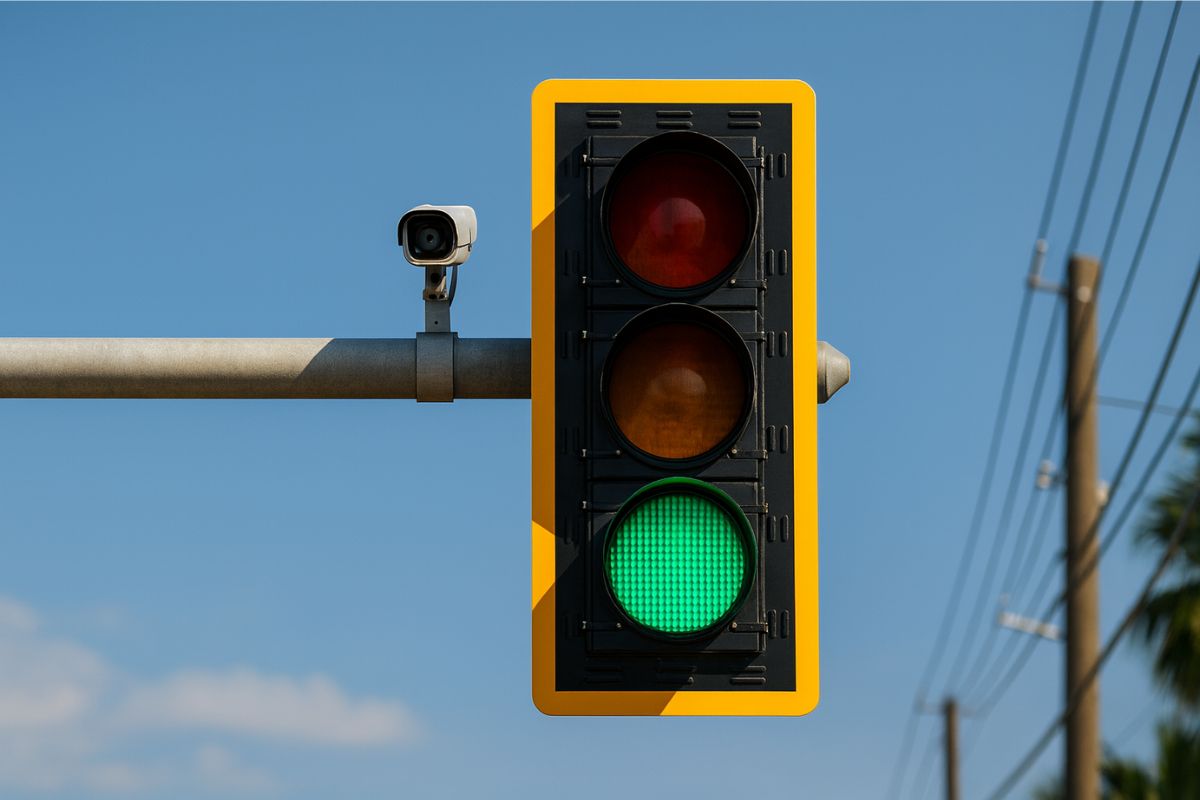


Technology That Works in Countries Like the USA and Japan Is Being Tested in Brazilian Cities. Bill Aims to Mandate Installation in Municipalities With Over 150,000 Inhabitants
Imagine leaving home and finally finding all the traffic lights timed correctly, without needing to stop at every intersection. This reality may be closer than one might think. Brazilian cities have already begun installing a new model of smart traffic lights, equipped with artificial intelligence, sensors, real-time connectivity, and a noteworthy detail: a reflective yellow frame that ensures maximum visibility, even in low-light situations or blackouts.
The project is ambitious. The traffic lights are part of a national strategy to modernize urban mobility, reduce traffic jams, and decrease the time lost in transit — a daily pain for millions of Brazilians. Furthermore, a proposed law in Brasília could make these devices mandatory in hundreds of municipalities, which would further accelerate the silent revolution that is beginning at the country’s intersections.
Why Do the New Traffic Lights Have Yellow Frames and Artificial Brains?
Unlike traditional models, these traffic lights have a frame painted with photoluminescent paint or with high-contrast reflective material, making them visible even in rain, fog, or poorly lit areas. The idea is inspired by models used in the United States, as shown by analyses from Reddit users, where the bright outlines help drivers notice the signal even from a distance.
-
Brazil Sets New LED Bulb Efficiency Standards to Save Energy for 14 Million Homes by 2028

-
Actor Builds Portable Sound Booth in 25 Days with Limited Budget, Sells 55 Units and Earns $3,000 Monthly
-
Brazilian undergraduate builds eco-friendly weed-killing robot, wins $50,000 and starts own startup after beating 95 teams

-
Fervo Energy Adapts Oil Drilling Techniques to Develop Universal Geothermal Energy Solution


But the frame is just the beginning. These new devices come with integrated cameras and sensors that monitor the flow of vehicles and pedestrians in real-time. The artificial intelligence analyzes the data and automatically adjusts the signal timing, prioritizing the flow with greater demand and reducing idle periods. It’s not just about automating the signals, but dynamically optimizing them according to patterns that change every minute.
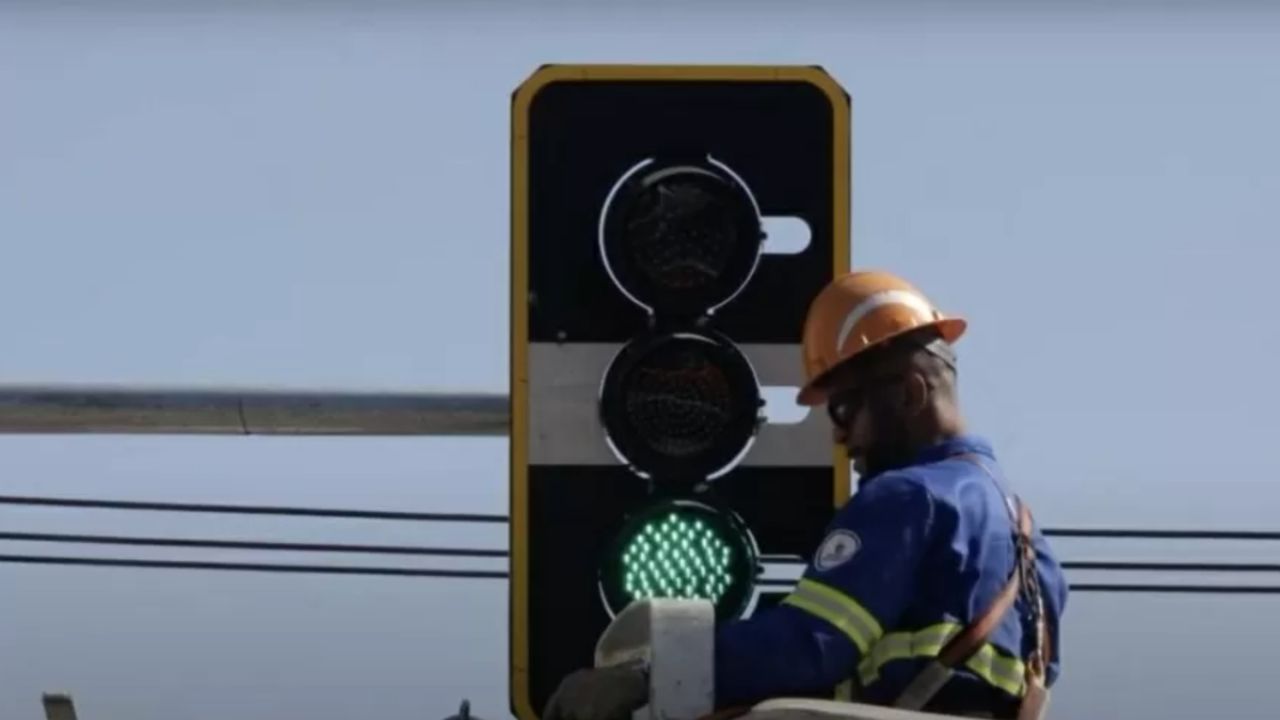
São Paulo, São Caetano, and the Plan to Transform Traffic With Data
São Paulo has taken the lead with the installation of the first AI traffic lights at over 270 intersections, with plans to expand to more than 2,500 points by 2026. The goal is to connect the entire city’s traffic light network to a control center via fiber optics and 5G networks.
In São Caetano do Sul, the innovation comes from outside: the city was chosen to participate in the Project Green Light, a Google initiative that uses anonymous Google Maps data to synchronize traffic lights and reduce congestion in real-time. The technology is already operational in cities like Haifa (Israel), Seattle, and Rio de Janeiro, and is now being tested in São Paulo territory, as announced by Google engineer Juliet Rothenberg.
According to Embratel, the use of AI in traffic can reduce average travel time in major centers by up to 25%. This gain is not just individual: fewer stationary cars also mean less CO₂ emissions, making the system a solution for both mobility and the environment.
Additionally, the new traffic lights send automatic alerts if they fail or suffer vandalism. Thus, maintenance teams are alerted immediately, and intersections do not remain dark for days, as often happens in many capitals.
Bill Aims to Mandate Installation Across Brazil
The new Bill 3048/2024 aims to make smart traffic lights mandatory public policy for cities with more than 150,000 inhabitants. The text stipulates a five-year deadline for the full installation of the technology and suggests that financing comes through the BNDES, federal resources, and public-private partnerships.
Deputy Leandro Pires (PSD-SP), author of the proposal, justified: “We are facing a revolution in traffic management. The technologies are available, already tested in various countries, and we cannot continue to waste hours of our lives in queues caused by archaic systems.”
The proposal has already gained support from mayors and mobility secretaries, who see technology as a means to improve urban transport without the need for heavy investments in physical infrastructure.
Is Brazil Ready for the Traffic of the Future?
The arrival of AI traffic lights with yellow frames marks a new chapter in the fight for urban mobility in Brazil. The country, which has been dealing with chronic congestion for decades, can finally make a leap towards smarter and more human cities. The initiative, if expanded and well-maintained, has the potential to create a real impact on the daily lives of the population.
Moreover, it aligns Brazil with solutions already used in developed countries. After all, it’s not just about asphalt — it’s about intelligence on the streets.