






 Portuguese
  Spanish


Glaciers with sudden advance enter the global radar after study maps thousands of dangerous ice masses, points out direct risks to communities, and shows that global warming is making these events harder to predict
Glaciers are often associated with slow melting caused by rising temperatures, but a rare group is catching scientists’ attention for much more abrupt and dangerous behavior. A study led by researchers from the University of Portsmouth identified more than 3,100 glaciers capable of triggering sudden advances, pushing large volumes of ice towards the glacier front and paving the way for floods, avalanches, river blockages, and other destructive events.
The alert has gained momentum because these glaciers are not evenly distributed across the planet. They are concentrated in areas such as the Arctic, High Mountain Asia, and the Andes, with emphasis on regions like Karakoram, where inhabited valleys and essential infrastructure lie just below these ice masses. Additionally, scientists have already identified 81 glaciers as a more direct threat, precisely at a time when global warming is making these surges more unpredictable.
What are sudden advance glaciers and why are they so concerning
The so-called sudden advance glaciers are ice masses that spend long periods in relative calm, moving slowly, until they enter a phase of sudden acceleration. When this happens, large quantities of ice are rapidly pushed to the glacier’s front, causing it to advance abruptly.
-
Scientists Predict Earth’s Habitable Lifespan: 1.8 Billion Years Before Oceans Evaporate and Sun Forces Planet Out of Life Zone

-
LG Unveils XBOOM Stage 501 Portable Speaker with 25-Hour Battery, AI Karaoke, and Sound by will.i.am in Brazil

-
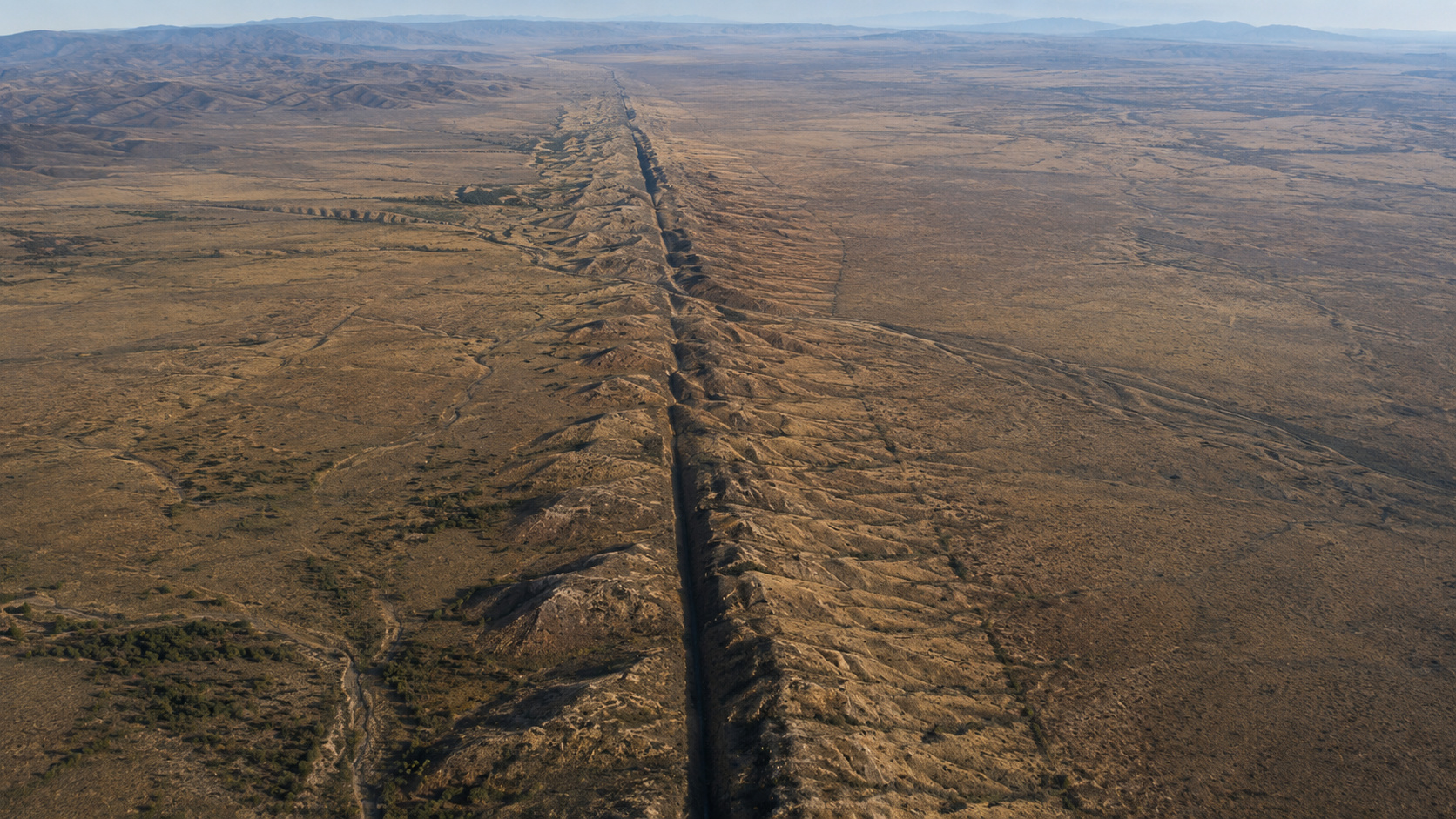
Scientists Warn San Andreas Fault Holds Highest Seismic Tension in 1,000 Years, Renewing Fears of “The Big One” Megaquake on U.S. West Coast

-
Brazil Advances with 14-X Hypersonic Project to Achieve Speeds Over Mach 5, Surpassing Concorde, After Two Decades of Research



This behavior is concerning because it completely changes the type of risk associated with these formations. Instead of just losing volume over time, these glaciers can trigger rapid and potentially catastrophic events, especially in mountainous regions where communities, roads, agricultural areas, and rivers lie in their path.
The numbers that explain the scale of the problem

The study gathered data from more than 3,100 glaciers that have already experienced sudden advances. Although they represent only 1% of all the world’s glaciers, they affect almost one-fifth of the global glacial area, indicating that their territorial weight is much greater than their quantity suggests.
The geographical distribution also draws attention. Currently, glacial advances are concentrated in the Arctic and subarctic, with 48%, and in High Mountain Asia, with 50%. From this universe, researchers identified 81 glaciers as the most dangerous, many of them located in the Karakoram mountains, where the combination of ice, terrain, and human presence increases the potential for disaster.
How these sudden advances can turn into disasters
Scientists highlight six major hazards linked to glacial advances. The first is the glacier’s own advance, where ice can move over buildings, roads, and farmlands. The second is river blockage, capable of forming unstable lakes that can later burst and cause major floods.
Additionally, sudden releases of water beneath the glacier can cause destructive floods. There is also the risk of sudden detachments, which can generate large ice and rock avalanches. The accelerated movement also creates deep crevasses, making movement extremely dangerous in areas where glaciers serve as routes between settlements or for tourism and climbing. When advancing into the ocean, these ice masses can still release many icebergs in a short time, increasing risks for vessels and maritime tourism.
Why global warming is making everything more unpredictable
One of the study’s most concerning conclusions is that climate change is not automatically reducing this type of risk. In many cases, global warming is altering the behavior of surging glaciers and making it more difficult to predict when and where these surges will occur.
Researchers point out that extreme events, such as intense rainfall and very hot summers, may already be acting as triggers for earlier-than-expected surges. This means that the changing climate not only alters the intensity of the problem but also rewrites the rules used to monitor and anticipate these episodes.
What changes from one region to another on the map of dangerous glaciers
The scenario is not uniform across the planet. In some regions, glacial surges are becoming more frequent than in the past. In others, they tend to lose strength because certain glaciers have thinned so much that they may no longer be able to accumulate enough ice to repeat these surges.
This contrast is clearly visible in regional projections. In places like Iceland, where glaciers are shrinking rapidly, surges may practically disappear. In contrast, parts of High Mountain Asia and the Canadian and Russian Arctic may experience more frequent surges, driven by warmer climatic conditions and increased melting. There is also the possibility of this behavior emerging in new areas, such as the Antarctic Peninsula.
Why Karakoram and the Arctic appear among the most sensitive spots
The Karakoram and Arctic regions stand out because they combine two critical conditions simultaneously: a strong presence of glaciers with this type of behavior and direct exposure of communities or infrastructure. In Karakoram, for example, many of the glaciers classified as most dangerous are located above inhabited valleys and areas essential for circulation and subsistence.
In the Arctic, the risk is compounded by rapid climate transformations, which increases uncertainty about the future behavior of these ice masses. When surges become more difficult to anticipate, the difficulty of protecting routes, settlements, and economic activities exposed to these changes also increases.
What this means for communities and infrastructure
In practice, the sudden advance of these glaciers can compromise much more than the landscape. Roads can be cut off, rivers can be dammed, agricultural areas can be overtaken by ice, and communities can face extreme events with little reaction time. In mountainous regions, where isolation is already a challenge, this risk becomes even more sensitive.
Critical infrastructure also enters the danger zone. When a glacier advances over a valley or interferes with the course of a river, the impacts can affect bridges, supply routes, local systems, and strategic connections for movement and regional economy. Therefore, the study treats these areas not just as vulnerable landscapes, but as zones requiring constant vigilance.
Next steps and why monitoring has become a priority
Researchers argue that continuous satellite monitoring, more field observations during glacial surges, improved modeling and better projections are now essential elements to reduce risks. The idea is to understand more precisely how these glaciers will respond to continuous warming and what behavioral changes may emerge in the coming decades.
The central message of the study is that the world needs to observe these ice masses with much greater attention. Knowing where the largest concentrations of surging glaciers are and which of them pose the most direct threat can make a difference in protecting vulnerable populations and planning infrastructure in exposed regions.
Why this discovery amplifies the global climate alert
The study shows that the climate crisis affects not only the volume of glaciers but also how they move and interact with the surrounding territory. This amplifies the alert because it transforms already sensitive ice masses into even more unpredictable sources of risk, precisely in areas where thousands of people live or depend on fragile infrastructure.
By identifying more than 3,100 surging glaciers and pointing to 81 as a direct threat, scientists reinforce that the discussion about climate, ice, and safety cannot be restricted to gradual melting. In many cases, the danger can arrive suddenly, violently, and with much more immediate consequences for those in its path.
Do you believe that regions exposed to these glaciers should receive global priority in monitoring and protection before unpredictable events affect more communities?


