





 Portuguese
  English
  Spanish
  3 min of reading
  0 comments


Another Tesla Recall In 2025: Steering Failure In Tesla Cars Registered This February. Approximately 380 Thousand Cars Are Affected And Elon Musk’s Company Is Implementing OTA Update.
Tesla, the electric car company of billionaire Elon Musk, announced on Friday (21st) a recall of approximately 380,000 cars in the United States. This is due to a steering failure in Tesla cars that can lead to complete loss of control. The Tesla recall affects the Model 3 and Model Y vehicles from the year 2023 equipped with older versions of the software.
Understand What Caused The Steering Failure In Tesla Cars
While some Tesla owners reported only an increase in the effort needed to steer, others experienced a steering failure in Tesla cars, resulting in complete loss of control. The root cause of the problem was identified as a break due to overvoltage, which puts excessive stress on the motor components on the circuit board.
Despite this steering failure in Tesla cars interrupting the power steering system, the design ensures that owners will not lose assistance while the vehicle is in motion, providing more safety. However, when the cars come to a complete stop, the power assistance disappears.
-
GM brings Google Gemini to 4 million cars already sold in the US via remote update, transforms vehicles into AI “copilots” starting with 2022 models, and opens a new billion-dollar revenue stream with subscriptions, assistance, and embedded services.

-
Toyota ends the Diesel era: new Hilux with up to 380 km of urban range brings 196 hp, 59.2 kWh battery, 4×4 traction and 715 kg of load capacity

-
Chinese company launches car with a rocket engine that accelerates quickly and goes from 0 to 100 km/h in 0.9 seconds; meet the Nebula Next 01 Jet Edition from Dreame Technology.

-
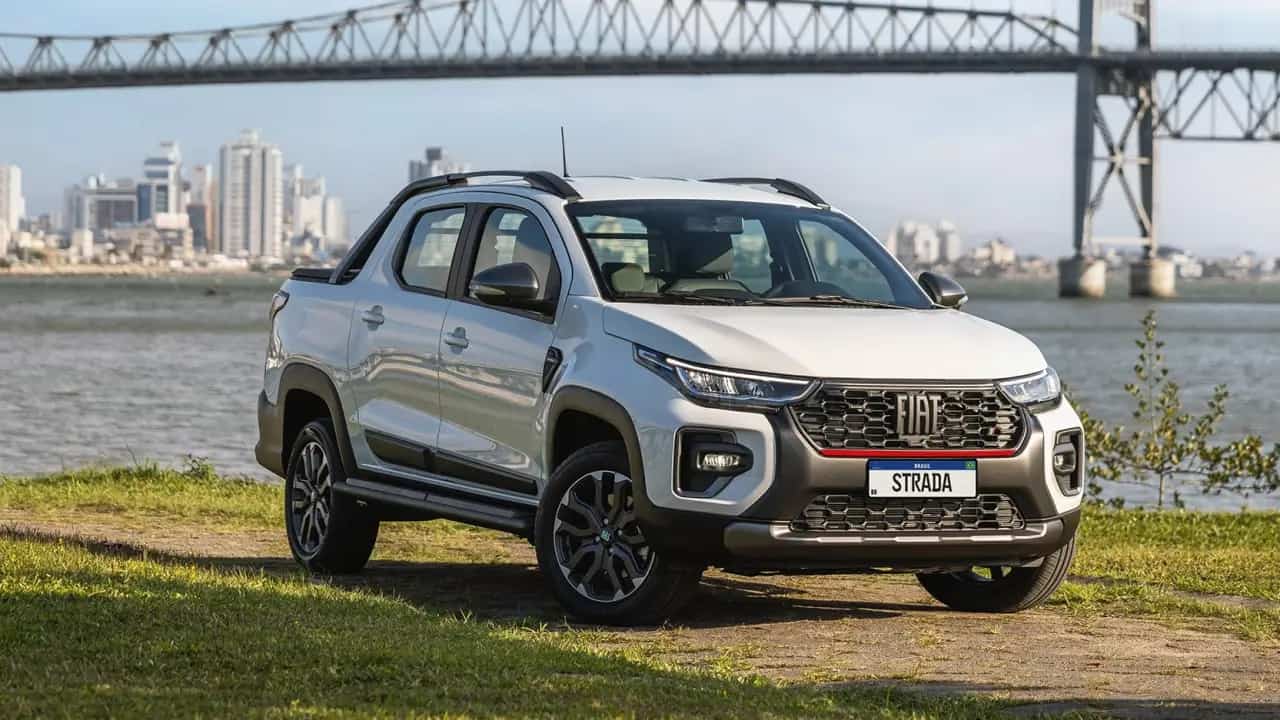
Fiat Strada dominates April with almost 13 thousand units registered and shows why a compact pickup continues beating hatches, SUVs, and electric vehicles in the Brazilian market.




In theory, it is still possible to drive a Model 3 and Y in this situation; however, maneuvering a two-ton vehicle without power steering is an extremely difficult task. In addition to the physical effort required, drivers are alerted to the failure through a message on the screen indicating “Reduced Steering Assistance. Steering May Require Greater Effort.”
Tesla Recall Will Be Done Via OTA Update
Despite the Tesla recall being announced only this month, the brand acknowledged more than 3,000 warranty complaints related to the issue and began an internal investigation nearly two years ago in response to customer complaints.
The steering failure in Tesla cars has also been the subject of a formal investigation that began in December 2023 by a non-American market, and the NHTSA opened its own investigation in February of last year. The automaker states, however, that it has not received reports of injuries or accidents associated with the defect.
Like many other quality and safety issues of the brand, this steering failure in Tesla cars is also software-related, meaning it is easier and cheaper to fix. To address the issue, Tesla is implementing a software update via Over The Air (OTA) for the 376,241 affected electric cars.
This Is Already The Second Tesla Recall In 2025
This Tesla recall comes shortly after another one conducted in January 2025, when the brand called back about 240,000 vehicles due to faulty rear cameras. At that time, the affected models included the Model S 2024-2025, Model X 2023-2025, Model Y 2023-2025, and Model 3 2024-2025. The issue was a firmware failure that could cause a short circuit in the car’s computer board, leading to malfunction of the rear camera.
It’s worth mentioning that, even with the Tesla recall, the brand is already planning to launch other vehicles this year, including some more affordable ones, according to its latest investor relations report. In addition to new cars, the aim is to include new versions of models such as Model Y and Model 3, which were called back this month.
According to the presentation on the last two months of 2024, Elon Musk’s brand will utilize features of the next-generation platforms, as well as existing characteristics, and will produce new innovations alongside the current lineup.






Be the first to react!