Portuguese
  Spanish




Have you ever wondered how stars manage to shine brightly for billions of years without fading? This cosmic flame is not magic, but the result of grand physical processes, involving colossal pressures, unimaginable temperatures, and the transformation of subatomic particles into pure light. The cosmic energy that keeps stars alive is an invisible spectacle to the naked eye, but it determines the existence of life on planets like Earth.
Cosmic Energy: The Secret of Stars
The key lies in the stellar core, where nuclear fusion occurs. In this process, hydrogen atoms fuse and form helium, releasing an immense amount of energy in the form of light and heat. It is this reaction that sustains stars like the Sun. Unlike the combustion of a common fire, which requires oxygen, nuclear fusion is much more powerful and self-sufficient, transforming matter into energy according to Einstein’s famous equation: E=mc².
The Sun as an Example of Cosmic Energy
Our Sun is a perfect example of how this cosmic energy works. It has been active for about 4.6 billion years and still has enough fuel to shine for another five billion. Every second, the Sun converts millions of tons of hydrogen into energy, illuminating and heating not just Earth, but the entire Solar System. It is a cosmic engine operating in balance: the pressure of nuclear fusion pushes outward, while gravity tries to collapse the star inward. This balance keeps the Sun stable and radiant.
-
Elderly Man in His 70s Spends Nearly 30 Years Digging 3 km Canal to Transform Arid Land into Farmland in Rural India

-
Submerged Town Reemerges in São Paulo as Reservoir Levels Drop, Revealing Ruins and Memories of Displaced Families
-
In Northeastern Brazil, 1,200 Residents Face a Silent Nightmare as Giant Sinkholes Threaten Entire Neighborhoods
-
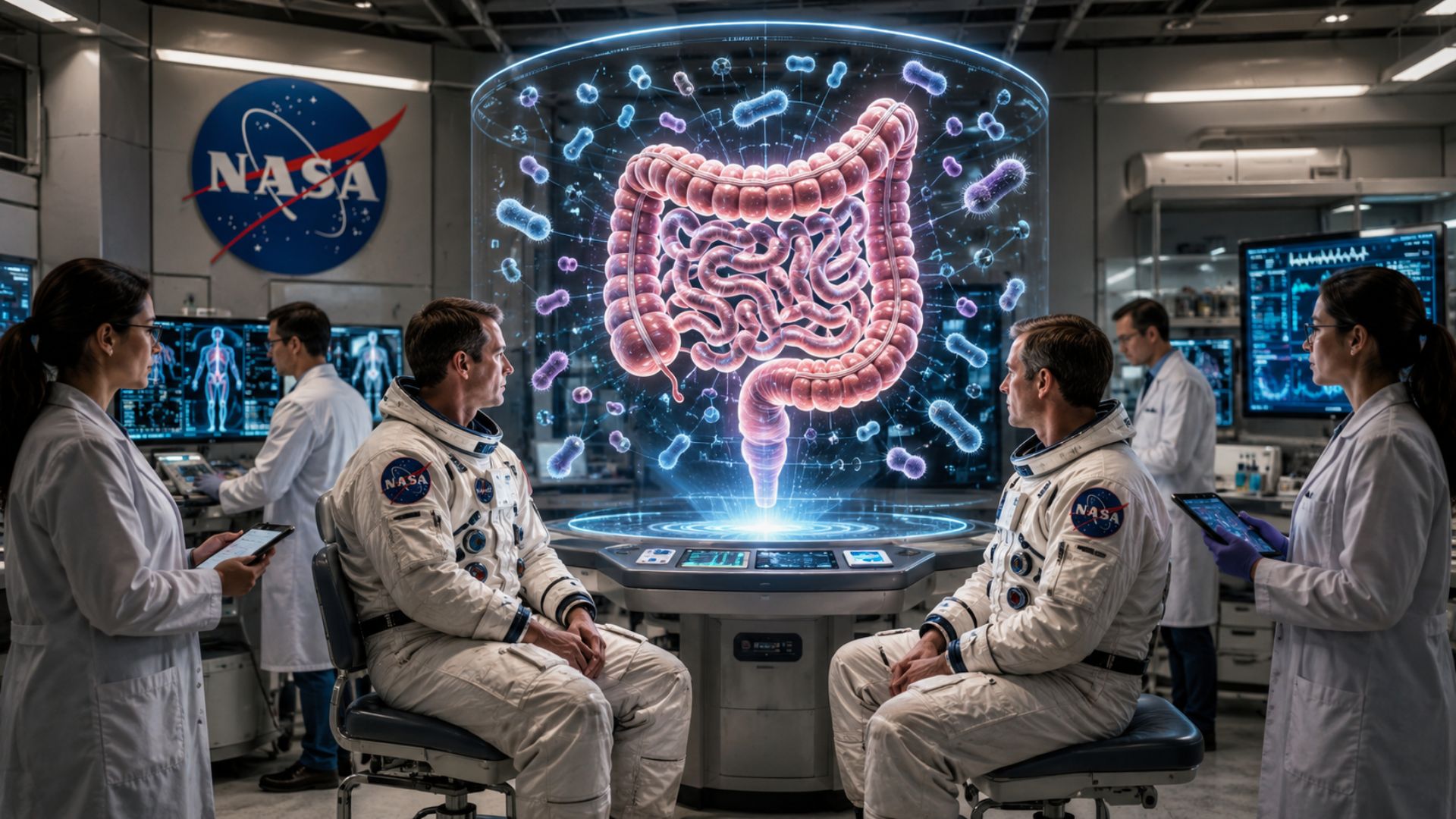
Astronauts Returning from Space Show Altered Gut Bacteria and Loss of Protective Microbes, Highlighting Potential Risks for Mars Missions




The Role of Gravity in Stellar Balance
Without gravity, stars would not exist. It is the force that keeps matter together and compresses atoms in the core until nuclear fusion begins. The greater the mass of a star, the more intense the gravity in its core and, consequently, the faster and more intense the fusion reactions are. This is why giant stars consume their fuel in a few million years, while smaller stars can last for tens of billions of years.
Stars and Their “Lifespan”
Stars are born, live, and die in a fascinating cosmic cycle. After consuming hydrogen, they begin to fuse heavier elements, such as helium, carbon, and even iron. This process varies according to the size of the star. Small-mass stars, like the Sun, end up as white dwarfs, emitting a gentle glow until they fade away. Meanwhile, more massive stars explode in supernovae, scattering elements throughout space that will become part of new planets, stars, and even living organisms.
Cosmic Energy and the Origin of Life
Without the cosmic energy from stars, life as we know it would not be possible. The carbon, oxygen, and iron present in our bodies were forged in ancient stars that have already died. Every cell in our body carries, in essence, the energetic signature of these celestial giants. The shine of the stars is not just a visual spectacle; it is also the foundation of the chemistry of life.
The Mystery of Neutron Stars and Black Holes
When nuclear fusion can no longer sustain gravity, some stars collapse in extreme ways. This can create neutron stars — objects so dense that a teaspoon of their material weighs billions of tons — or even black holes, regions where gravity is so intense that not even light escapes. Even in these cases, cosmic energy continues to play a leading role, as these forces and reactions shape the universe.
Cosmic Energy as Human Inspiration
Apart from the scientific explanation, cosmic energy has inspired cultures and philosophies since ancient times. Ancient peoples saw the stars as the abode of gods or spiritual guides. Today, we still carry this fascination, not only for their beauty but also for the quest to understand what connects us to the cosmos. Stellar energy has become a symbol of vitality, eternity, and creative power.
Nuclear Fusion on Earth: Dream or Reality?
Humanity is trying to replicate, on a small scale, what happens in the hearts of stars. International projects like ITER in France are seeking to develop controlled nuclear fusion as a source of clean and almost limitless energy. If we succeed, it will be like bringing to Earth a fragment of the cosmic energy that keeps stars burning.
A Spectacle That Shapes the Universe
The cosmic energy of stars is both a transformative engine and a natural poetry. It ensures that the universe is in constant motion, recycling elements, forming new worlds, and maintaining the balance between life and stellar death. When we look up at the night sky, we see not just luminous points: we contemplate billions of years of history in the form of light.
This light is the living testimony of what keeps the cosmos pulsating. To think that each star twinkling above us is burning silently, sustained by invisible forces, is an invitation to humility and admiration. After all, part of who we are was born in that distant glow.