






 Portuguese
  Spanish


Financial incentives, symbolic housing, and support for new businesses put small Italian village on the radar of those seeking a fresh start in Europe, amidst population aging and the attempt to preserve historic communities in the country’s mountainous regions.
Santo Stefano di Sessanio, a medieval village located in Abruzzo, Italy, gained prominence after launching a municipal program aimed at attracting new residents, combining housing with symbolic rent and direct incentives for business creation in a scenario marked by population aging.
In this context, the municipality structured a package that can reach 44 thousand euros, combining an annual contribution of up to 8 thousand euros for three years and a one-time subsidy of up to 20 thousand euros aimed at opening a local economic activity.
Demographic crisis in Italian village boosts program
Located in the Gran Sasso and Monti della Laga National Park, the small locality had 115 residents when the initiative was announced, with 41 already over 65 years old, while only 13 were under 20.
-
It combines maximum strength and minimum weight, and that’s why the hexagonal structure has become the secret weapon of engineering: the honeycomb shape, copied from nature, supports airplane panels, satellites, trains, and construction around the world.

-
It is estimated that over 35,000 Brazilians cross the border to study medicine in Paraguay, where the monthly fee drops from R$ 8,000 to less than R$ 2,500 and admission does not require the competitive entrance exam.
-
He arrived in Brazil with a thousand liras, saw the cargo of his first business disappear in the sea, and started almost from scratch, but a decision involving pork lard, cans, and flour eventually led the immigrant to command 200 factories, 30,000 employees, and one of the largest industrial empires in Latin America.

-
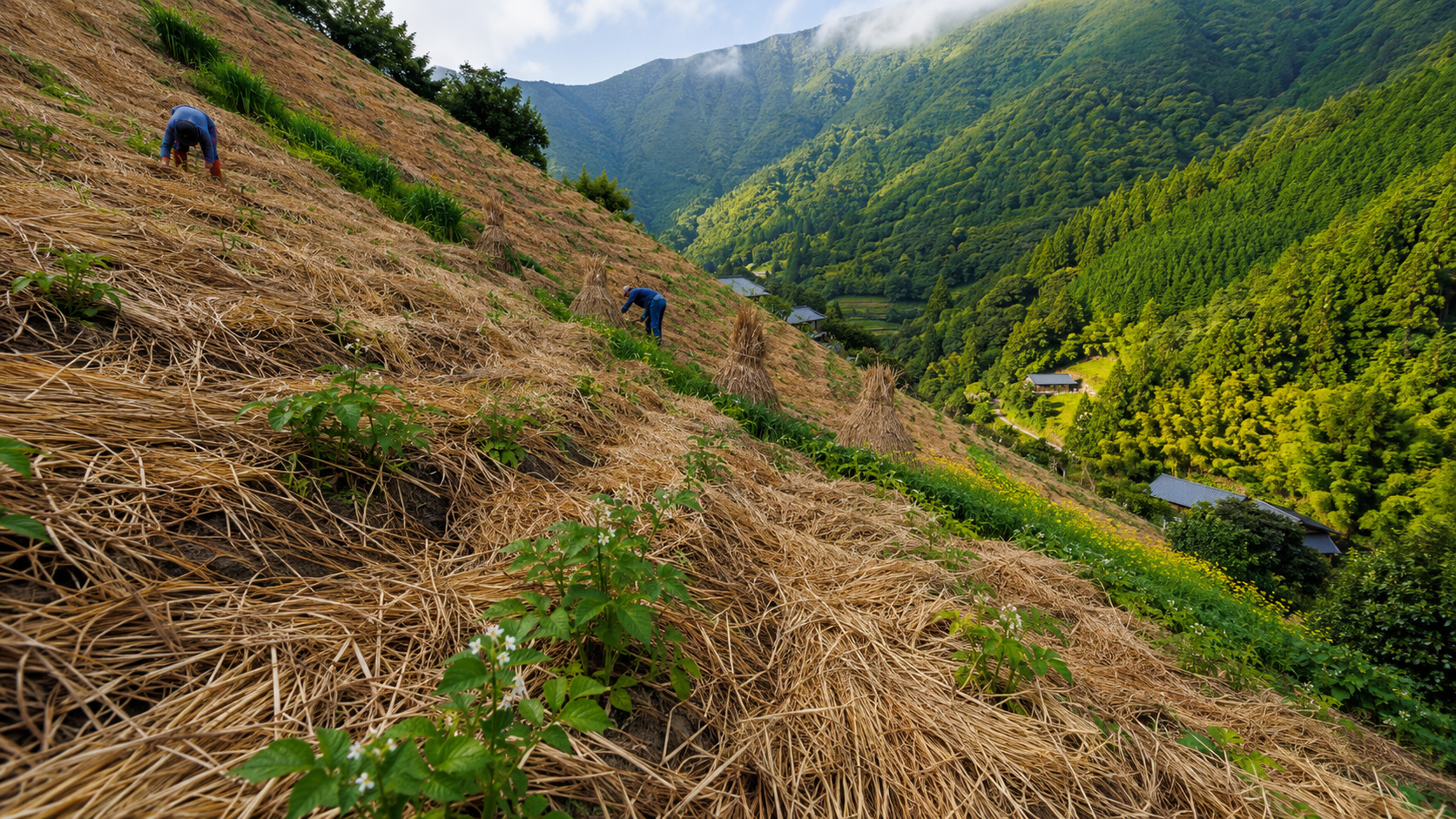
Without leveling mountains or relying on tractors, Japanese farmers spread tons of grass on slopes of up to 40 degrees, keep soil threatened by erosion productive, and cultivate millet, buckwheat, and potatoes.



Given this scenario, the age imbalance began to threaten the continuity of basic services, leading the local administration to bet on the arrival of new residents as a way to maintain social and economic dynamics throughout the year.
In an interview with CNN, Mayor Fabio Santavicca summarized the objective by stating: “We just want the village to continue to live”.
Financial benefits and almost free housing

When structuring the program, the municipality foresaw the payment of monthly aid distributed over three years, limited to 8 thousand euros per year, in addition to offering properties with rent described as symbolic during the period.
In addition to this, a financial incentive of up to 20 thousand euros was also included, paid in a single installment, aimed at supporting the opening of businesses considered strategic for the local economy.
Considering all benefits, the total amount can reach 44 thousand euros, not including the indirect gain represented by the reduced housing cost offered to selected participants.
Rules for participating in the program in Italy
With a focus on population renewal, the initiative established as its target audience people between 18 and 40 years old, willing to transfer residence to the village and remain for at least five years developing professional activity there.
Furthermore, interested parties should be Italian citizens, European Union citizens, or foreigners with long-term residence permits within the European bloc.
To avoid negative impacts on other small communities, the municipality also indicated that candidates coming from Italy itself should leave municipalities with more than 2 thousand inhabitants.
Professions related to tourism and local commerce
Reflecting the village’s tourist vocation and reduced structure, the prioritized activities were linked to essential services and the valorization of regional products characteristic of the mountainous region.
Among the mentioned roles were tourist guide, cultural or sports guide, tourist information officer, cleaning worker, maintenance professional, convenience store manager, and entrepreneurs linked to the production and commercialization of local food.

More than a change of address, the project was presented as a repopulation strategy associated with income generation within the community itself.
International Interest and Limited Number of Vacancies
The combination of affordable housing, temporary income, and encouragement of entrepreneurship made the proposal gain international visibility shortly after its launch.
According to CNN Brazil, approximately 1,500 people showed interest in the initiative, although the city hall planned to start the project with a restricted group of about ten people or five couples.
This reduced number was directly linked to the availability of properties and the strategy of gradual population growth, avoiding overload on local infrastructure.
Program Had a Defined Deadline
Although it continues to circulate on social networks, the program was officially announced in 2020, with the deadline for expressing interest set until November 15 of that year.
So far, there is no reliable confirmation in updated official sources that the notice remains open with the same conditions initially announced.
For this reason, the values should be considered as part of the original project, not as a guarantee of current availability.
Where Santo Stefano di Sessanio is Located

Located in the province of L’Aquila, in Abruzzo, the village is situated in a region known for mountainous landscapes, preserved historical heritage, and tourism associated with the Gran Sasso massif.
The altitude mentioned in different sources is around 1,250 meters, reinforcing the character of a community situated in a high area with a harsher climate.
Another highlight is the “albergo diffuso” model, where accommodations are distributed across restored houses within the historic center, contributing to architectural preservation and attracting visitors.
Routine and Challenges of Living in a Small Village
Although the financial package is attractive, adapting to the local routine involves significant changes compared to urban life, including fewer services, limited commerce, and more difficult travel during periods of intense cold.
According to the mayor himself, life in the village requires planning, especially during winter, when snow and ice can impact mobility and daily functioning.
Still, the local administration maintains that initiatives of this kind are essential to preserve historical communities and maintain economic activities in regions facing population aging and the constant departure of young people.



How can I be part of this benefit, am interested
Please am in Ghana and am very much interested.
I and my family are interested