






 Portuguese
  Spanish


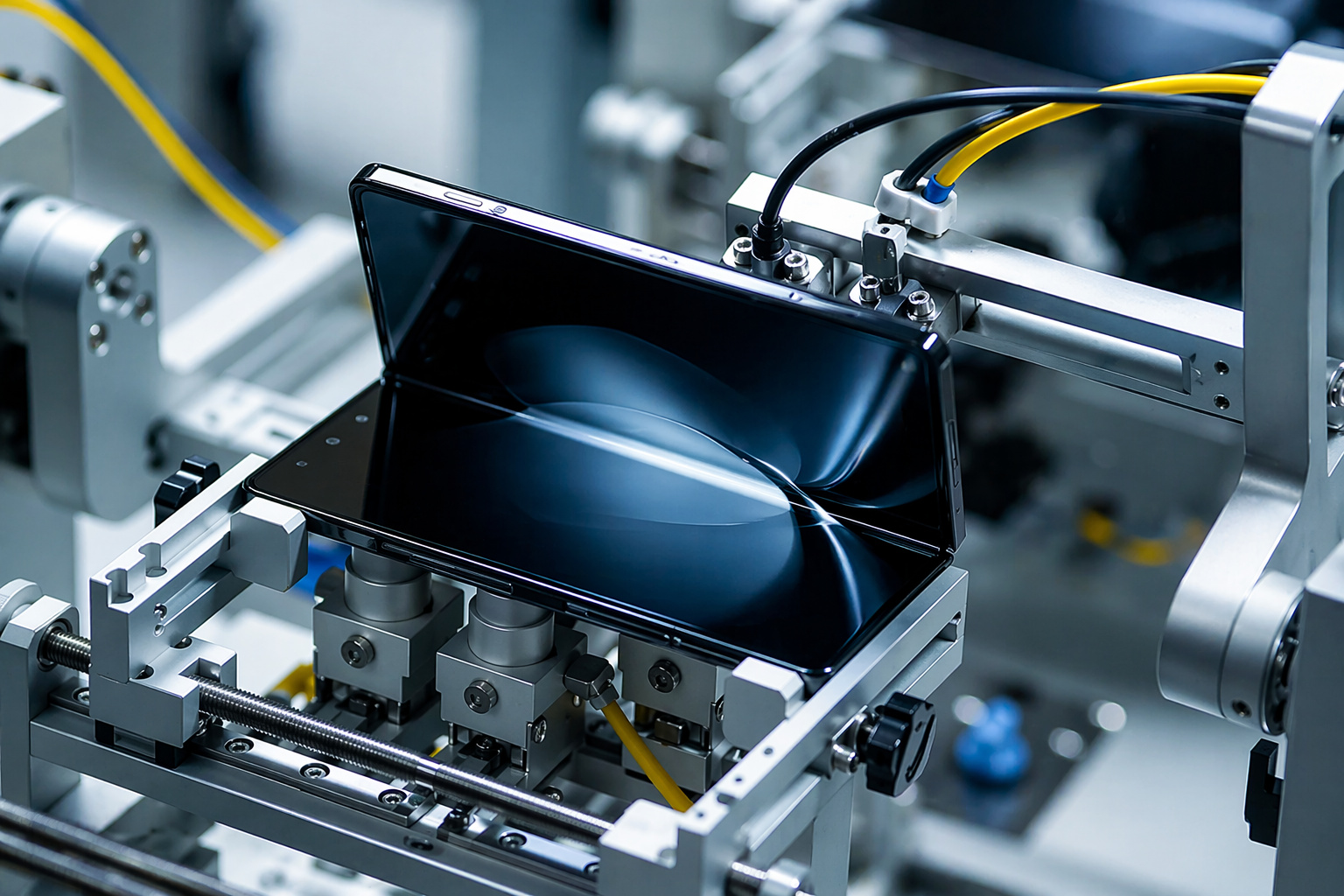

Smartphone production at Samsung shows how robots and conveyor belts operate without pauses and ensure a continuous rhythm and uniform standard
The futuristic factory of Samsung, a global technology company, reveals a production system where industrial robots and automated conveyor belts work non-stop to assemble smartphones. The process occurs continuously, with repetitive movements and visible precision at each stage.
The direct impact is seen in the ability to produce thousands of units with the same visual standard. The absence of human intervention in the main stages reinforces the level of automation and control within Samsung’s factory.
The report was published by FRAME, a channel for technical videos about industrial processes, which presents visual details of this automated line in constant operation within Samsung’s structure.
-
Scientists warn that melting ice is triggering an alarming chemical transformation in preserved areas, and the first signs are already concerning researchers worldwide.

-
China placed 198 robotic legs under a 7,600-ton school and made the building walk 62 meters in 18 days, rotating the historic structure as if a concrete structure had gained feet to escape demolition.

-
Distributor confirms the premiere of ‘Dark Horse’, Bolsonaro’s film, in 650 cinemas with 99% of copies dubbed.
-
9-year-old boy who could only hold a plank for 6 minutes in physical education class trained alone for 6 months, without needing encouragement from his parents, until he broke the world children’s record with 61 minutes and 5 seconds.


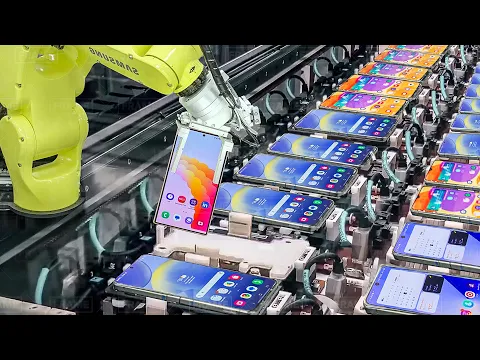

Samsung’s conveyor belts maintain a constant flow and prevent production failures
In Samsung’s futuristic factory, the process begins with conveyor belts and metal tracks that move small parts along the line without interruptions. This system maintains the continuous rhythm of production.
The components travel on fixed supports, with side guides and controlled alignment, preventing displacements during transport. This ensures that each piece arrives correctly at the next station.
As a result, production remains organized and predictable. Small automatic adjustments help maintain alignment, reducing failures throughout Samsung’s process.
Samsung’s industrial robots perform repetitive fittings with high precision
The articulated robotic arms of Samsung execute tasks such as fitting and securing components with fast and standardized movements. Each action follows a repetitive cycle, with no noticeable variation.
The mechanical claws hold small parts and position them accurately within the smartphone structure. This constant repetition ensures uniformity among all produced units.
The result is a consistent assembly, with reduced errors and higher final quality. Samsung’s automated line maintains the same standard in each device.
Samsung’s factory produces millions of smartphones with automation and strict control
Within Samsung’s factory, the automated process allows for the production of millions of smartphones with rigorous organization. Each stage is controlled by integrated systems that maintain continuous flow.
The components go through fitting, securing, and closing without the need for direct manual intervention. This demonstrates how Samsung utilizes automation to scale up production.
This model ensures visual uniformity and stability in the process. Controlled repetition and constant alignment reduce variations among the manufactured devices.
Electronic boards and connectors are positioned with precise alignment at Samsung
An important stage in Samsung’s futuristic factory involves the installation of electronic boards and metal connectors within the device structure. These components require exact positioning.
The process includes aligning the boards on fixed bases, followed by controlled pressure to ensure a firm fit. Mechanical tools assist in this stage.
After this phase, the smartphone already presents an organized internal structure. FRAME, a channel for technical videos about industrial processes, highlighted this moment by showing the precise repetition of fittings on Samsung’s line.
Samsung’s outer casings receive components and form the final body
Next, Samsung’s factory uses outer casings and rigid panels to enclose the internal components. These structures define the final shape of the smartphone.

The robots position the components inside the casings and make adjustments to the edges. The applied pressure ensures that all parts fit well together.
The result is a device with a uniform finish and standardized appearance. All units maintain the same alignment within Samsung’s production.
Samsung’s inspection systems check alignment and integrity of the devices
After assembly, the devices go through verification stations with sensors and visual analysis within Samsung’s factory. These points assess the overall condition of the smartphones.
The devices continue moving while being analyzed, without stopping the flow. This allows for quick identification of any irregularities.
As a result, only units within the standard proceed down the line. This control ensures consistent quality in Samsung’s production.
The organization of Samsung’s futuristic factory ensures efficiency and continuous production
The environment of Samsung’s factory features clean floors, organized areas, and well-defined stations, contributing to the efficiency of the automated line.
Each stage occupies a specific space, avoiding interference and facilitating the movement of components. This keeps the process stable and predictable.
The result is an efficient production system, with a lower risk of failures and greater control over all phases of assembly.

Samsung’s automation shows how robots sustain large-scale production
Samsung’s futuristic factory highlights that the central point lies in the integration between industrial robots and automated conveyor belts, which operate together to maintain precision and continuity.
This model reveals how Samsung is able to produce millions of smartphones with consistent quality, using automation, organization, and repetition as the foundation of the industrial process.
If this level of technology caught your attention, share this content or leave your comment on the advancement of automated factories.


