






 Portuguese
  Spanish
  6 min of reading
  0 comments


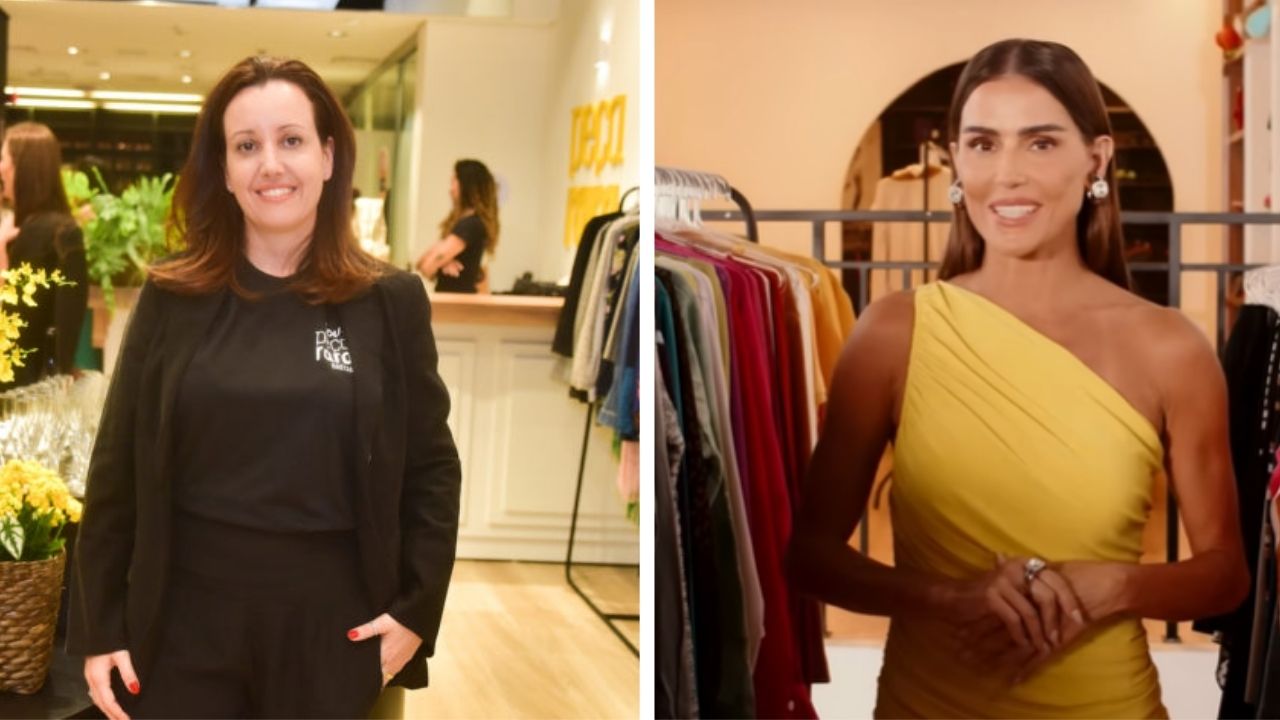
Founded by Bruna Vasconi in Brasília, the thrift store Peça Rara started with her children’s items and now operates in more than 130 stores. According to Seu Dinheiro, the network earned around R$ 300 million in 2025, sold four million items, and aims for 300 units in the next three years.
The thrift store that started with clothes and toys from Bruna Vasconi’s children became one of the largest circular economy networks in Brazil. Peça Rara was born in Brasília in 2007, after a family loan, a short partnership, and a bet on used items when the market still faced resistance.
According to a report by Seu Dinheiro published on March 26, 2026, the company earned around R$ 300 million in 2025, a growth of 25% over the previous year, and sold four million items. Today, the brand has more than 130 stores and is present in 22 of the 26 Brazilian states, in addition to the Federal District.
Idea was born at home, with children’s clothes
Bruna Vasconi, a psychologist by training, started the business at a time when she was looking to supplement her family’s income. Before Peça Rara, she had already sold jewelry, chocolates, and beauty products to acquaintances during college.
-
The German fund created to compensate victims of Nazi forced labor paid billions, but the responsible parties themselves admit that the money did not come close to compensating 26 million people.

-
Why do so many people avoid calls and prefer to resolve everything through messaging?

-
Tired of seeing people living on the streets for years, after 12 years of trying, Des Moines approved micro-houses ranging from 18 to 36 m² with affordable rent: Joppa Village promises to become a model of social housing for the homeless population.

-
At 29 years old and tired of the corporate routine, a young man leaves his 11-year career, sells almost all his possessions, buys a sailboat, and sets off from Oregon to Hawaii accompanied only by his cat.



The turning point came after reading a story about an entrepreneur who sold her children’s used clothes in her garage in São Paulo. Looking at the clothes and toys that the children no longer used, Bruna saw the chance to set up a thrift store with an apparently smaller investment.
Grandmother’s loan helped with the first step
At the time, Bruna lived in Brasília and was the mother of two children. She opened the first business in partnership with a friend, gathering items from their own children and other colleagues who also had unused items at home.
Each of the partners invested R$ 7,000 to rent a 100-square-meter space and cover the initial costs. Bruna borrowed this money from her grandmother. The partnership, however, lasted only 40 days, and each went their separate ways.
First Peça Rara store opened in 2007


After the separation of the initial partnership, the two calculated that the business was worth R$ 50,000. Bruna kept R$ 25,000 and sought new financial support from her father, who invested another R$ 25,000 in the operation.
With R$ 50,000 in hand, she rented a larger space, 350 square meters, and opened the first Peça Rara store in April 2007. The proposal expanded from just children’s items to include women’s clothing, shoes, and accessories.
Consignment became the basis of the business model
Bruna attributes part of the thrift store’s growth to the consignment model adopted from the start. The logic was simple: people left items in the store and received payment only after the sale.
According to the founder, consignment arose because she didn’t think it was fair to pay a fixed amount for a bag of clothes, as each piece had its own value. The other reason was straightforward: she didn’t have the money to buy her own stock.
Suppliers now have three ways to receive
Currently, those who bring items to Peça Rara can choose between consignment, PR coins, or payment via Pix. In consignment, the items are displayed in stores and the supplier tracks sales through an app.
The brand also created alternatives for those who prefer faster payment. Pix can occur within 48 hours, while PR coins allow exchanging the value for other items from the thrift store on the same day.
Curation helps organize the collection

The selection of items is done by curation and pricing teams at Peça Rara units. The criteria vary according to the audience of each store, as suppliers and consumers tend to have similar profiles within the same neighborhood or city.
The network receives luxury items but is not limited to this segment. There are also more affordable items, as long as they align with the unit’s profile. This process helped transform the thrift store into a more organized and scalable operation.
Prejudice against used clothing was an obstacle at the beginning
When she opened the first unit in Brasília, Bruna faced a common problem at that time: many people wanted to supply items, but few wanted to buy second-hand clothes.
The founder told Seu Dinheiro that, in the beginning, there wasn’t a strong culture of consumption in thrift stores. To change this perception, she focused on an organized store, inviting environment, and an experience that showed value beyond price.
Expansion through franchises began after seven stores
In 2019, Peça Rara had seven own stores, all in Brasília. The company was more structured but had difficulty growing while maintaining only the family logic.
After seeking consultancy, Bruna received the diagnosis that the way forward would be franchising. The first unit in this model was also opened in the Federal District, marking the beginning of a new phase of expansion.
SMZTO and Deborah Secco increased visibility
In the same year she was evaluating expansion, Bruna was approached by the SMZTO group, led by José Carlos Semenzato. The partnership took time to advance due to the pandemic but was formalized in 2021.
Actress Deborah Secco joined as a partner in 2022 and became the most recognized face in the brand’s communication. As a result, Peça Rara became nationally associated with the expression “Deborah Secco’s thrift store,” although the founder is Bruna Vasconi.
Network reached R$ 300 million in 2025
Peça Rara earned about R$ 300 million in 2025, according to Seu Dinheiro. The result represented a 25% growth compared to the previous year and was accompanied by the sale of four million items.
The number shows the change in status of the second-hand market. What was once viewed with resistance has started to align with circular economy, conscious consumption, unique pieces, and the search for more sustainable alternatives in retail.
Institute transforms pieces outside the collection into social action
The network created, in 2019, the Instituto Eu Sou Peça Rara. The initiative arose from an operational challenge: what to do with items that arrived at the stores but did not enter the main collection?
The answer came in the form of charity bazaars, with pieces sold at more symbolic values, between R$ 5 and R$ 50. In 2024, the institute sold over 300,000 pieces in these bazaars and raised R$ 2.8 million for social actions.
Daycare and environmental impact entered the strategy
Among the social actions mentioned in the report is a daycare inaugurated by Peça Rara in 2023, serving 300 children. The initiative reinforces the brand’s attempt to connect business, social impact, and circular economy.
The company also estimates that by avoiding the production of a new piece, it preserves 2,700 liters of water and prevents 5.7 kilograms of carbon dioxide in the atmosphere. These data help explain why the thrift store has come to be treated as part of an ESG agenda.
The goal now is to reach 300 stores
The current major goal of Bruna Vasconi is to expand the network. According to the founder, Peça Rara aims to reach 300 units in the next three years.
She states that the expansion was held back in 2025 to consolidate the operation, after the network jumped from seven stores to 130 in four years. The priority in 2026 remains to strengthen the structure, without letting the brand lose control of the model.
Franchises have three investment formats
The network operates with three franchise models: Classic, Midi, and Pocket. The Classic version requires an investment starting at R$ 630,000, in stores over 300 square meters and cities with more than one million inhabitants.
The Midi model requires an investment starting at R$ 530,000, for stores between 200 and 250 square meters. The Pocket version starts at R$ 320,000, with stores of 100 square meters, aimed at smaller cities and focused on the women’s sector.
When used clothing becomes a national business
The story of Peça Rara shows how a thrift store created from children’s clothes, a loan from a grandmother, and the need for income became a national network with million-dollar revenue, franchises, well-known partners, and social impact.
The question that remains is simple: would you buy more used pieces if the thrift store had curation, an organized store, and a sustainable proposal, or do you still prefer new clothes even if it costs more? Comment on what catches your attention the most in this shift in the second-hand market.


Be the first to react!