






 Portuguese
  Spanish
  5 min of reading
  0 comments


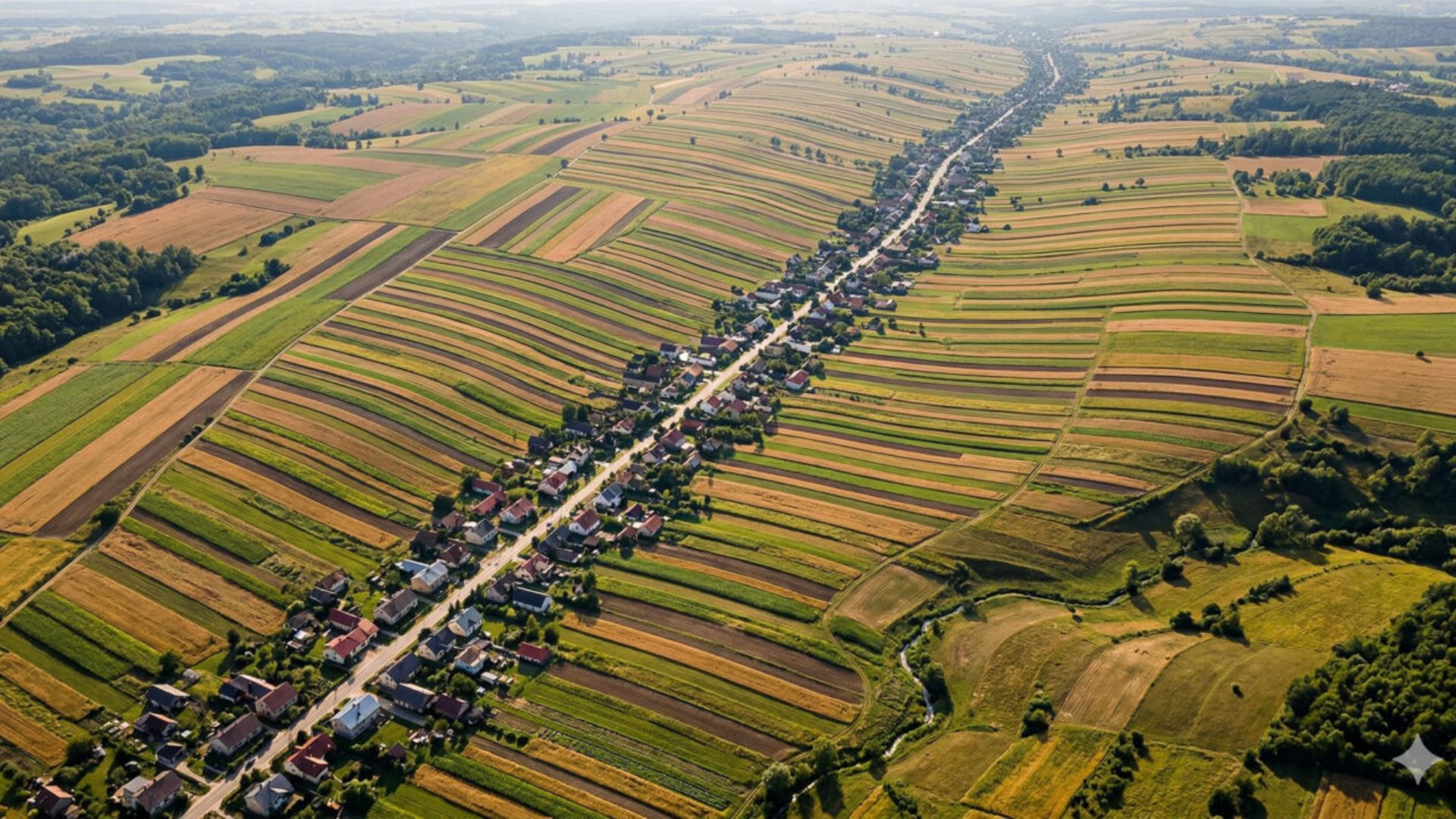
Sułoszowa, in southern Poland, gathers 5,705 residents along a street over 9 km long and preserves a rare linear rural model surrounded by agricultural strips.
Aerial images of Sułoszowa, in southern Poland, went viral because they show a rare and extremely organized territorial pattern. The village develops along a single main road, with houses lined up in sequence and, right behind them, long parallel agricultural strips that create an unusual visual design when seen from above. According to the local administration, Sułoszowa is among the longest ulicówki in the country, with a linear layout of over 9 kilometers.
The population data reinforces the impact of the place. According to the official development strategy of Gmina Sułoszowa, the municipality had 5,705 inhabitants at the end of 2022, a number often rounded to about 6,000 in viral content. What differentiates the location, however, is not just how many people live there, but how they are distributed along this almost continuous linear structure.
Sułoszowa preserves a rare linear rural model in Poland
Sułoszowa is a preserved example of ulicówka, a historical type of linear rural settlement characterized by houses built along a single main road. According to the town hall itself, this urban form makes the village one of the longest of its kind in all of Poland.
-
Brazilian flying boat aims to shorten trips that can currently take days in the Amazon by using rivers as runways and reaching speeds of 150 km/h to transport people, cargo, and even provide health support in isolated regions.

-
Cristiano Ronaldo’s family focuses on Brazil and buys 3 plots in a condominium worth R$ 410 million in RS, with lots of up to 600 m², 450 units, 70% of the area navigable, and the largest artificial beach in the country.
-
Farmer handed over 87 acres for just $10 to become a public park, but almost 30 years later the area was sold for $10 million and will make way for a $1 billion data center, angering local residents.

-
Habits that help enhance the results of weight training and supplementation


In this model, the residences face directly onto the road, while the territory is organized in depth behind each house. This logic produces an extremely functional territorial design, as it concentrates housing, circulation, and access to productive land in a single axis.

It is precisely this permanence of the historical layout that explains why Sułoszowa attracts so much attention today. The linear pattern has not been erased by modern urbanization and remains clearly visible both on the ground and in aerial images.
Parallel agricultural strips create the most striking image of the Polish village
The most impressive element of Sułoszowa appears right behind the houses. Each residence is connected to a narrow and elongated strip of farmland, creating a parallel mosaic of crops and exposed soil that stands out strongly from above.
This design is not random. It reflects a historical model of land division where each family maintained direct access to their productive area from their own home.
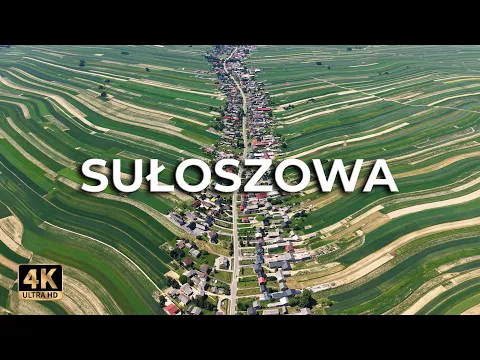

The organization helped distribute the land in a continuous and practical way, without requiring long distances between home and field.
The result is a landscape that is both functional and visually unique. Instead of a compact urban core surrounded by large plots, Sułoszowa presents a sequence of small agricultural strips that extend the village into the countryside.
Historical model helps explain the longevity of territorial organization
The persistence of this format over the centuries suggests that it survived not only by tradition but also by efficiency within the local context. By uniting housing and production on the same axis, the village reduces the distance between domestic life and agricultural work.
This integration helps explain why the layout persisted even with the economic and urban transformations of the 20th and 21st centuries. In Sułoszowa, the linear model still organizes daily life, access to properties, and the visual reading of the territory.
Therefore, the case of the village gained value not only as an internet curiosity but also as a concrete example of preserved historical landscape in operation.
Proximity to Ojców National Park enhances tourist interest
Besides the unusual territorial design, Sułoszowa also benefits from its proximity to Ojców National Park, one of the most well-known natural areas in the region. The park is about 16 kilometers north of Kraków, according to the official page of the Ojcowski Park Narodowy, and features trails, rock formations, and historical sites visited throughout the year.
Among the attractions in the area is the Pieskowa Skała Castle, located in Sułoszowa and administratively linked to the local tourist and historical circuit. The official page of the castle states that the site maintains visitation and presents its own heritage history, which enhances the tourist appeal of the region beyond agriculture.

This combination of preserved rural landscape and tourist surroundings helps explain why the village has started to attract attention far beyond Poland. It is not just a long street with aligned houses, but a territory where historical structure, productive field, and cultural heritage continue to coexist.
Sułoszowa became an example of how an old model still works in the present
The case of Sułoszowa shows that historical forms of land occupation can continue to function when they remain adjusted to the local context. The village draws attention not only for the aesthetics of aerial images but because it still operates within a spatial logic created centuries ago and maintained with a high degree of legibility.
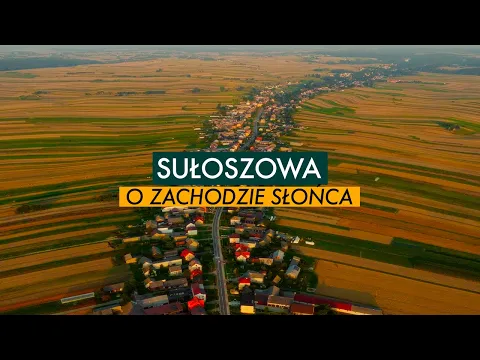
At a time when urban planning is often associated with diffuse expansion, dispersed neighborhoods, and spatial fragmentation, Sułoszowa appears as a rare example of extreme linearity combined with residential continuity and agricultural use. This makes the village a reference for those studying rural geography, historical urbanism, and territorial organization.
In the end, what made Sułoszowa famous was not just the curious image of a straight-line village. It was the perception that there survives, in a very clear and still functional way, an old model of occupation that the rest of Europe has largely transformed or lost.






Be the first to react!