






 Portuguese
  Spanish


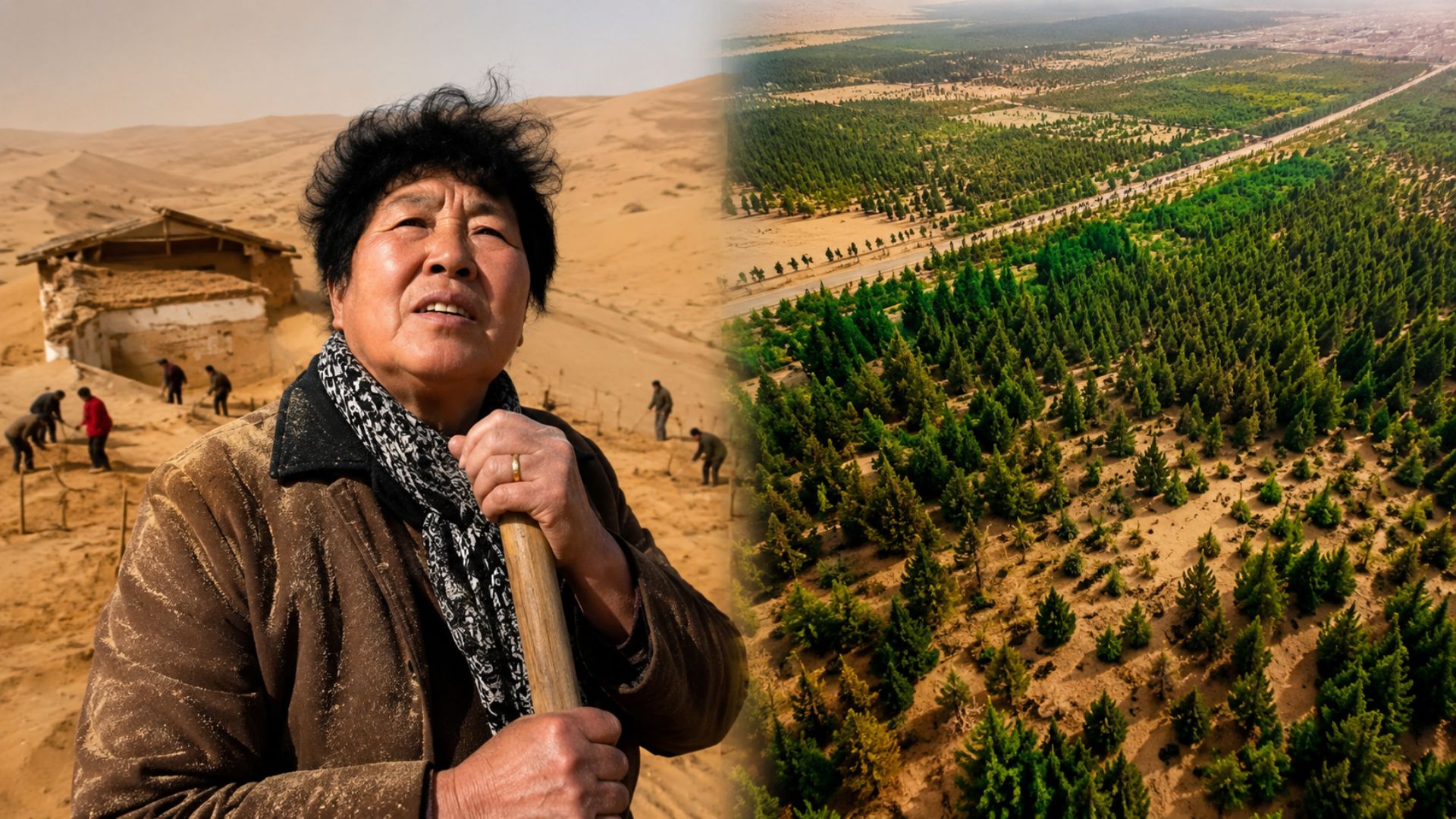


According to the state agency Xinhua, the Chinese woman Yin Yuzhen, now 60 years old, has been fighting against desertification in the sandy area of Maowusu for decades. The donation from American professor Ronald Sakolsky in 1999 funded more than 50,000 seedlings, and he plans to visit the forest in August.
The Chinese woman Yin Yuzhen, now 60 years old, spent decades planting trees against the desert that once buried part of her house in Inner Mongolia, northern China, and is now preparing to welcome American Ronald Sakolsky, whose donation helped transform sand into forest. The story was reported by the state agency Chinese Xinhua, which followed Yin’s journey on the outskirts of the Maowusu sandy area, the fourth largest in the country.
The reunion was born from an old gesture and a recent video. According to Xinhua, Sakolsky, who met Yin by chance while working as an exchange professor in China, donated $5,000 in 1999 to support reforestation, and the more than 50,000 seedlings planted with that money turned into a dense forest. Near her house, about 4,667 hectares, or 70,000 mu, of former desert were replanted with 8 million trees thanks to government action and the work of local residents, and, moved by a video Yin published, Sakolsky plans to visit the forest in August.
The decades-long fight of the Chinese woman against the sand
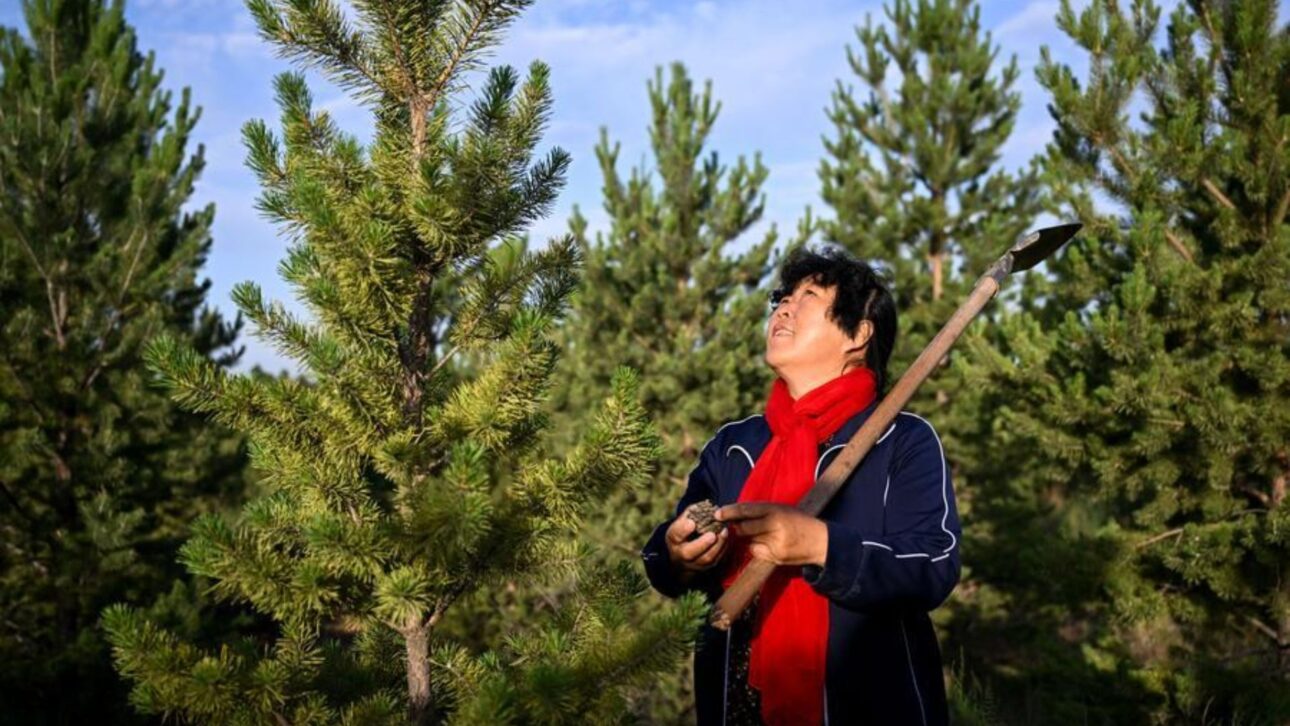
Long before any donation, the battle had already lasted years. The Chinese woman Yin Yuzhen had already spent more than a decade fighting desertification on the edge of the Maowusu sandy area, where sandstorms buried part of her house and seriously threatened her livelihood.
-
Abandoned warehouse hid a giant collection of rare computers, with over 2,000 artifacts from the 1930s to the 1980s.

-
Scientists warn that melting ice is triggering an alarming chemical transformation in preserved areas, and the first signs are already concerning researchers worldwide.

-
China placed 198 robotic legs under a 7,600-ton school and made the building walk 62 meters in 18 days, rotating the historic structure as if a concrete structure had gained feet to escape demolition.

-
Distributor confirms the premiere of ‘Dark Horse’, Bolsonaro’s film, in 650 cinemas with 99% of copies dubbed.



Her determination became a kind of personal motto.
“I prefer to wear myself out planting trees than let the sand defeat me”
, promised Yin, according to Xinhua, summarizing the persistence that would mark decades of work in Inner Mongolia.
The $5,000 donation that turned into a forest
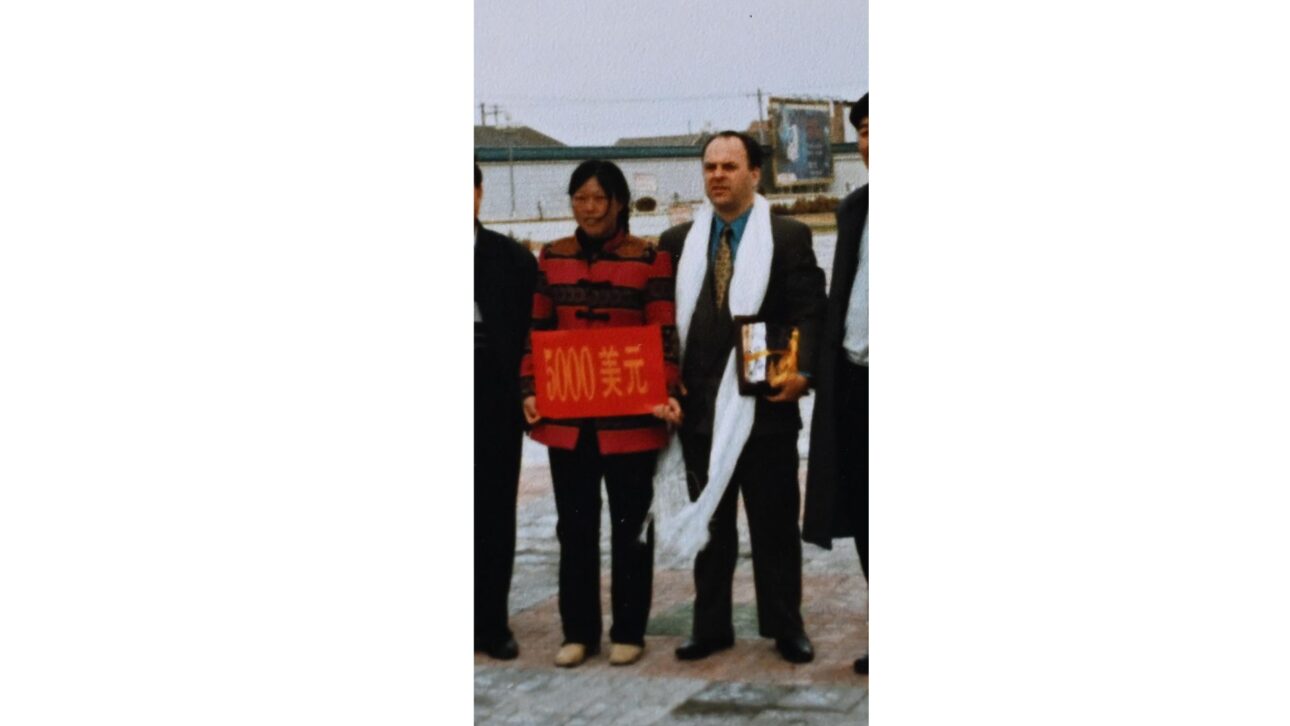
It was in this setting that American Ronald Sakolsky entered the story. He met the Chinese woman by chance while working as an exchange professor in China and, moved by the tree planting on the desert outskirts, donated $5,000 in 1999 to support the project. In gratitude, Yin sewed a pair of embroidered insoles overnight to gift the donor.
The money yielded much more than seedlings. The more than 50,000 trees planted with the donation grew and formed a dense forest that halted the advance of the sand. After coming across a video Yin posted last month to reconnect with him, Sakolsky decided to visit the forest with his children in August and, on Facebook, downplayed his own role,
“I am not the hero of this story”
, crediting the transformation to Yin.
8 million trees and the world’s largest reforestation
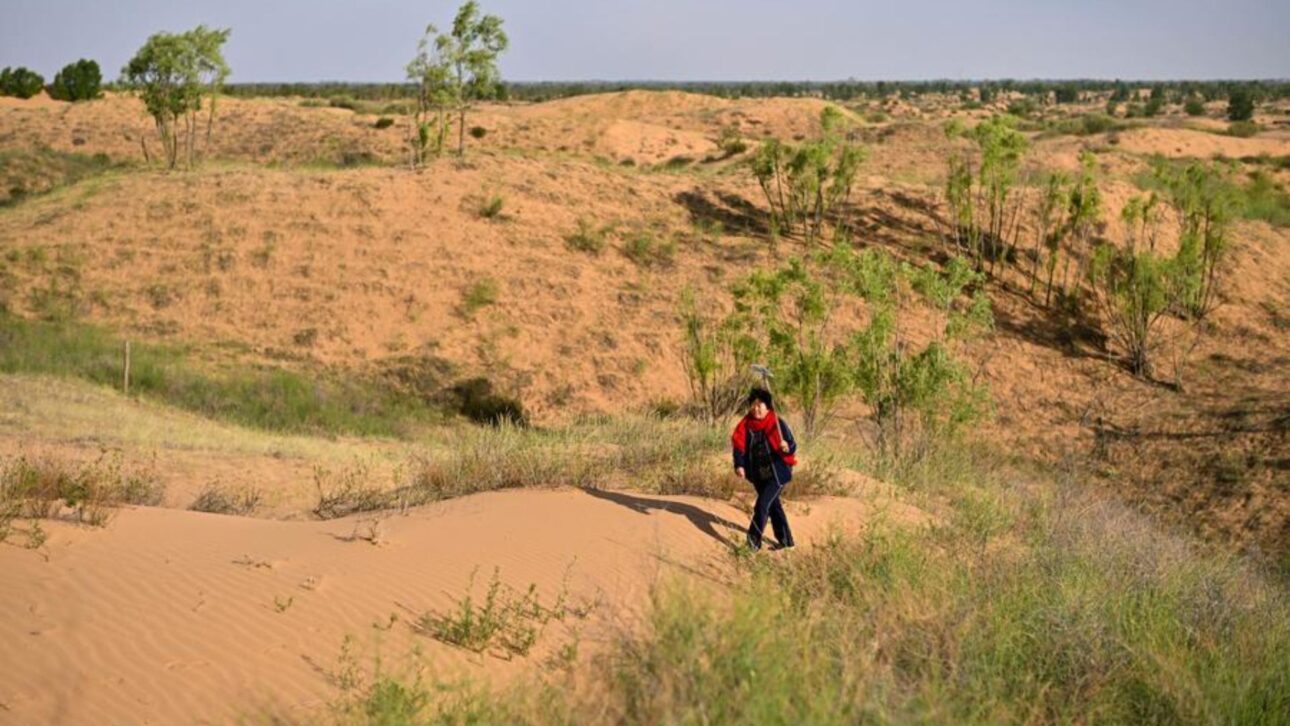
The work of the Chinese woman is just one chapter of a much larger effort. Near Yin’s home, about 4,667 hectares of former desert have been replanted with 8 million trees, the result of government action and the relentless work of local residents, according to Xinhua.
This planting is part of the largest reforestation project on the planet. The initiative is part of the Three-North Shelter Forest Program, launched in 1978 to combat desertification in northwest, north, and northeast China, and described as the world’s largest reforestation project, still ongoing. According to Xinhua, 53% of the country’s treatable sandy lands have already been effectively managed, and China presents itself as the first nation to achieve “zero growth” in land degradation.
The volunteers who join the campaign
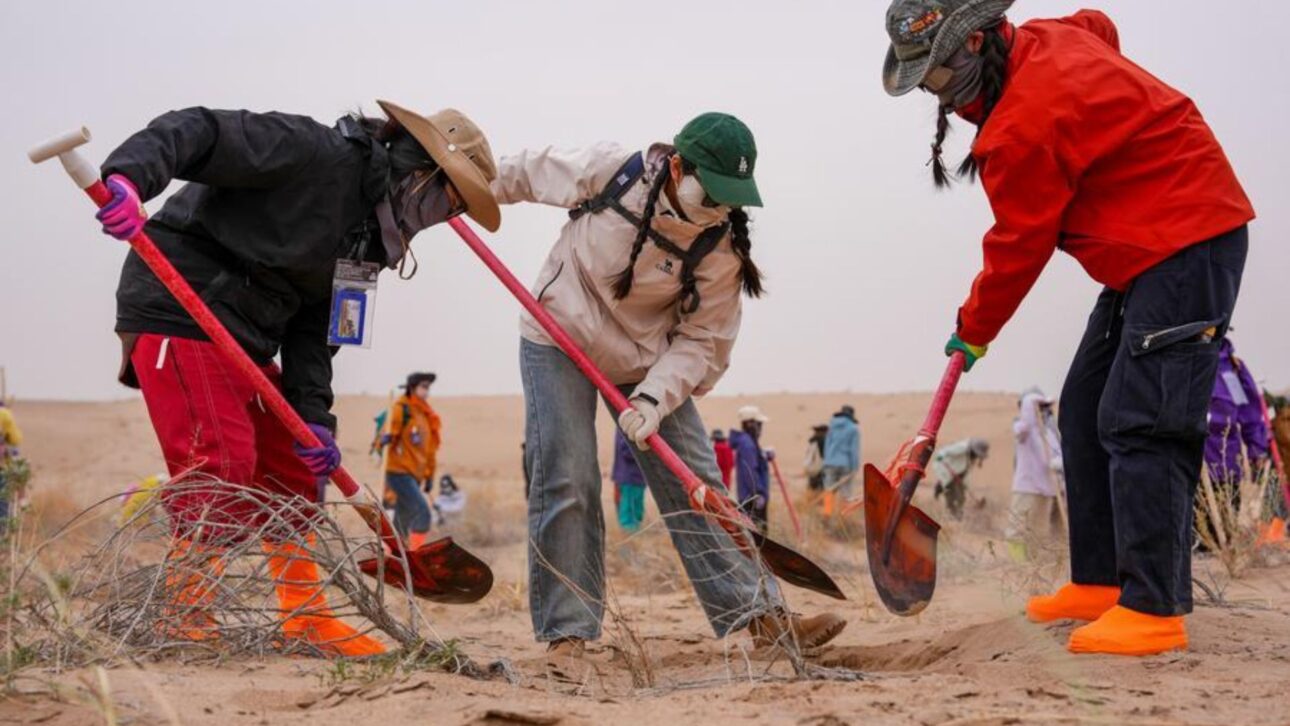
Besides dedicated farmers like the Chinese woman Yin, the campaign gained unexpected reinforcement. Chinese reforestation has begun to attract a growing number of environmentally conscious volunteers, especially young urban residents and international students.
A county in Gansu has become a symbol of this mobilization. In Minqin, forest coverage reached 18.28%, up from just 3% in the 1950s, and more than seven decades of continuous planting created a 380-kilometer strip of forest and grasslands that helped curb two major deserts. According to the local forestry department, more than 100,000 residents plant trees voluntarily every spring and autumn, and this year, a WeChat mini-program became an online registration hub for volunteers, linking digital tree adoption to field cultivation.
From Shanghai to France and Malaysia, young people plant in the desert
The story of the Chinese woman today echoes in those who travel from afar to plant in the desert. Since February, more than 30,000 people have gone to Minqin on their own for the “Plant a Tree in Minqin” campaign, about 80% of them university students and young professionals between 20 and 35 years old, alongside international volunteers.
The reports come from different corners of the world. Among them, French exchange student Marie Fitoussi summed up the collective spirit,
“united we can contain the sand and build a greener tomorrow”
. The office worker Zhu Wanyin, from Shanghai, exchanged beach vacations for tree planting, and See Thou Kai Ain traveled from Malaysia, by plane and bus, to participate; by 2025, according to the National Afforestation Commission, China had already created 3,071 online tree planting bases, which attracted more than 33 million visits.
The decades-long persistence of the Chinese woman Yin Yuzhen, who refused to let the sand swallow her home, became the human face of the fight against desertification in China, now able to attract volunteers from Shanghai, France, and Malaysia and the return of her American friend in August.
According to Xinhua and official data from the National Afforestation Commission, the country presents the campaign as the largest reforestation in the world and a contribution to global ecological governance. More than the statistics, the story of Yin and her forest of millions of trees shows how individual perseverance and collective effort can transform desert into green.
And you, what did you think of the story of the Chinese woman who turned desert into forest? Do you believe that examples like this can inspire restoration projects in other places? Share your opinion and exchange ideas with other readers about the environment, with respect for different views.





It is an effort worth commending owing the large scale coverage or hitherto barren space that has been covered with vegetation. We salute her and other global citizen’s making efforts to reverse desertification.
What an inspiration this lady is! A shameful pity that almost all politicians in the world care more about making themselves (and their cronies) even richer than the state of the planet.