Portuguese
  Spanish


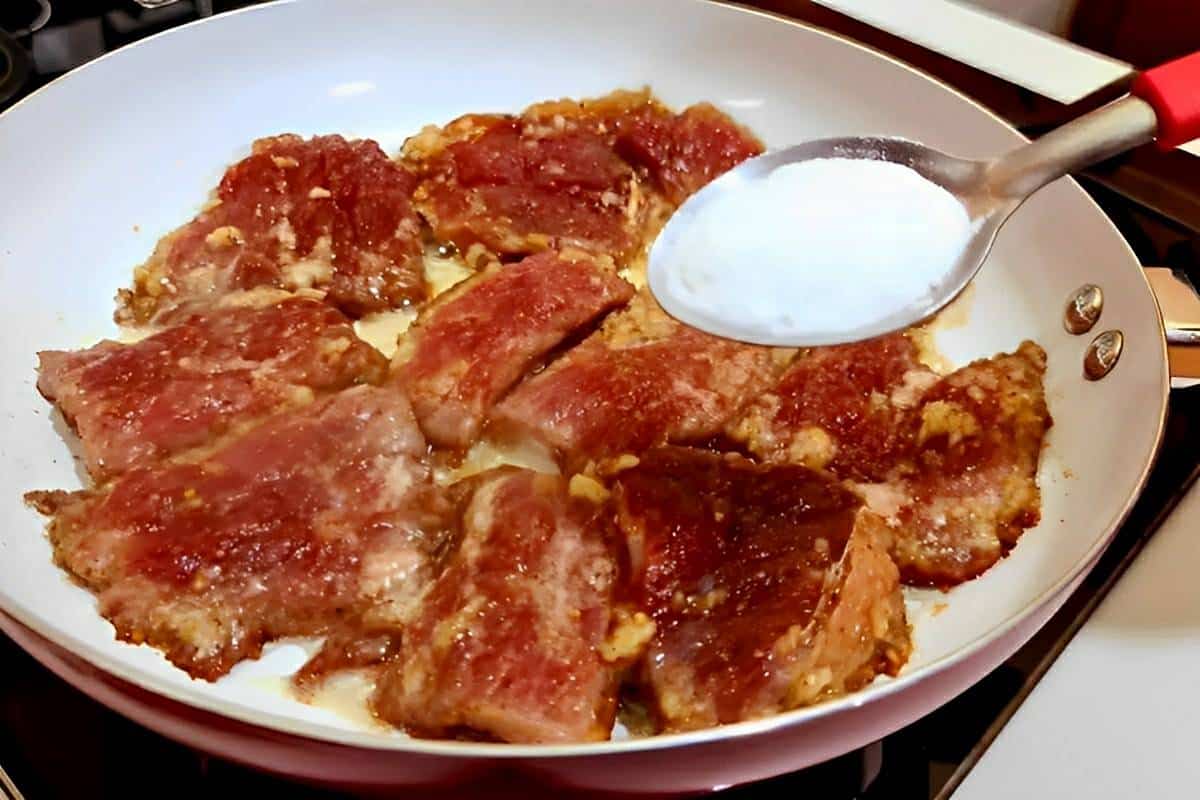

Tenderizing Meat with Baking Soda Is Real: Here’s How the Technique Works, the Necessary Cautions, and the Practical Recipe for Tough Cuts.
A viral video on social media reignited the debate about cheap and effective cooking hacks. Influencer and reality cooking show participant João Felippe showed how to use baking soda to tenderize meat, a practical solution for those seeking tenderness without investing in premium cuts.
The topic, which gained traction among Brazilians in September, raises questions: is this technique safe and really effective?
Why Use Baking Soda to Tenderize Meat?
The explanation lies in chemistry. Baking soda is an alkaline substance that, when applied to the surface of the meat, raises the local pH.
-
Adventurer Solo Climbs 20-Meter Giant Fig Tree in Costa Rica, Camped in Canopy, Explains Tree’s Unique Growth Strategy

-
Underground Fire Burns for Over 100 Years in New Zealand Forest Without Wood, Smoke, or Human Intervention

-
Brazilian Town Known for Its Steady Winds Impresses with Cutting-Edge Hospitals, Clean Air, and Peaceful Living Just Three Hours from São Paulo
-
Animal Thought Extinct for 130 Years Reappears in Brazil, Exciting Scientists with Rare Comeback


This process prevents excessive contraction of the fibers during cooking, resulting in softer cuts even in quick preparations like stir-fries or sautéed dishes.
According to João Felippe, the practice is especially useful for popular cuts like chuck, shoulder, tough round, and tender round — pieces that are tougher due to long fibers and connective tissue.
Luxury cuts, such as picanha and filet mignon, should not be subjected to the trick, as their tenderness is natural.
How to Apply the Technique Correctly
The method is simple but requires attention to proportions. Experts recommend 1 teaspoon of baking soda for every 500 grams of meat.
The mixture should be spread evenly over the piece, allowed to rest for 15 to 20 minutes, and then the meat needs to be washed under running water before being seasoned and prepared.
In the viral video, João also adds cornstarch and soy sauce to the preparation, creating a result that, according to him, gets the meat ready for dishes like stroganoff or diced meat.
The Risk of Overdoing It
Despite the positive results, excessive use can compromise the recipe.
If the meat is left in contact with baking soda for too long or if the measurement exceeds the recommendation, the texture can become spongy and unpleasant.
Moreover, without proper rinsing, the residual taste of the product can take over.
The chef himself warns: “The ideal would be for stewed dishes, like a diced meat. This way, you don’t risk ruining the meat.”
Tender Meat Without Breaking the Bank
The trick of tenderizing meat with baking soda is seen as an affordable alternative during times of high prices at butcher shops.
While premium cuts are expensive and reserved for special occasions, using the technique democratizes the experience of eating well, with quality and without high costs.
“The reality is that it’s not always possible to invest in a prime cut.
The important thing is to know how to extract the most flavor from the ingredient you have,” reinforces João Felippe.
Quick Recipe to Test at Home
- Mix 1 teaspoon of baking soda in 50 ml of water.
- Add it over 500 g of meat and let it sit for 15 minutes.
- Wash the meat and season to taste.
- If desired, add 1 tablespoon of cornstarch to enhance tenderness.
- Cook normally.
The use of baking soda to tenderize meat is not a myth: the technique works, but it should be applied with moderation and knowledge.
More than a kitchen trick, it’s a tool that can transform simple cuts into flavorful meals, ensuring savings without compromising the ideal texture.