






 Portuguese
  Spanish


Germany’s project drills 9,101 meters of the crust and reveals extreme temperature, pressurized fluids, and unexpected behavior of the Earth’s crust.
Between 1987 and 1995, the German scientific program German Continental Deep Drilling Programme (KTB) conducted, in Windischeschenbach, Bavaria, one of the most ambitious attempts at direct exploration of the continental crust ever undertaken. Funded by the Federal Republic of Germany, the project was designed to investigate in depth the structure, stresses, fluids, and geological evolution of the continental Earth’s crust with an unprecedented level of precision for the time. By the end of the operation, the main well reached 9,101 meters deep in October 1994, after 1,468 days of drilling, becoming the deepest point ever drilled in Germany and one of the most extreme scientific accesses ever obtained in the continental crust.
According to the GFZ Helmholtz Centre for Geosciences, in a note published on November 4, 2024, the KTB was the first major national geoscientific project in Germany and remained a global reference in deep scientific drilling.
The operation took about eight years of continuous drilling, including preliminary phases and the main well, establishing itself as one of the largest geoscience experiments ever conducted outside the industrial context.
-
13-Year-Old Raises Funds to Build Well, Transforming Lives in Cambodian Community Lacking Clean Water

-
Man with Metal Detector Finds Medieval Silver Seal in England, Uncovers 2,000-Year-Old Roman Gem with ‘Richard’s Secret’

-
Thailand Converts 8 Tons of PET Bottles into 3,500 School Backpacks, Showcasing Circular Economy with Over 40 Factories Involved

-
Mysterious Bats Spotted in Paris’s Père Lachaise Cemetery, Drawing Tourists to the “Vampire Cemetery”




Temperature reached 265 degrees and exceeded initial scientific predictions
One of the first shocks faced by scientists was the thermal behavior of the crust. The geological models used before drilling indicated that the temperature would increase more gradually with depth. However, as the drill advanced, the sensors recorded a much faster increase than expected.
At the final depth of 9,101 meters, the temperature reached approximately 265°C, a value significantly higher than initial expectations.

This result forced a revision of theories about the thermal gradient of the continental crust and imposed technical limits on the advancement of drilling, as higher temperatures directly compromise the resistance of the equipment.
From this point, it became clear that the deep Earth crust is much hotter and more dynamic than traditional models indicated.
Unexpected presence of fluids and gases revealed highly permeable crust
Another result considered revolutionary was the presence of large volumes of fluids and gases at extreme depths. The scientific expectation was that, under high pressures and temperatures, the rocks would behave as more compact and sealed structures. However, what researchers found was the opposite.
During drilling, significant flows of fluids circulating through deep fractures were identified, as well as the release of gases from the rocks.
Experiments conducted inside the well demonstrated that these rock formations were porous and interconnected, allowing fluid movement at much greater depths than previously thought possible.
This finding showed that the crust is not a rigid and impermeable block, but rather an active and permeable system even at kilometers of depth.
Rocks were not static and showed dynamic behavior under pressure
Another unexpected aspect observed in the KTB was the mechanical behavior of the rocks. The dominant theory predicted that, at great depths, the rocks would become essentially static due to extreme pressure. However, the collected data indicated that these formations were far from passive.
The rocks showed signs of movement, deformation, and structural reconfiguration, influenced by tectonic pressures and the presence of fluids.
“`html
In addition, measurements indicated that the crust in that region was under active tension, with continuous tectonic forces acting on the material.
This reinforced the idea that the deep continental crust remains geologically active, even far from the surface.
Experiments confirmed the presence of connected fractures and large-scale fluid circulation
During the project, fluid injection tests and seismic monitoring were conducted within the well. These experiments demonstrated that different depths were connected by fracture networks, allowing fluids to circulate between distant layers.

The results indicated that there was hydraulic communication between regions located between 3,000 and 6,000 meters deep, confirming the existence of an interconnected system within the crust.
This discovery had a direct impact on the understanding of phenomena such as earthquakes, plate movement, and heat transport within the Earth.
Collected seismic data changed the interpretation of reflections in the deep crust
The KTB also played a key role in the reinterpretation of seismic data. Before the project, many of the structures identified by seismic waves were interpreted as boundaries between different types of rock. However, direct measurements showed that these reflections could be caused by other factors.
Among them are:
- Presence of fluids in fractures
- Pressure changes
- Differences in mineral composition
- Complex tectonic structures
This led to a profound revision in the way geologists interpret seismic data on a continental scale, impacting studies in various regions of the world.
KTB drilling required the development of technology capable of operating in extreme conditions
The execution of the KTB required significant advances in engineering. The conditions encountered during drilling included:
- Temperatures exceeding 250°C
- Extremely high pressures
- Structural instability of the well
- High friction at great depths
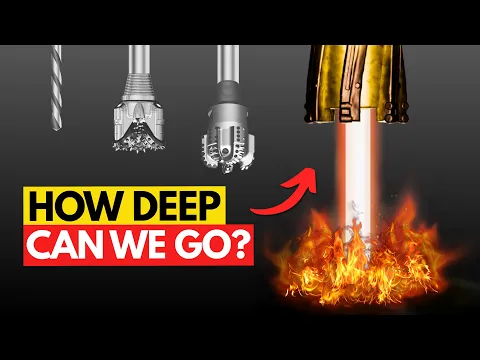

To deal with these challenges, specific equipment was developed, including heat-resistant drills and measurement systems capable of operating in extreme environments.
These innovations directly influenced technologies used later in the oil and gas industry and in international scientific projects.
The KTB project became a global reference in deep scientific drilling
The success of the KTB established the project as a global reference. It served as a basis for subsequent initiatives, such as the International Continental Scientific Drilling Program (ICDP), created in 1996 to coordinate scientific drilling projects in different parts of the world.
In addition, the drilling site began to function as a geophysical observatory, allowing for continuous studies on the behavior of the Earth’s crust.
The KTB ceased to be just an isolated experiment and became a permanent landmark in geological science.
Discoveries challenged fundamental concepts about the continental crust
The set of results obtained from the project led to the revision of several established theories. Before the KTB, the deep crust was often described as:
- Rigid
- Static
- Impermeable
- Thermally predictable
After drilling, it became clear that this view was overly simplified. The data showed that the crust is:
- Dynamically stressed
- Permeable to fluids
- Thermally more complex
- Structurally active
These conclusions altered the foundation of various geological models used to this day.
Physical limits prevented advancement beyond 9,101 meters
Despite the success, the project was unable to reach greater depths. The increase in temperature and the associated technical difficulties made it unfeasible to continue drilling beyond 9,101 meters.
From that point, the cost and operational risk increased significantly, leading to the closure of the main phase of the project in 1995.
This limit revealed that, even with advanced technology, the direct exploration of the Earth’s interior still faces significant physical barriers.







This radically changes perspective about the earth’s crust and reveals limits to which the crust could be explored. Personal impression is that being able to push the project to 9,101 meters is ground breaking considering the hostile nature due to extreme temperature and pressure as well as the variable and porous nature of the rock at depth.