






 Portuguese
  Spanish
  2 min of reading
  6 comments


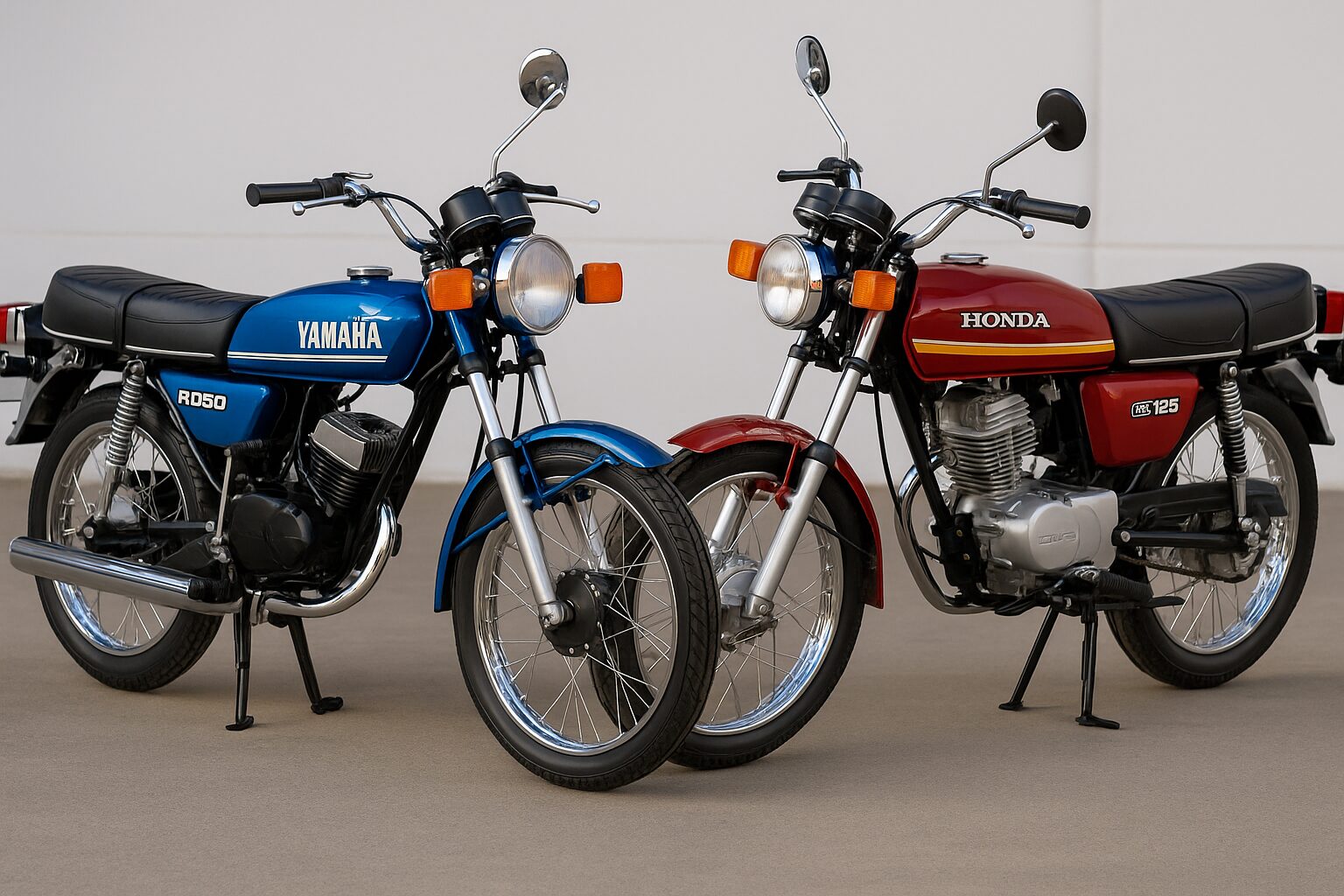

Yamaha Was The First To Manufacture Motorcycles In Brazil, But Honda Conquered The Leadership With Speed And Strategy, Marking One Of The Biggest Rivalries In The Sector
When it comes to motorcycles in Brazil, two names dominate the conversation: Yamaha and Honda. However, contrary to what many believe, it was not Honda that took the first steps in the country. History shows that Yamaha was ahead, being the first to manufacture motorcycles on Brazilian soil. This long-standing rivalry still drives the market and keeps the competition between these two giants alive.
Yamaha: The First Motorcycle Factory In Brazil
Yamaha was the pioneer. On October 10, 1974, the company opened its first factory outside Japan, located in Guarulhos, São Paulo.
With this, it began the national production of motorcycles. That same year, it launched the famous RD 50, nicknamed “cinquentinha,” which marked the start of the era of motorcycles manufactured in Brazil. Yamaha’s arrival represented an important advance for the two-wheeled sector in the country.
-
Driver’s license at 16, driving limit after midnight, and autonomous cars in Brazil: a bill that changes the Traffic Code advances in the Chamber and could transform the routine of young people, drivers, and new technologies on the streets

-
He bought a Toyota for R$ 14,000 in 1990, did all the maintenance himself for 40 years, and the car has already driven over 1.2 million kilometers without stopping, but the odometer only shows 253,000 because there is no space for the digit “1”.

-
Three doors, concept look, and FIPE value of R$ 62,524: The 2013 Hyundai Veloster delivers a 1.6 engine with 140 hp, a 6-speed automatic transmission, and a design that still seems too strange to go unnoticed.
-
A Land Rover that used to do 1.8 km per liter now does 8 km per liter after a 34-year-old Kenyan engineer installed an ECU he designed himself, which is already being ordered from Zambia, Canada, and Pakistan.

Honda: Discreet Arrival, But With Vision For The Future
Honda arrived in Brazil three years before Yamaha, in 1971, but started in a more discreet manner, only importing motorcycles.
It was only in 1976 that it decided to produce locally. The factory was established in Manaus, Amazonas. There, the CG 125 was born, the first motorcycle of the brand made in Brazil. The model quickly became popular with Brazilians and had enormous sales success.
Leadership With Speed
Even starting later in local production, Honda quickly surpassed the competition. The CG 125 became the best-selling motorcycle in the country, strengthening the brand’s presence among consumers.
Over the years, the company expanded its line of models and spread throughout the national territory. Today, Honda is the undisputed leader in the Brazilian motorcycle market, with millions of units produced and sold.
Rivalry And Respect
Honda advanced with speed and efficiency, but Yamaha has never ceased to be a respected competitor. Even without achieving leadership, it maintained its strength in the market, focusing on innovation, technology, and design.
Both companies remain side by side in the imagination of Brazilians passionate about motorcycles. Each with its identity, its history, and its loyal audience.
Despite different trajectories, Yamaha and Honda have established themselves as symbols of the culture of two wheels in Brazil.
Yamaha earned the title of pioneer in production, while Honda dominated the market with impressive numbers. The rivalry between the brands continues to spark debates among fans and shows how this competition has helped shape the motorcycle sector in the country.




O **** vai torar.
Lula l@drã0 de aposentados
A Yamaha teve que desenvolver todo uma estrutura de fornecedores nacionais de velocímetro a selins de fato era uma montadora nacional.
Eu sei meu irmão foi peça chave nesse desenvolvimento – conheci a planta de Guarulhos na terraplanagem.
A Honda se aproveitou dos incentivos fiscais da zona franca de Manaus, na verdade por anos apenas montou motos vindas do Japão.
A primeira 750 foi um sucesso 100% importada, as seguintes foram se nacionalizando e perdendo qualidades.