






 Portuguese
  Spanish


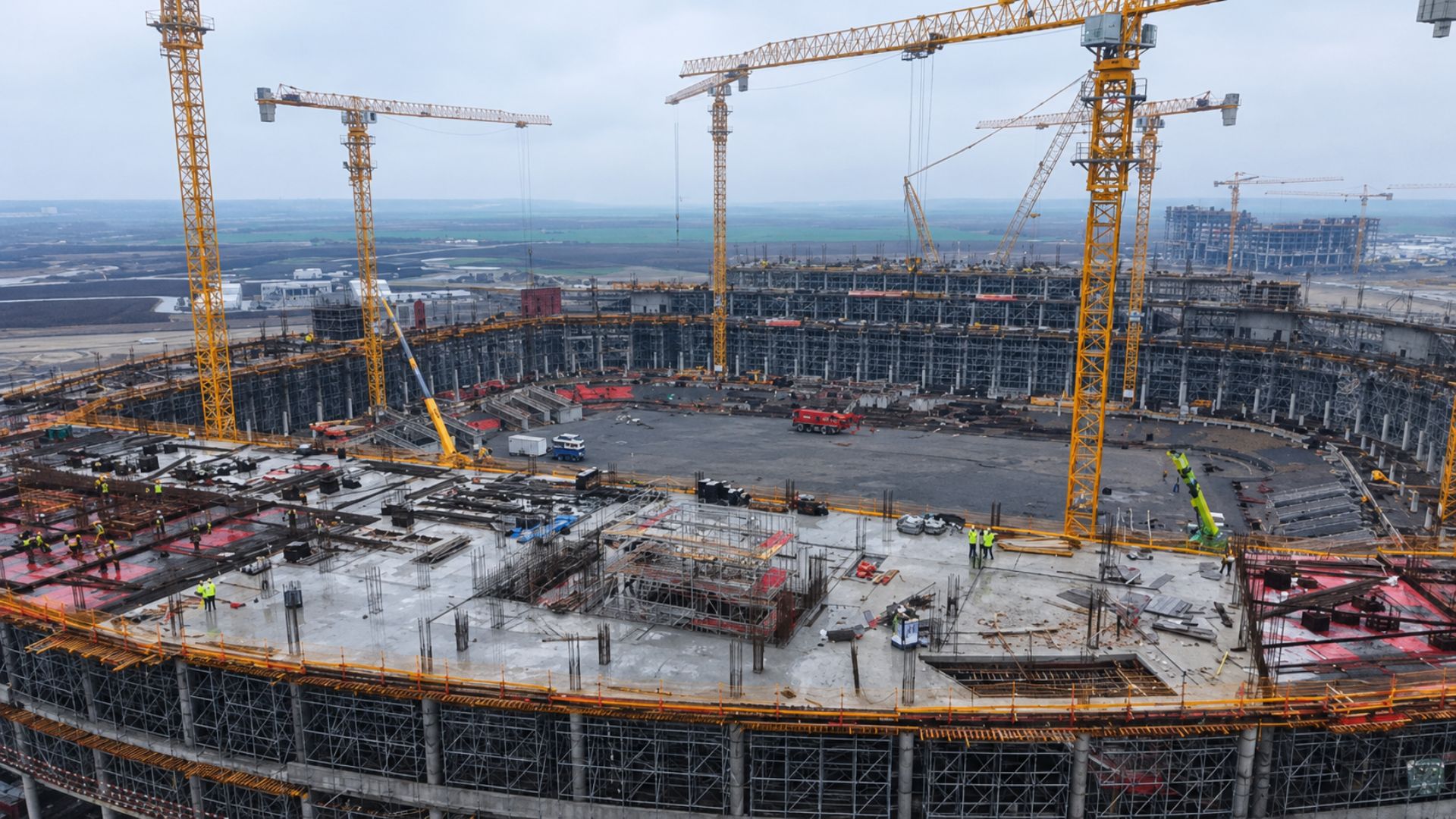


A Chinese state-owned company has completed the first lifting of the steel structure of Serbia’s National Stadium, which will be the world’s first garden stadium. According to information released by the NSC portal, the arena, located in Belgrade, will have 52 thousand seats, 76 thousand square meters of total area, 12.6 thousand tons of steel, and four rings of gardens suspended by cables that will make the terraces appear to float around the arena, in a project worth R$ 6 billion with completion expected by the end of 2026.
The project is being executed by the China State Construction Engineering Corporation (CSCEC), a Chinese state-owned company responsible for the design, manufacturing, and installation of the stadium’s steel structure. The groundbreaking ceremony took place on May 1, 2024, on Labor Day, and the first lifting of the metal structure was recently completed, instead of a conventional concrete or glass facade, the arena will have four giant rings composed of gardens and leisure areas supported by a complex network of steel cables, in a suspension engineering considered unique in the world. Why Serbia is investing R$ 6 billion in this project: the country does not have any stadium that simultaneously meets the standards of the FIFA World Cup and UEFA continental competitions, and the arena will be the new home of the Serbian national football team.
The project was debated for more than a decade before construction began. Discussions started in 2013 with an initial estimate of 250 million euros, but the final cost reached about 1 billion euros (R$ 6 billion), financed by the Serbian government. The stadium is being built in the suburb of Surčin, in Belgrade, a decision made in 2018 after years of uncertainty about the location.
Gardens suspended by steel cables: what makes this stadium unique

The major differentiator of the Serbia National Stadium is the suspension engineering that supports its four rings of gardens. Instead of a conventional facade, shrubs and trees will be planted on each terrace, transforming the stadium into a vast vertical garden that surrounds the entire arena. These terraces are not supported by traditional pillars: they are sustained by a complex network of steel cables that creates the illusion that the gardens are floating around the structure.
-
Brightline to Connect Los Angeles and Las Vegas in Two Hours with the First U.S. Electric High-Speed Train, a $12 Billion Project Aiming to Reduce Road Traffic

-
Brazilian Students Develop Hurricane-Resistant, Ultra-Light Concrete for Modular Homes to Aid Homeless Youth

-
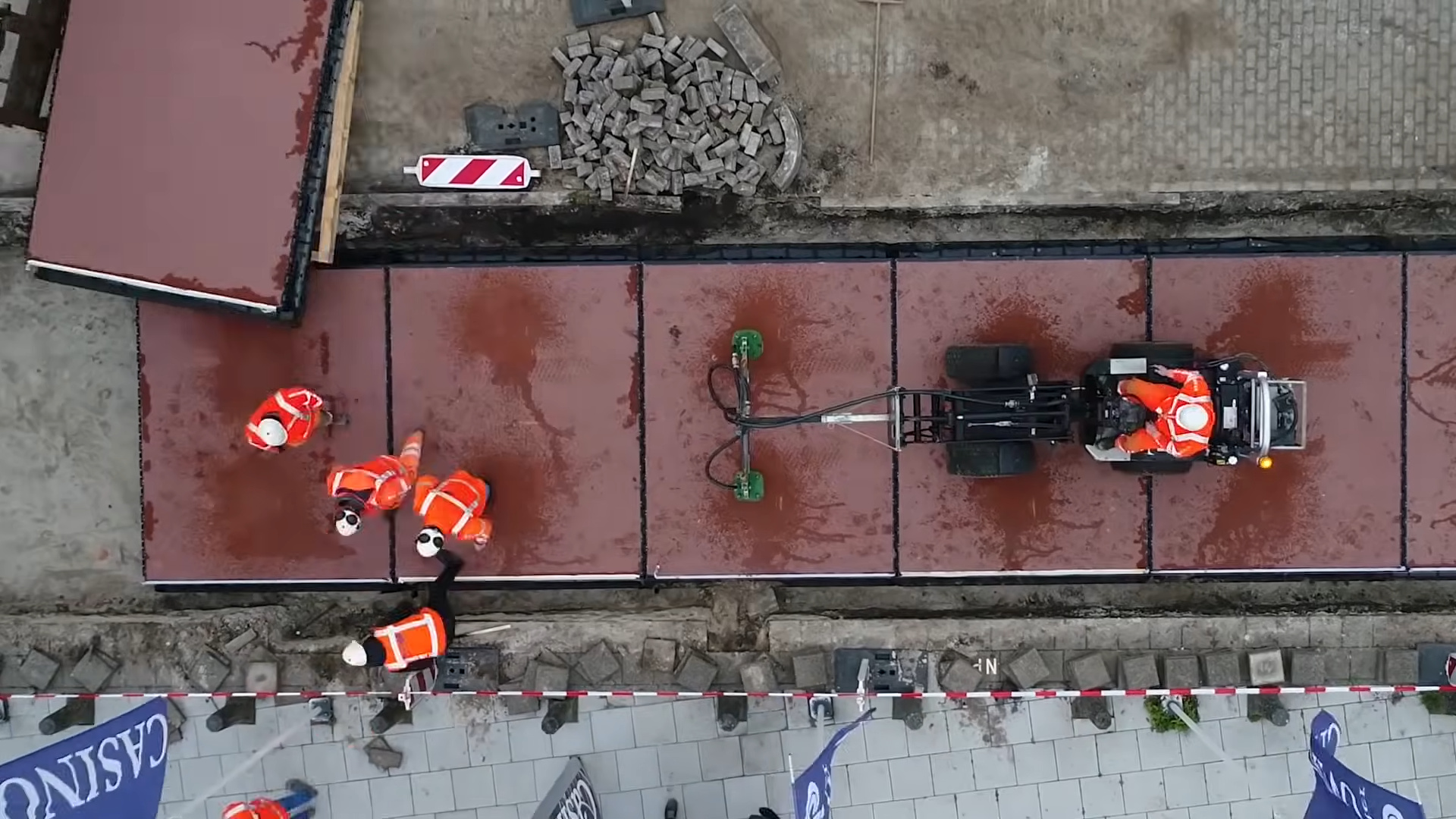
Netherlands Builds Road from 218,000 Recycled Plastic Cups and 500,000 Bottle Caps, Featuring Smart Sensors and Promising Triple the Lifespan of Traditional Asphalt

-
Brazil to Convert 80 Public Properties into 11,000 Affordable Homes Across 44 Cities to Address Housing Shortage




This design is considered one of the few of its kind in the world and justifies the high cost of the project. The combination of live vegetation, metal structure, and suspension cable system requires engineering calculations that take into account not only the weight of the steel structure but also the weight of the soil, irrigation water, and plants that will grow over the years. A conventional stadium with 52,000 seats costs a fraction of the R$ 6 billion estimated for this project. The difference lies entirely in the complexity of the engineering that transforms a sports arena into the first garden-stadium on the planet.
12.6 thousand tons of steel and 76 thousand square meters

The structural numbers of the stadium are impressive in scale. The arena will occupy a total area of 76 thousand square meters and will incorporate approximately 12.6 thousand tons of steel in its structure, a volume that includes the supporting beams, the suspension cables of the terraces, and all the metal framework of the roof and stands. The first lifting of the steel structure, recently completed by CSCEC, marks the beginning of the phase where the stadium starts to take visible shape.
For comparison, the Mané Garrincha Stadium in Brasília, whose circular structure is often compared to the Serbian project, has a similar shape but does not feature suspended gardens. The Serbian stadium goes beyond the Brazilian reference by adding the vegetal dimension to the metal structure, creating a hybrid between civil engineering and landscaping on a scale that no sports arena has experienced before.
The Chinese company behind the construction
China State Construction Engineering Corporation (CSCEC) is one of the largest construction companies in the world and is responsible for the design, manufacturing, and installation of the stadium’s steel structure. Power Construction Corporation of China (PowerChina) also participates in the project as the main contractor, consolidating the presence of Chinese state-owned companies in Serbia’s largest sports infrastructure project. For China, building the stadium in Belgrade is another chapter in the engineering export strategy that Beijing executes in dozens of countries.
The choice of Chinese construction companies for a project worth R$ 6 billion financed by the Serbian government reflects the economic influence that China exerts in the Balkans. Loans, infrastructure investments, and commercial partnerships have been bringing Serbia closer to Beijing in recent years, and the garden stadium is the most visible manifestation of this relationship. For Serbia, which is not part of the European Union, Chinese financing offers an alternative to European funds that come with political requirements that Belgrade does not always accept.
From 2013 to 2026: the decade it took for an idea to become a stadium


The construction of the National Stadium of Serbia was first debated in 2013. At the time, the estimate was 250 million euros, and it was not defined whether the arena would be new or a renovation of existing facilities of one of the country’s two biggest clubs, Red Star or Partizan. The indecision lasted five years until in 2018 the government decided that the stadium would be built from scratch in the suburb of Surčin.
The project did not advance as quickly as announced, and the COVID-19 pandemic further delayed the schedule. The groundbreaking ceremony only took place on May 1, 2024, more than six years after the decision on the location. The cost jumped from 250 million to 1 billion euros over this period, reflecting both the inflation in construction materials and the complexity of the design that transformed the stadium from a conventional arena into the world’s first garden stadium.
What the stadium will represent for Serbian football
When completed, the stadium will be the only arena in Serbia to simultaneously meet the standards of the FIFA World Cup and UEFA competitions. With 52,000 seats, the capacity is sufficient to host group stage matches and even quarter-finals of international competitions, which opens up the possibility for Serbia to host Euro Cup games or participate in joint bids for World Cups.
The arena can also be used by local clubs in European competitions or during the classic between Red Star and Partizan, two of the biggest rivals in Serbian football, whose current stadiums do not fully meet UEFA’s requirements for advanced stages of the Champions League. For the Serbian national team, the stadium will be the permanent home for home games, replacing temporary solutions that the country used until now.
A stadium that is a garden and a project that still needs to become a reality
The National Stadium of Serbia will have 52,000 seats, 12.6 thousand tons of steel, four rings of gardens suspended by cables, and a cost of R$ 6 billion financed by the Serbian government and built by Chinese companies. The first steel structure has already been hoisted, and the forecast is that the project will be completed by the end of 2026. If the schedule is met, Serbia will have the first garden-stadium on the planet and the only arena in the country meeting World Cup and UEFA standards.
Would you like to see a garden-stadium in Brazil? Tell us in the comments what you think of the Serbian project, if the comparison with Mané Garrincha makes sense, and how you evaluate the investment of R$ 6 billion in a sports arena with floating gardens. We want to hear your opinion.




Good Idea, beautiful things are done with money
Great ideas by combining nature with the beautiful game. Money well spent. The money is not used to manufacture weapons to destroy God’s children. Bravo 🇷🇸.
It simply crazy.