






 Portuguese
  Spanish


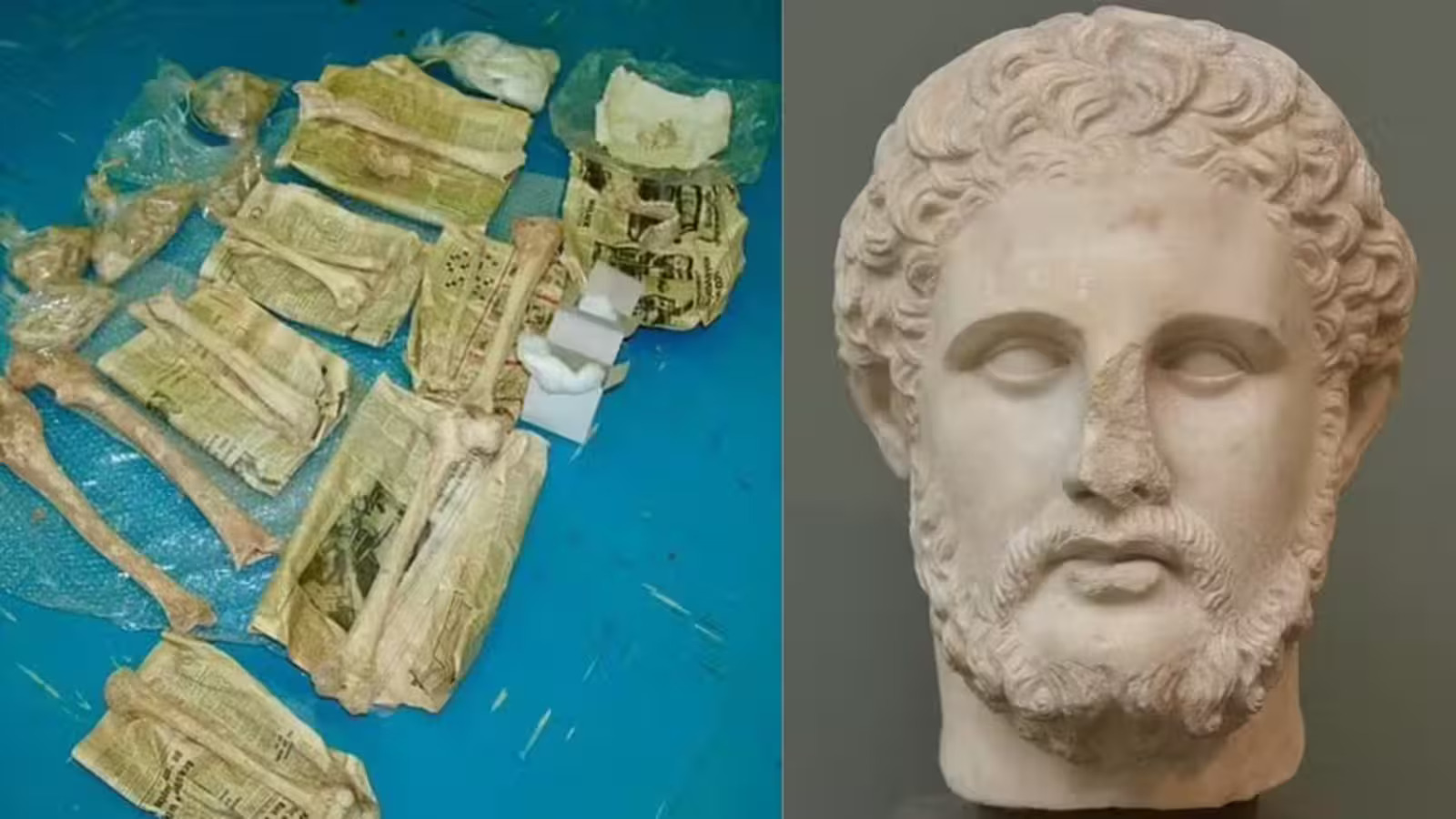


Identification of the royal tombs in Vergina confirms Philip II, Philip III Arrhidaeus, and Alexander IV, reorganizing the history of the Macedonian dynasty linked to Alexander the Great after nearly five decades of archaeological debate
Identification of the royal tombs in Vergina confirms that Tomb I holds Philip II, father of Alexander the Great, his wife Cleopatra, and an infant, closing an archaeological doubt open since 1977 in ancient Aigai.

Royal tombs close a nearly five-decade-long doubt
The ancient city of Aigai, in Vergina, Greece, returned to the center of archaeology after the definitive identification of the occupants of the royal tombs. The site was discovered in 1977 by Greek archaeologist Manolis Andronikos.
Since then, the exact identity of the buried monarchs remained an academic issue. The new investigation brought together an international team to examine biological signs preserved in the remains of the Macedonian dynasty.
-
World Cup Ball Chip Uses Technology to Detect Invisible Touches, Confirms Offside, Secures Portugal’s Victory Over Croatia

-
36-Meter Hydrogen-Powered Superyacht Arrives in Brazil to Debut German Engines and Showcase Future of Clean Navigation

-
Indian Students from Jaipur Win Top Prize at World’s Largest Science Fair with EcoFog, an Affordable Mesh to Harvest Fog Water Without Energy

-
Italy Sinks Massive 11-Story Concrete Structures in the Ligurian Sea to Create a 6.2 km Barrier, Clearing the Way for 400-Meter Ships in Genoa



The work was led by Antonis Bartsiokas, professor of anthropology at the Democritus University of Thrace, Greece. The team used X-rays and high-precision forensic dissections to analyze the bones.
The technical investigation, published in the Journal of Archaeological Science, confirmed that Tomb I houses the remains of Philip II of Macedonia, a central figure before the rise of Alexander III.
Philip II was identified by the knee injury
The decisive data for identifying Philip II was evidence of a bone fusion in the knee. The mark is consistent with historical records of his severe limp following a war wound.
Philip II was the father of Alexander the Great and is presented in the material as responsible for the political and military transformation of Macedonia. He unified city-states into a power capable of sustaining later expansion.
His violent death occurred in 336 BC and paved the way for Alexander’s rise to the throne. Alongside him, researchers also identified Cleopatra and an infant.
The presence of these remains in Tomb I connects the burial to the succession politics of the Macedonian dynasty. The biological confirmation concludes a central part of the debate initiated with the site’s discovery.

Tomb II belongs to Philip III Arrhidaeus
Tomb II, for years associated by some researchers with Philip II, was attributed to Philip III Arrhidaeus, half-brother of Alexander. The revision separates the two kings within the funerary complex.
Arrhidaeus was buried with his wife, the warrior queen Adea Eurydice. The material indicates that marks on the bones suggest a life linked to intense physical activities and power rituals.
This identification reorganizes the reading of the royal tombs and gives new weight to the distribution of the occupants within the funerary ensemble. Arrhidaeus’ burial appears as part of the material record linked to Macedonian power.
Tomb III holds Alexander IV
Tomb III was identified as the burial site of Alexander IV of Macedonia, heir son of Alexander the Great. The young man appears in the material as a victim of the Macedonian court disputes.
With this attribution, the funerary complex now gathers three generations linked to Alexander’s lineage. Philip II, Philip III Arrhidaeus, and Alexander IV form a set of strong historical and archaeological importance.
The case shows how forensic archaeology can answer questions left open for decades. In the royal tombs, the comparison between historical data, osteological analysis, and modern techniques allowed closing gaps about the burials.

Science helped reorganize Vergina
Bartsiokas’ team combined scientific methods to interpret evidence preserved under layers of dust and silence of millennia. The goal was to decode biological signals in the remains of the Macedonian royal family.
The confirmation of Tomb I as the burial site of Philip II concludes a debate of almost half a century. It also rearranges the other tombs, attributing Tomb II to Arrhidaeus and Tomb III to Alexander IV.
Philip II appears at the center of this process due to his direct connection with Alexander and his role in the formation of the Macedonian power. His identification reinforces the importance of the knee injury as forensic evidence.

The discovery also raises questions about the Macedonian succession and the place of each character within Aigai. Even so, the current data offers an objective answer about the occupants of the royal tombs.
In Vergina, forensic archaeology transformed remains into historical evidence. The result returns names to the burials, corrects old attributions, and consolidates Aigai as an essential setting for understanding the dynasty linked to Alexander the Great.
With information from O Cafézinho.





God bless u didn’t find the tomb 🙏 🙌
How was Alexander 4 assassinated please tell the whole story
By cassander, long time rival to alexander the great, he was ruler in macedon after alexanders death, whilst alexanders son was still young