Portuguese
  Spanish


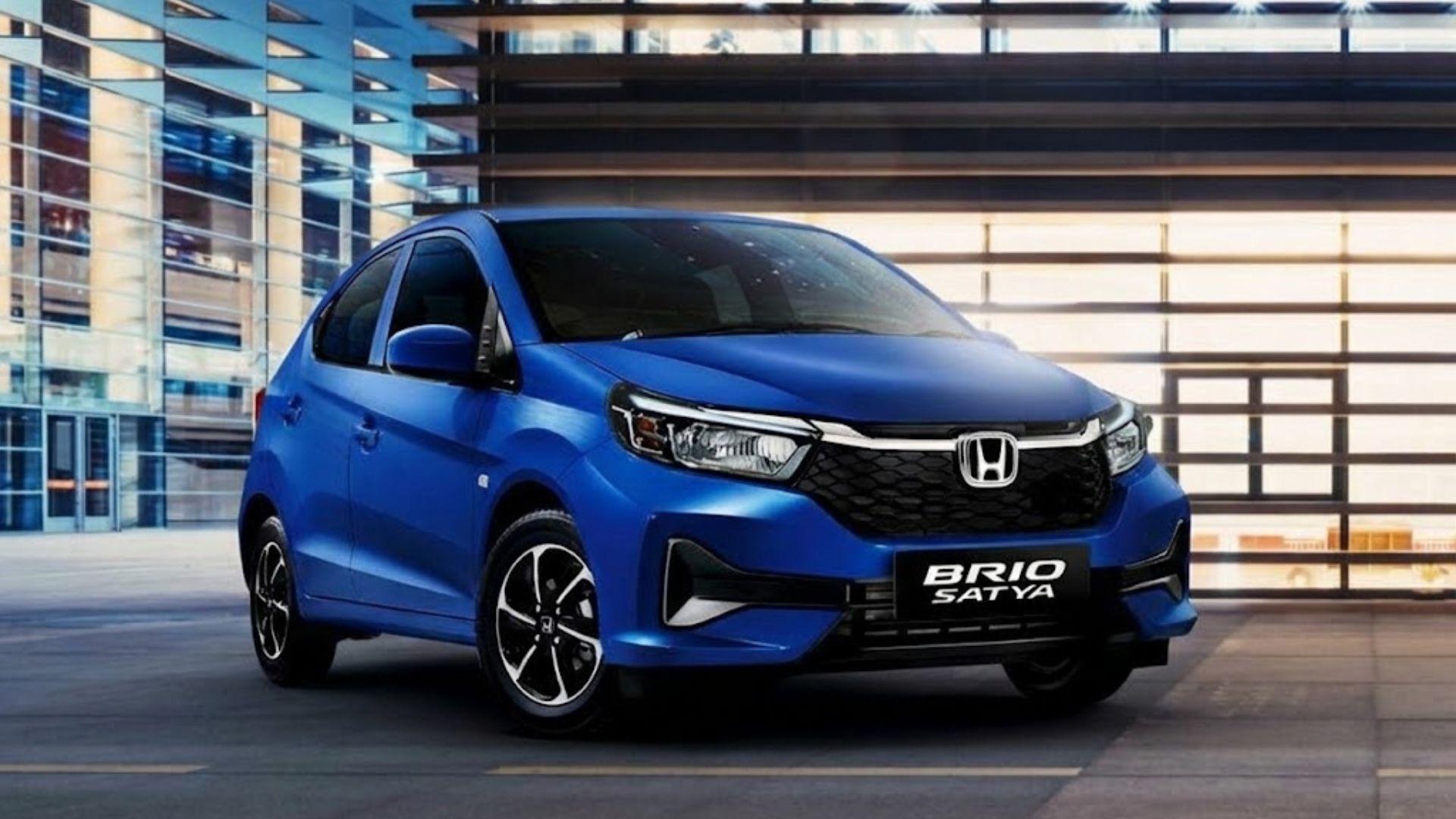

Automatic urban hatch from Honda sold in Indonesia draws attention for its converted price, simple mechanics, and contrast with the Brazilian market, where new compact models have become more expensive and the brand does not offer an equivalent entry-level car.
Honda has started offering in Indonesia the Brio Satya S CVT 2026, a new automatic entry-level configuration of the urban hatch that expands the line with a 1.2 four-cylinder engine, CVT transmission, and a price equivalent to about R$ 57,000 in direct conversion.
According to Honda Indonesia and KatadataOTO, the official value is Rp 183.5 million, not including costs that would exist in a potential sale in Brazil, such as national taxes, freight, homologation, commercial margin, commercial exchange applied by importers, and distribution expenses.
Even with this caveat, the figure draws attention for being below the prices practiced in the Brazilian market for new compact hatches, including Fiat Mobi, Citroën C3, Fiat Argo, Volkswagen Polo Track, Hyundai HB20, and Chevrolet Onix.
-
Suitcase-sized hydrogen engine spins at 25,000 rpm, nearly doubling the efficiency of conventional cars and replacing exhaust smoke with water vapor

-
1983 Chevrolet Runs Over 100,000 km Without Gasoline, Powered by Wood Chips, Reaches 125 km/h in Airport Test

-
Workshop Converts Giant Tractor Tire Tricycle into a Three-Wheel Drive Hybrid with 36,000-Watt Electric Motor Capable of Climbing Hills

-
Sales of Brazil’s Cheapest Electric Car Halted Before First Deliveries: E-Motors Suspends Emova Easy Due to Import Tax Increase and Rising Freight Costs




This comparison does not indicate that the Brio could be sold in Brazil for the same value, but it exposes the gap between markets where Honda still maintains a small, automatic hatch positioned as the brand’s entry-level option.
Honda Brio Satya S CVT expands the entry line in Indonesia
Created to fill a gap within the Brio Satya family, the new version arrived below the more expensive automatic configurations, as the S option was previously offered only with a manual transmission in the Indonesian market.

According to KatadataOTO, Honda Prospect Motor introduced the Brio Satya S CVT in January 2026 to cater to urban consumers seeking a more affordable automatic option within the brand’s entry line.
The publication also reported that deliveries to dealerships would begin gradually after the opening of orders, reinforcing the hatch’s positioning as an alternative aimed at everyday use in large cities.
Sales, Marketing, and After-Sales Director of PT Honda Prospect Motor, Yusak Billy told KatadataOTO that the demand for CVT transmission is especially strong in large urban centers of the Asian country.
In a free translation, he said that in centers like Jakarta, “almost 100% of the contribution comes from CVT transmissions,” a statement that helps explain the presence of automatic transmission in a more affordable configuration.
With this decision, Honda stops treating automatic transmission only as an item for higher versions and starts offering it also in a basic option of the Brio Satya, without abandoning the focus on price and urban use.
1.2 Four-Cylinder Engine and CVT Transmission Focus on Urban Use
Under the hood, the Brio Satya S CVT uses a 1.2 i-VTEC four-cylinder engine, with 1,199 cm³, a set chosen to meet daily commutes and maintain a simple proposal within the line of urban compacts.
The power reported by Honda Indonesia is 90 PS, a number equivalent to approximately 88.7 hp, while the torque reaches 110 Nm at 4,800 rpm, always with front-wheel drive.
This power is sent to the front wheels through a CVT-type automatic transmission, a technology known for prioritizing smoothness and practicality in urban routes, especially in places with heavy traffic.

In small cars, this type of transmission usually favors daily use by reducing the driver’s effort in traffic jams, frequent stops, and short journeys, common situations in big cities.
Without a sporty proposal, the Brio Satya S CVT was designed as a small, simple, and efficient car, aimed at those looking for an entry-level car with automatic operation and cost compatible with urban use.
In Brazil, this positioning contrasts with a reality where automatic compacts are usually well above entry-level manual versions, making the Indonesian hatch even more appealing to the local audience.
Therefore, a Honda hatch with CVT and price converted in the range of a popular car causes an immediate impact among readers who follow the rise of new automobiles and the reduction of truly affordable options.
7-Inch Multimedia Center and Equipment Package
Although it is below other versions of the family, the Brio Satya S CVT does not rely solely on price to justify its presence in the lineup, as it includes basic comfort, connectivity, and safety equipment.
Among the items listed for the version are digital air conditioning, multimedia center with a 7-inch screen, USB connection, radio, and screen mirroring function, relevant features in an entry-level urban hatchback.
Inside, the reported finish includes seats upholstered in black and gray fabric, a simple solution but consistent with the proposal to keep the model affordable within Honda’s portfolio in Indonesia.
On the exterior, the chrome front grille and 14-inch wheels help to distance the look from the extreme simplicity associated with old popular cars, without turning the hatch into a product with premium appeal.
For safety, Honda Indonesia reports that the Brio features SRS airbags, ABS brakes with EBD, and G-CON + ACE structure, while KatadataOTO also mentions electric steering in the set aimed at urban use.
These items do not place the model on the same level as more expensive or sophisticated compacts, but they show that the affordable proposal does not eliminate basic comfort, connectivity, and protection features for daily use.


Price of Honda Brio exposes contrast with hatchbacks in Brazil
Directly converted, the Rp 183.5 million results in approximately R$ 57 thousand, depending on the exchange rate used, a value that serves only as a visual reference to compare very different market realities.
This calculation does not reflect the price the car would have in a potential official sale in Brazil, as a real operation would involve taxes, logistics, homologation, exchange rate variation, dealership network, and commercial margin.
Even so, the difference draws attention because Brazilian consumers have seen entry-level cars become more expensive in recent years, while various brands have reduced or repositioned their cheaper options.
In this movement, SUVs, more equipped automatic versions, and higher-margin products have gained space in showrooms, while simple hatchbacks have come to occupy an increasingly narrow segment of the national market.
Within this scenario, the Brio Satya S CVT serves as an example of a type of Honda that does not appear in Brazilian stores, despite still existing in Asian markets with a focus on price and practicality.
Here, the brand operates with models such as City, HR-V, ZR-V, CR-V, and hybrid Civic, all positioned above the range historically associated with traditional popular compacts.
Entry-level Honda was left out of the Brazilian catalog
In Asian markets, the Brio fulfills a role that Honda does not occupy today in Brazil: being the brand’s first car for consumers seeking low cost, compact dimensions, and maintenance suitable for urban use.
The absence of a compact entry-level hatch in the Brazilian catalog is not an isolated case for Honda, as the national market has lost variety in truly affordable models over the past few years.
At the same time, the remaining hatches have become more expensive, following an industrial strategy focused on products with higher added value and versions with more equipment.
Manufacturers based in Brazil have directed a good portion of investments towards compact SUVs, sedans, and more complete hatch configurations, while countries like Indonesia have preserved a broader offering of small cars.
The Brio Satya S CVT stands out precisely because it does not rely on electrification, a futuristic platform, or an advanced technology package to attract attention, but on a simple combination of price, size, and automatic transmission.
Its appeal lies in the urban body, small engine, CVT transmission, and low cost within the local reality, characteristics that resonate with consumers seeking affordable daily mobility.
For the Brazilian public, the interest goes beyond the technical specifications, because the hatch highlights how the concept of an entry-level car continues to exist in other markets, while in Brazil this segment has become narrower, more expensive, and less accessible to the average buyer.