Portuguese
  Spanish


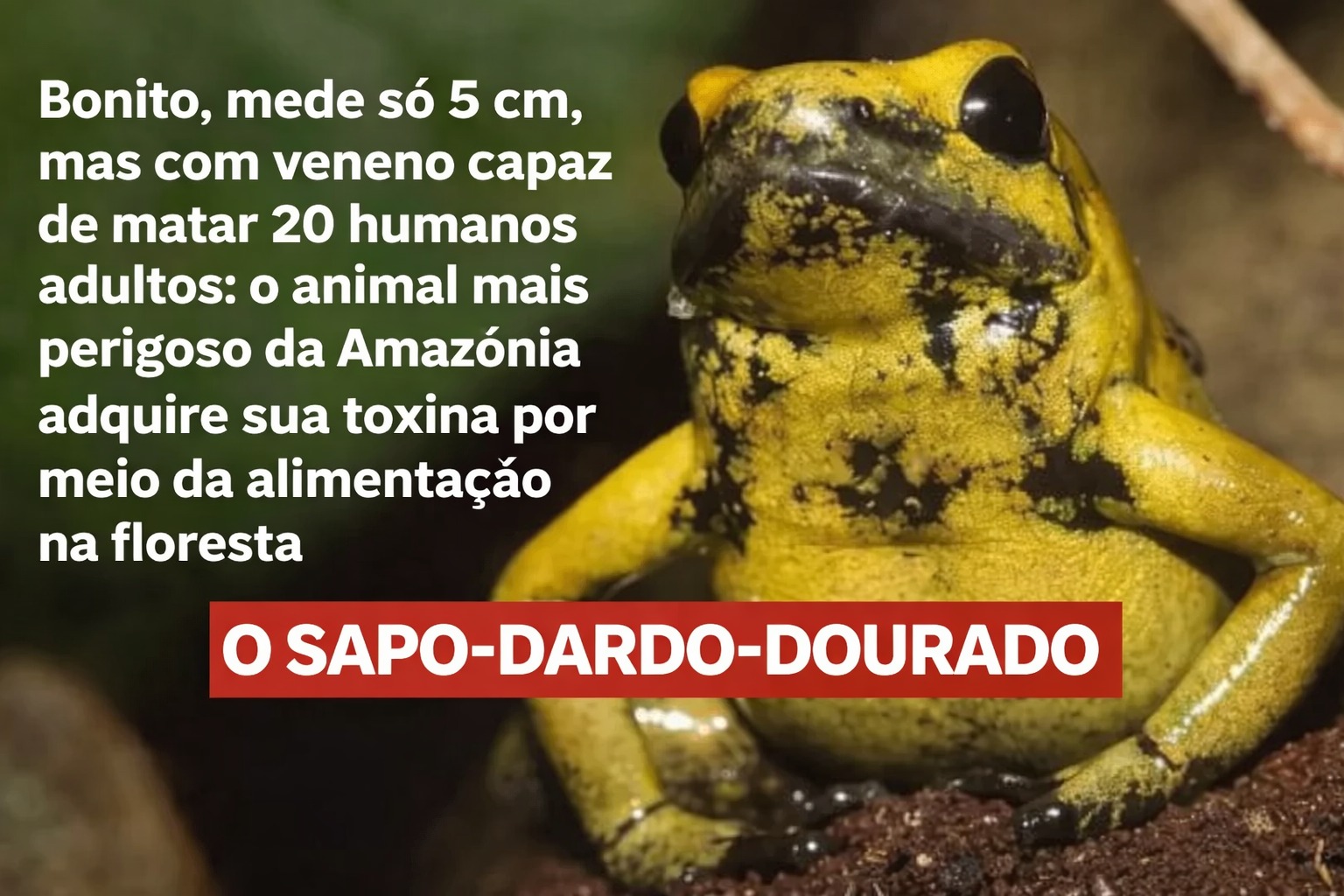

With Just Five Centimeters, The Golden Poison Frog Holds Toxin Capable of Killing Adults, Historical Relationship with Indigenous Peoples and Risk of Extinction Tied to The Destruction of Tropical Forests in Colombia
The golden poison frog, an amphibian from the tropical forests of Colombia, stands out for measuring five centimeters and harboring a toxin capable of killing 20 adults, making it relevant to science, indigenous culture, and conservation.
One of The Most Poisonous Animals on The Planet
Considered one of the most poisonous animals in the world, the frog concentrates on its skin enough batrachotoxin to cause muscular paralysis and respiratory failure.
The substance works by blocking the transmission of nerve impulses, interrupting communication between nerves and muscles, which explains its extreme lethality.
-
Three teenagers transform cut cardboard into Japanese origami-style packaging that promises to retire styrofoam and bubble wrap, win a $12,500 prize, and target giants like Amazon, FedEx, and Home Depot after a robot motor arrived broken.

-
The large jar blender has a rival: Oster Ultra Power bets on 1,000 W, six stainless steel blades, and two portable cups with leak-proof lids.

-
Tesla injected an additional $250 million into the German factory, doubled the battery cell target, and opened its own production line for startups.

-
No more TV stuck on the wall: Samsung The Freestyle+, the new projector with over 400 lumens projects on walls, floors, and ceilings, bringing cinema to any corner of the house.




Despite its potency, the animal itself does not suffer effects from the toxin, a result of evolutionary adaptation that ensures survival in hostile environments.
Poison That Comes from Diet
Contrary to popular belief, the golden poison frog does not produce poison naturally, acquiring batrachotoxin through a diet based on insects.
Ants, beetles, and termites present in its habitat provide the necessary precursors, explaining why individuals raised in captivity do not exhibit toxicity.
Without access to these specific insects, the synthesis of the toxin does not occur, making these frogs harmless when removed from their natural environment.
Traditional Use and Evolutionary Relationships
The toxin also holds a historical role, being applied by Colombian indigenous tribes to the tips of arrows traditionally used for hunting.
Although less common today, the practice persists in some communities, preserving ancestral knowledge about the use of the amphibian as a tool.
This cultural relationship highlights how biological characteristics have shaped human interactions, connecting biodiversity, survival, and local traditions over time.
Visual Alert and Risk of Extinction
In addition to the toxin, the vibrant coloration in yellow, green, and metallic shades serves as a visual warning against potential natural predators.
Known as aposematic coloration, this strategy communicates danger before an attack, reducing confrontations and increasing survival chances in the local ecosystem.
Despite these defenses, the species faces the threat of extinction due to habitat destruction and illegal trafficking of exotic animals.
The preservation of the amphibian depends on the maintenance of tropical forests, highlighting the ecological importance of the species within the current regional environmental balance.
With information from Crusoe.