






 Portuguese
  Spanish


A study published in the journal Nature Communications confirmed that the Great Atlantic Sargassum Belt has become a permanent feature of the ocean. The research, led by Annalisa Bracco from the Euro-Mediterranean Center on Climate Change, demonstrated for the first time the ability to predict algal blooms months in advance. The Sargassum Belt extends over 8,000 kilometers from West Africa to the Caribbean, with biomass exceeding 37 million tons in 2025.
The Sargassum Belt that dominates the tropical Atlantic is no longer a temporary phenomenon caused by climate variations; it is a permanent and self-sustaining biological system that has developed its own internal ecology and is here to stay. An international study led by Annalisa Bracco confirmed that the Great Sargassum Belt, which emerged in 2011, evolved from a wind-driven event to a living structure that recycles its own nutrients. The floating mats of algae host communities of marine organisms that recycle nitrogen within the Sargassum Belt itself, and the decomposing algae release these nutrients back into the surrounding water, fueling the growth of new algae in a cycle that perpetuates itself regardless of climate conditions.
Bracco summarized the discovery to Earth.com: “It’s a striking example of how the ocean can reorganize itself very quickly. What started as a wind-driven event has become a self-sustaining biological system.” The research, published in Nature Communications, also demonstrated for the first time the ability to predict Sargassum Belt concentrations months in advance, paving the way for affected communities in the Caribbean, Gulf of Mexico, and African coast to prepare before the arrival of the algae.
How the Sargassum Belt emerged and why it won’t go away

https://svs.gsfc.nasa.gov/5298/ ).
The Great Sargassum Belt first appeared in 2011, when stronger than usual winter winds deepened the ocean’s mixed layer and pushed nutrients to the surface. This event triggered an explosive growth of sargassum algae that spread over thousands of kilometers between West Africa and the Caribbean.
-
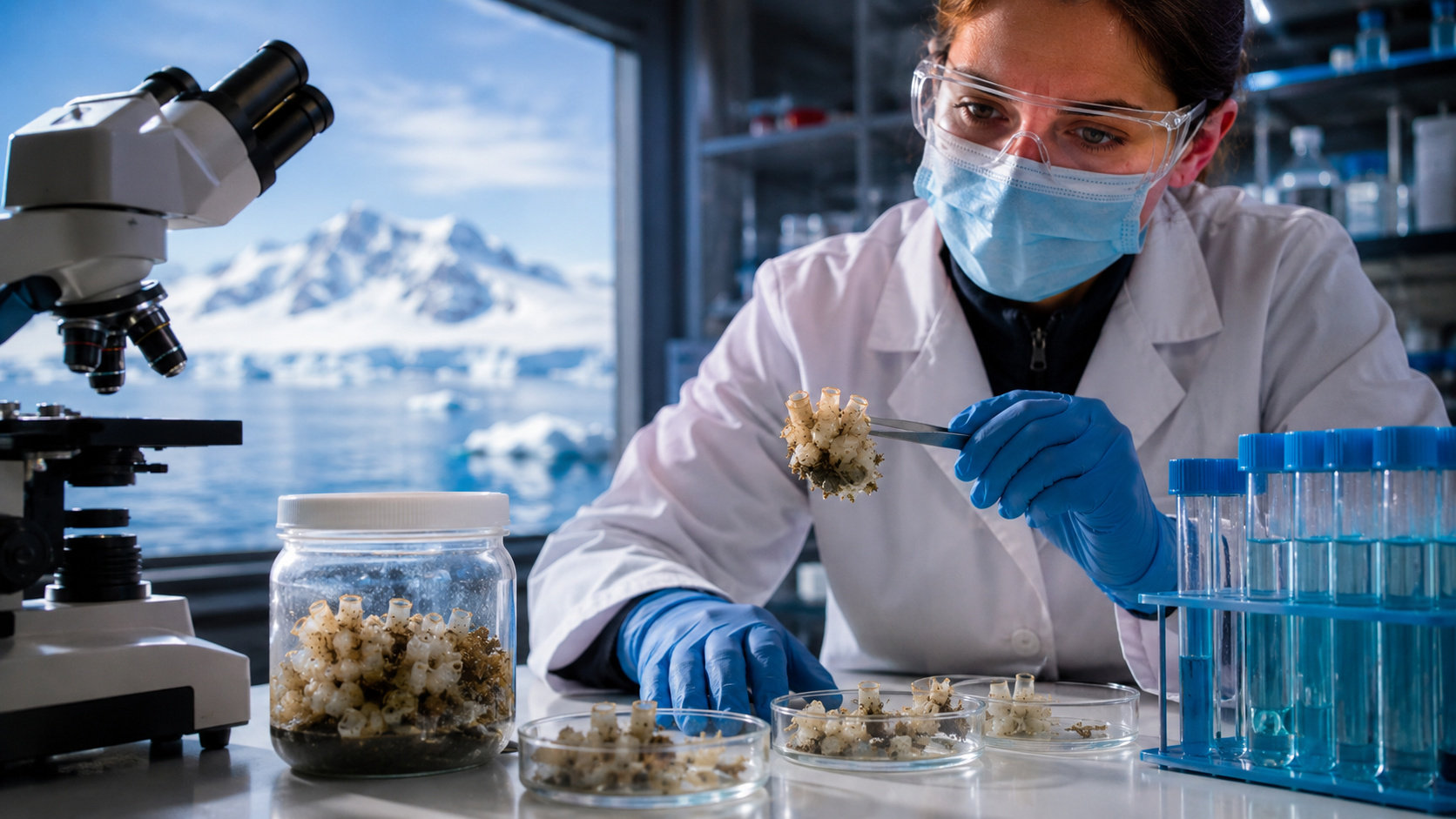
Antarctic Sea Creature Yields Promising Compound Against Melanoma, Captivating U.S. Researchers

-
Underwater Guardian: The Autonomous Robot Monitoring Submarine Cables, Self-Returning, Wirelessly Charging, and Transmitting Data Without Onboard Crew

-
Robots Clean Solar Panels in Desert Power Plants Without Water, Preventing Energy Losses
-
AI Radar Built with Old Camera and $20 Gains Attention After Alleged $317,000 Sale to Chinese Government, But Lack of Documentation and Official Confirmation Raises Questions



Initially, scientists attributed the blooms to physical forces like wind, ocean circulation, and nutrient upwelling. The new study reveals that this explanation is no longer sufficient. The Sargassum Belt has developed its own ecology: the floating mats function as miniature ecosystems, with organisms that recycle nitrogen and other nutrients within the algae themselves. When part of the sargassum decomposes, the released nutrients fuel the growth of new algae around, creating a self-sustaining cycle that no longer depends on the atmospheric conditions that originated it.
The numbers that show the scale of the Sargassum Belt
The scale of the phenomenon is continental. The Sargassum Belt stretches over 8,000 kilometers, from the coast of West Africa to the Caribbean islands. The total biomass exceeded 37 million tons in 2025, and the algae arrive annually in catastrophic quantities on the beaches of dozens of countries, generating cleanup costs that amount to hundreds of millions of dollars per year.
The affected communities have borne these costs for the past 15 years without predictive tools, long-term management plans, or international coordination. What they received were emergency cleanup funds applied annually to a problem that ceased to be an emergency and became a permanent condition. The Sargassum Belt affects tourism, artisanal fishing, and the quality of life on Caribbean islands that depend on clean beaches for their economy.
The forecast that can change everything
Using a model built with satellite data and oceanographic observations, Bracco’s team reconstructed how the concentrations of the Sargassum Belt changed between 2011 and 2022. The model was tested by predicting concentrations for 2023 and 2024 successfully, proving that it is possible to anticipate the blooms months in advance.
The ability to forecast fundamentally changes the logic of response. The current approach is reactive: the algae arrive, communities mobilize, resources are spent on cleaning, and the cycle repeats. Reliable forecasts can break this dynamic, allowing for early preparation and even interception of the sargassum in open waters before it reaches the coast. Bracco stated that “the fact that we can now understand and predict it means we can also start to seriously think about how to manage it.”
Sargassum as a Climate Solution or as a Permanent Plague
While floating in the ocean, the Sargassum Belt absorbs carbon dioxide from the atmosphere through photosynthesis, functioning as a natural carbon sink. The problem arises when the algae reach the coast and decompose, releasing the captured carbon back into the atmosphere and generating toxic gases like hydrogen sulfide that affect the health of coastal populations.
Bracco suggests that intervention before reaching the beaches could transform the system into part of the climate solution. Options include harvesting the sargassum in the high seas of the Atlantic and sinking it into the deep ocean, where the carbon would remain sequestered for centuries, or processing it into biofuels and other materials. The study provides the scientific basis for this approach in the Atlantic: clear explanation of the system’s functioning, demonstrated predictive capability, and framework for thinking about intervention instead of just resistance.
Did you know that the Atlantic Sargassum Belt has become permanent and feeds on itself? Do you think we should harvest the algae at sea to sequester carbon or should nature take its course? Tell us in the comments.






Messing with nature always works so well for humanity! Impulsive reactions are not the solution. It’s nature and it will always find a way to balance itself. Sustainable usage of the excesses sound like a reliable alternative. Securing exesive algae bloom at the open Sea sound good as long as it’s not at the expense of killing other species in order to do so. Let’s think it over it’s a new phenomenon, earth is a few billion years old!
I say we process it, I am not a scientist or anything but I think it might escape the ocean bed again.
There have been too many world ecological events that have inconvenienced humanity. Humanity has stepped in to control or eliminate
To the detriment of the planet. Sinking the mass to the bottom of the ocean to control carbon dioxide – we can’t fortell what eventual consequence that will come. Let nature alone