Portuguese
  Spanish


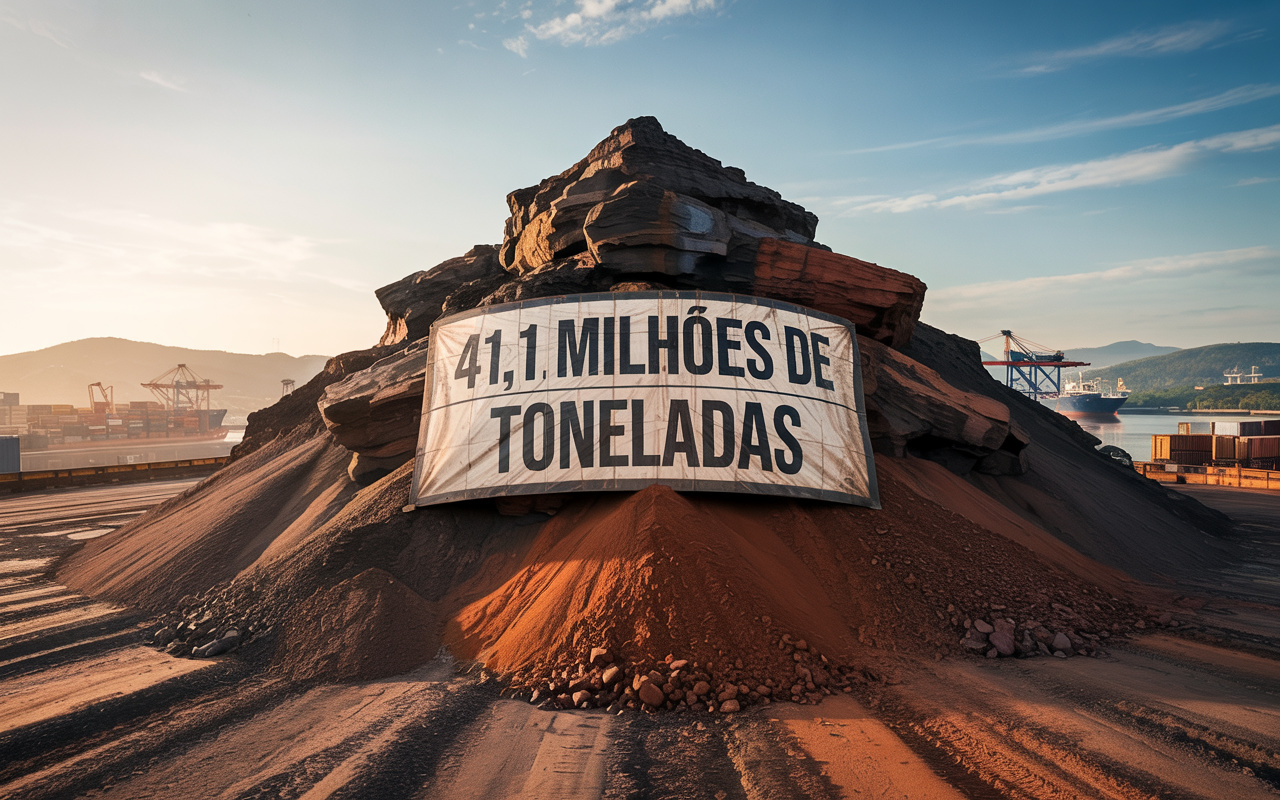

Brazil Sets Record In July 2025 With 41.1 Million Tons Of Iron Ore Exported. Volume Surpasses 2015 And Strengthens Global Leadership In The Dispute With Australia.
July 2025 will be marked in the history of Brazilian mining. In a single month, the country exported 41.1 million tons of iron ore, according to data from the Foreign Trade Secretariat. The volume not only represents a significant jump compared to previous months but also broke a record that stood since December 2015, when Brazil shipped 39.5 million tons.
This achievement demonstrates the renewed strength of the sector, which even after facing price crises, environmental tragedies, and global demand fluctuations, continues to be one of the most powerful engines of the Brazilian trade balance.
Amid the international race for strategic raw materials, Brazil reaffirms its role as the second-largest global exporter of iron ore, only behind Australia, and gains momentum to compete for space in a billion-dollar market dominated by Asia.
-
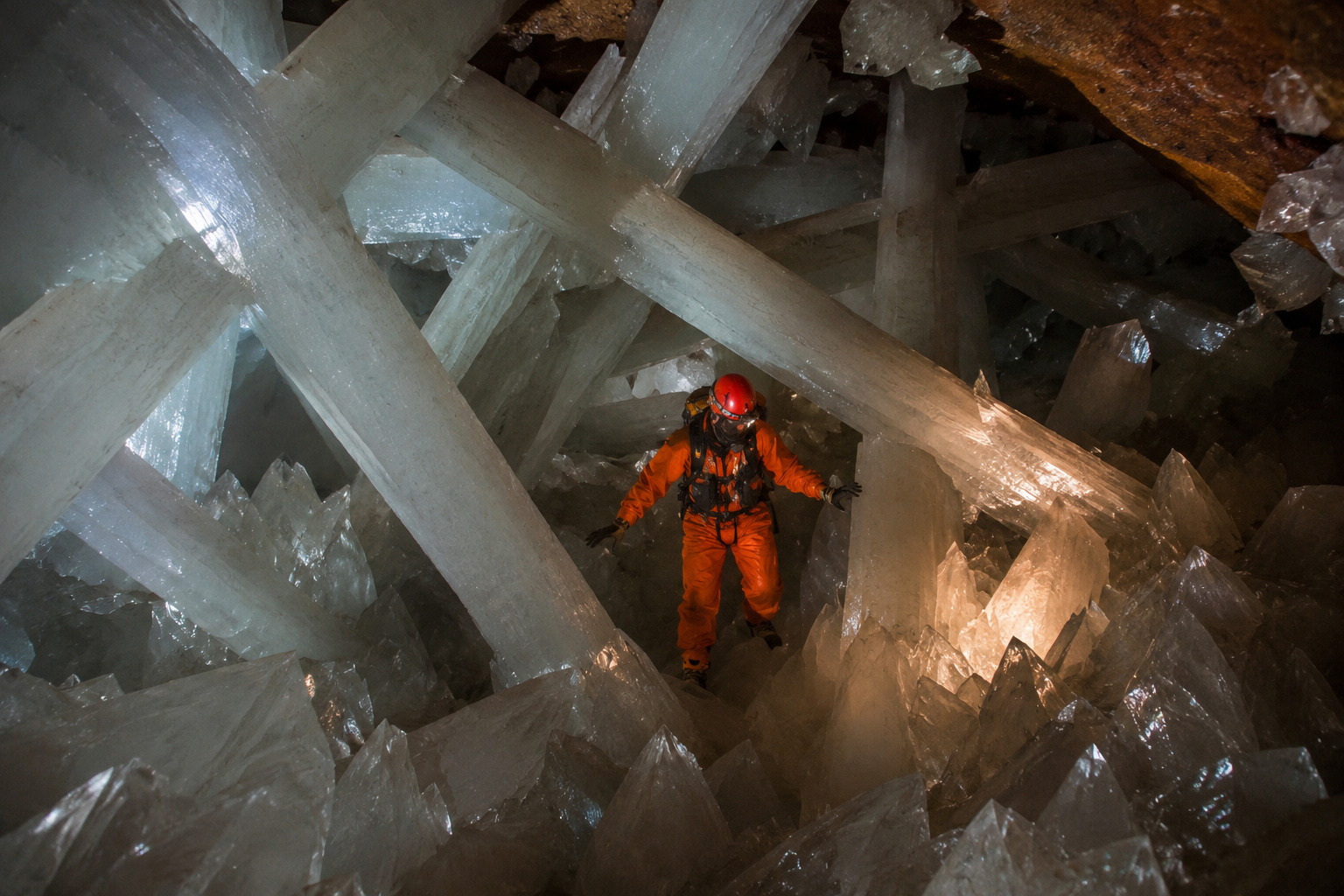
Mexico’s Giant Crystal Cave: A Deadly 58°C Underground Palace with 11-Meter Crystals Formed Over Nearly a Million Years

-
China Dominates Over 90% of Rare Earth Refining, Prompting Global Concerns: Canada and Japan Launch Billion-Dollar Plan to Reduce Dependency and Safeguard Batteries, Semiconductors, and Defense

-
Ancient Mines in Spain Reveal Tools and Metals That May Explain Bronze Age Trade with Scandinavia
-
XCMG Launches 240-Ton Mining Truck in Brazil, Promising Increased Productivity with Lower Fuel Consumption


The Engine Of The Trade Balance
Iron ore continues to be the main product of Brazilian exports. Just in July 2025, the value generated by shipments exceeded US$ 3.5 billion, which corresponds to a significant portion of the trade surplus for the period.
China, the largest global importer, remains a priority destination: it absorbs about 65% of all Brazilian iron ore.
However, the record in July also revealed greater diversification, with increased sales to countries in the European Union, Middle East, and even new partners in Africa. This diversification is strategic as it reduces dependence on a single buyer and reinforces Brazil’s weight in commercial diplomacy.
The Dispute With Australia
The Brazilian record of 41.1 million tons does not go unnoticed by Australia, the absolute leader in global iron ore production and exports. The two countries are engaged in a silent but fierce competition for the supply of the raw material that drives trillions of dollars in the global steel supply chain.
While Australians benefit from geographical proximity to China, Brazil bets on the superior quality of its ore—with higher iron content—and on long-term agreements to ensure competitiveness, even with higher logistical costs.
The historic performance of July 2025, therefore, also sends a message to the market: Brazil is willing to expand its share in international trade, even in a scenario dominated by strategic rivals.
The Role Of Vale And Carajás
Behind this result is the strength of Vale, a giant in Brazilian mining, and the Carajás complex in Pará, considered the largest open-pit mine in the world. Together, they account for a large portion of the ore exported in July.
With billion-dollar investments in technology, rail transport, and high-capacity ports, Carajás has been consolidating itself not only as a mineral hub but also as a laboratory for sustainable mining practices.
The record of 2025 shows that the model based on scale, efficient logistics, and innovation can position Brazil favorably in the global race for strategic raw materials.
A Billion-Dollar Sector In Transformation
The record in July comes at a time of transformation for global mining. Demand for iron ore remains strong, driven by steel production for civil construction, automobiles, infrastructure, and increasingly, by the energy transition, which requires large-scale metal structures for turbines, solar panels, and transmission networks.
At the same time, pressure is increasing for mining to be cleaner and more transparent. Brazil, marked by tragedies like Mariana (2015) and Brumadinho (2019), is trying to prove that it has learned from its mistakes and can also lead in sustainability.
Vale has been investing in renewable energy, reducing tailings dams, and using reuse technologies like dry stacking. The record in July, therefore, is not just a number but a symbol of a sector that seeks to reinvent itself.
Risks And Gaps
Despite the euphoria, the sector faces challenges. The dependence on China remains a risk: any abrupt change in Chinese industrial policy or reduction in demand for steel may directly impact Brazilian exports.
Furthermore, logistics is still a bottleneck. Transporting ore from the mines to the ports requires efficient railways and modern terminals. Projects like Ferrogrão and the duplication of sections of the Carajás Railway are essential to ensure that records like those of July can be repeated sustainably.
Another challenge is the international image. Pressures from environmentalists and multilateral organizations require that mining in Brazil be increasingly linked to environmental protection and social responsibility. Maintaining growth without repeating past mistakes is crucial to consolidating the country’s position.
The Impact On Geopolitics
More than just figures, the record in July 2025 carries geopolitical significance. Brazil demonstrates to the world that it is a reliable supplier of strategic commodities, while simultaneously strengthening its commercial diplomacy with historical partners and new markets.
Amid a global dispute between China and the United States for economic leadership, Brazil uses ore as a bargaining chip.
On one side, it strengthens ties with Beijing, ensuring billion-dollar exports. On the other, it seeks agreements with Western countries interested in reducing dependence on China. This strategic position may be decisive for the country’s future in the international arena.
A Record With Many Interpretations
The export of 41.1 million tons of iron ore in July 2025 is a milestone for Brazil. Surpassing a record that lasted a decade showcases the resilience and strength of a sector that still accounts for a large portion of the national economy.
More than just numbers, the record reveals Brazil’s power to influence global supply chains, challenge rivals like Australia, and position itself as a protagonist in a world that relies on raw materials to grow and transform.
Whether this is merely a momentary peak or the beginning of a new era of expansion remains to be seen. But one thing is certain: Brazilian ore continues to be a central piece in the gears of global trade—and each ton shipped is a further step to consolidating the country as a mineral powerhouse.