Portuguese
  Spanish


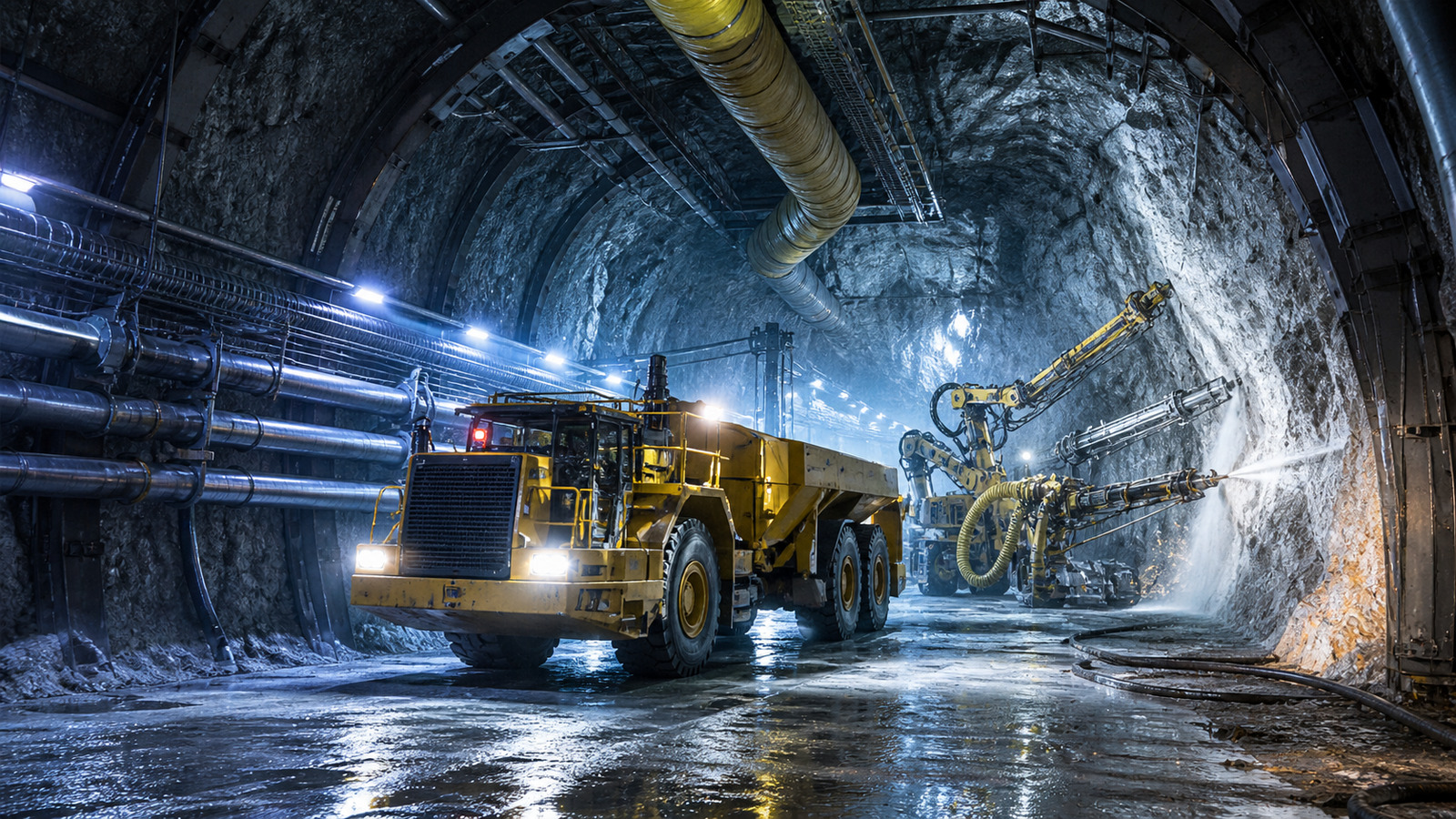

With artificial ground freezing, underground robots, and high-pressure water jets, Cigar Lake extracts uranium in an unstable, water-saturated area with extreme radiation in Canada
The frozen uranium mine of Cigar Lake, in northern Saskatchewan, Canada, uses artificial freezing, robots, and high-pressure water jets to extract ore in unstable rock, saturated with water and with extreme radiation.


Freezing makes extraction possible
Operated by Cameco Corporation, Cigar Lake is recognized as a high-grade uranium deposit with technical complexity. The ore is in unstable rock, surrounded by a pressurized aquifer.
The deposit is in an extremely porous, water-saturated sandstone layer. In this condition, conventional mining would be impossible due to the risk of catastrophic flooding in the underground advance.
-
China could reduce iron ore imports from 80% to 50% of consumption by 2030, while its share in global steel production falls from 52% to 46%, in a shift that could reshape the global market, says CMRG.

-
Brazil is sitting on one of the largest lithium reserves in the world, in the Jequitinhonha Valley, but national mining has almost become an appendage of China: 97% of the metal’s export goes to a single country, which also dominates refining.
-
Iron ore falls to 762 yuan in China as real estate sales decline and steel production hits lowest level since 2018
-
Brazil has minerals, clean energy, and a waiting market, but it could miss a billion-dollar opportunity if it doesn’t speed up the race for green minerals, while the steel industry seeks to reduce emissions.


To solve this impasse, the operation uses large-scale artificial ground freezing. The technique transforms the rock around the ore into a solid, impermeable barrier capable of containing the water.
The frozen uranium mine circulates chilled brine through kilometers of underground pipes. The area around the deposit becomes a block of ice that allows controlled ore removal.
Thermal sensors monitor the temperature of the frozen ground. This control confirms whether the containment remains stable and if the frozen barrier continues to protect the operation against infiltrations.
Water jets replace explosives
Cigar Lake does not use explosives or manual excavation to remove uranium. The extreme levels of radiation require distance between workers and rock, which led to the Jet Boring System, or JBS.
The equipment is installed in tunnels below the uranium layer and operates autonomously. Thus, no operator needs to come into direct contact with the radioactive ore.
A rotating nozzle projects high-pressure water jets against the rock. The pressures exceed a thousand bars and crush the ore, turning the uranium into a thick slurry.
In the frozen uranium mine, this slurry is collected by shielded pipelines and sent to the surface. The lines use double-walled, high-strength steel to prevent leaks and direct human contact.
The positioning of the jetting machines is done by underground laser guidance systems. This precision allows targeting the ore with control, keeping the operation automated in a high-radiation area.
Armored transport and robotics reduce risk
The movement of radioactive material requires meticulous logistics and heavy armored equipment. The goal is to transport the ore from the depth to the processing plant without direct handling and without contamination.
Armored containers are loaded onto remotely operated vehicles, called AGVs. These vehicles maintain the transport flow without exposing workers to the loads and integrate the automated underground chain.
Tools undergo automated decontamination before preventive maintenance. This procedure prevents radioactive residues from reaching common areas and keeps equipment within safety standards.
The protocols are monitored by bodies such as the Canadian Nuclear Safety Commission. Every transit document and every load must comply with international radioprotection standards.
Safety also depends on robotic sensors. These devices measure radon and gamma radiation in real-time in the galleries, sending automatic alerts to the control center.
With this data, teams adjust ventilation and shielding. The quick response prevents accidental exposure to dangerous ionizing particles and keeps the underground work within strict limits.
Unmanned ground vehicles perform visual and radiological inspections. They replace technicians in high-risk areas and check gallery conditions without putting people in harm’s way.
Licensing monitors water and impact
The environmental licensing of Cigar Lake involves in-depth impact studies and contingency plans. The protection of aquifers is central because the mine operates in a porous, saturated, and sensitive environment.
Cameco must prove that freezing contains contaminants and maintains the stability of the extraction area. It also needs to demonstrate that future closure will restore the region’s original environment.
Regular audits verify containment basins and effluent treatment. The transparency of operational data underpins the trust of authorities and Indigenous communities in northern Saskatchewan.
The technology applied at Cigar Lake shows how automation, robotics, and engineering enable operations in hostile environments.
The model paves the way for other difficult deposits and consolidates Canadian uranium in clean and safe nuclear power generation.
With information from Monitor do Mercado.