






 Portuguese
  Spanish


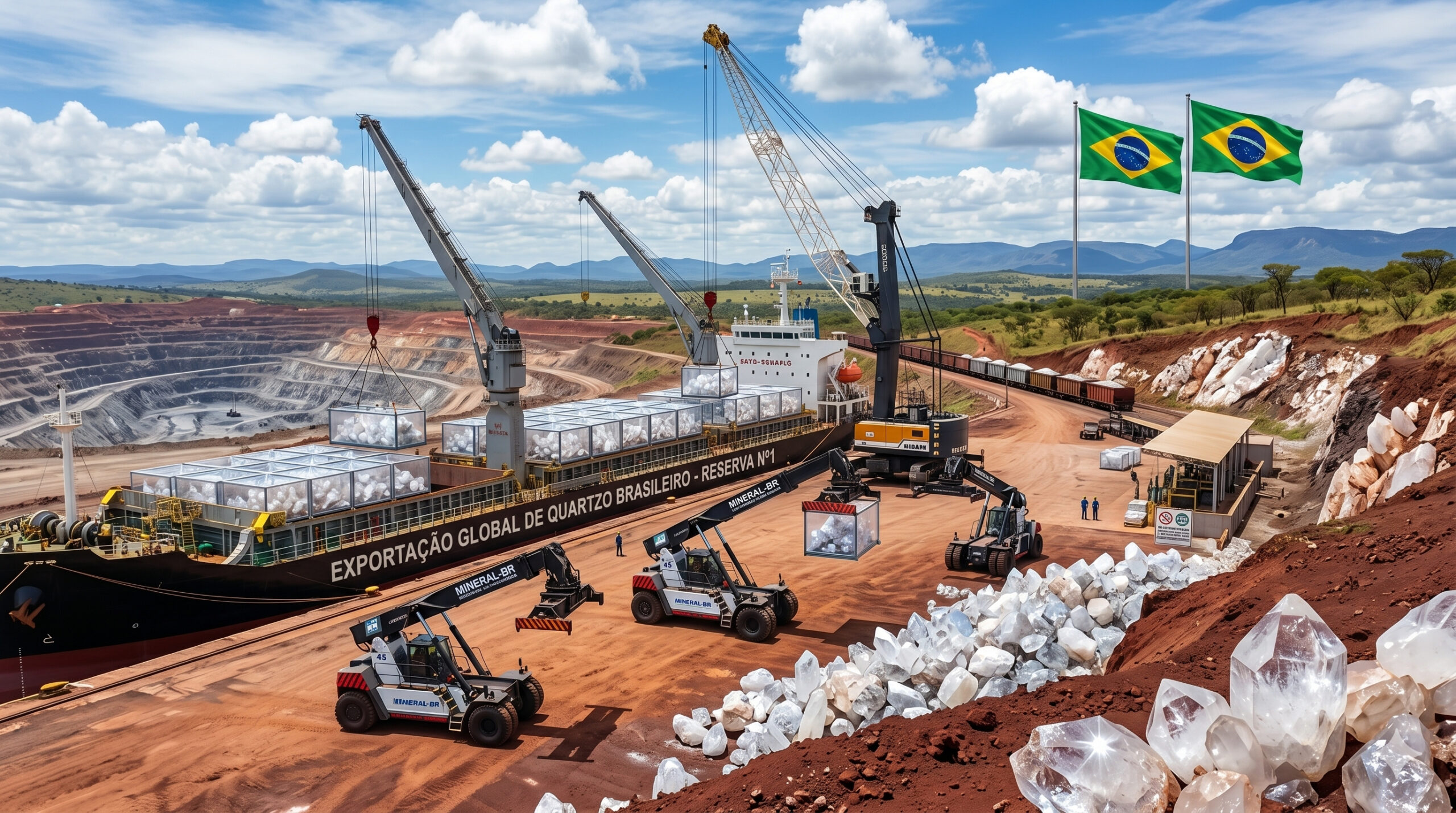

Brazil has 21.11 million tons of high-purity quartz, an essential mineral for solar panels, semiconductors, optical fibers, and artificial intelligence, but lost global standing after a 1974 embargo and has not yet transformed its reserves into a strategic industrial chain.
Brazil has 21.11 million tons of high-purity quartz, the largest known reserve on the planet, distributed mainly among Pará, Minas Gerais, Santa Catarina, and Bahia. This data, attributed to the United States Geological Survey in a scientific review cited in the base text, positions the country with an essential mineral for the production of silicon, used in photovoltaic panels, semiconductors, optical fibers, and high-tech components.
The relevance of this mineral lies at the beginning of the chain, before the chip, before the solar panel, and before the optical fiber. Without high-purity quartz, there is no ultrapure silicon on an industrial scale. SWithout this silicon, the digital economy and energy transition remain tied to a global supply chain concentrated among a few suppliers.
Until 1974, Brazil was a major global exporter of quartz crystal. After the embargo on raw crystal exports, it lost market share internationally without building, at the same pace, the processing industry that would allow adding value to the mineral. Five decades later, the world seeks to diversify the supply of high-purity quartz, and the largest known stock remains in Brazil, awaiting an industrial strategy compatible with its geopolitical weight.
-
U.S. Invests $75 Million in Projects to Extract Rare Earths, Gallium, Germanium, and Aluminum from Coal Waste

-
Eni Acquires 25% Stake in Chilean Lithium Project, Plans to Invest Up to $225 Million in Eco-Friendly Extraction Method
-
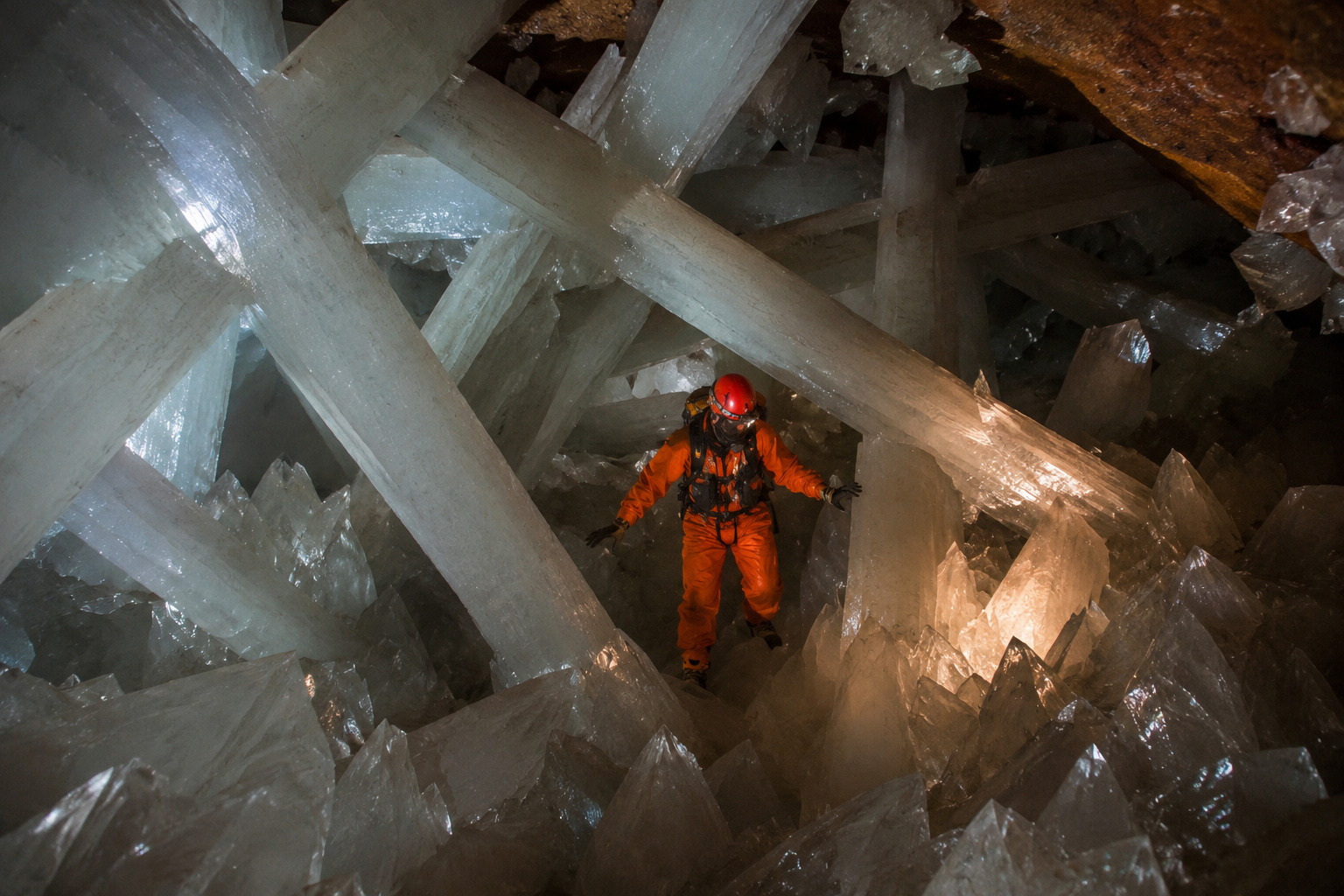
Mexico’s Giant Crystal Cave: A Deadly 58°C Underground Palace with 11-Meter Crystals Formed Over Nearly a Million Years

-
China Dominates Over 90% of Rare Earth Refining, Prompting Global Concerns: Canada and Japan Launch Billion-Dollar Plan to Reduce Dependency and Safeguard Batteries, Semiconductors, and Defense


High-purity quartz is the invisible mineral that supports chips, solar panels, optical fibers, and artificial intelligence
Quartz is the second most abundant mineral in the Earth’s crust and appears in almost all rock types, including granite, sandstone, and gneisses. But abundant quartz and high-purity quartz are completely different things.


High-purity quartz, known in the industry as HPQ, for High Purity Quartz, is defined as quartz with a silicon dioxide content above 99.99%. This means less than 100 parts per million of total impurities, including aluminum, iron, potassium, sodium, calcium, magnesium, and other elements that exist in common quartz but are unacceptable for high-tech applications.
In the photovoltaic industry, HPQ is used to manufacture melting crucibles in which polycrystalline silicon is heated to over 1,400°C to form ingots, the basis of solar wafers. If the quartz crucible contaminates the silicon, the efficiency of the panels decreases on an industrial scale.
Semiconductor industry demands even purer quartz to manufacture advanced chips
In the semiconductor industry, the requirement is even more severe. Tubes, chambers, and components used in chemical vapor deposition equipment, a central step in chip and memory manufacturing, require quartz with impurities measured in parts per billion.
At this level of precision, the material needs to achieve purity close to 99.9999%. A single iron atom in the wrong place can compromise an advanced chip during the manufacturing process, affecting yield, performance, and reliability.
The same purity that makes quartz so valuable also makes it rare. Geological deposits with sufficiently low impurities for high-tech applications exist in few places in the world, and Brazil has more of these deposits than any other country, according to the data cited in the base text.
US$200 million investment in Spruce Pine revealed the strategic value of high-purity quartz
In April 2023, Sibelco, a Belgian company that controls the Spruce Pine mine and is described by the OECD as holding a dominant share in the global market for 4N8 grade or higher high-purity quartz, announced an investment of approximately US$200 million to double production capacity in North Carolina.

The announcement had a clear justification: to meet the growing demand from the semiconductor, solar energy, and advanced optical technologies sectors. In other words, the market understood that high-purity quartz would cease to be merely a mineral input and would become a critical component of global technological security.
The contrast with Brazil is direct. While a single American mine receives US$ 200 million to expand production, Brazil has 21.11 million tons of reserves distributed across four states and still lacks a structured national plan to convert this stock into industrial leadership.
1974 embargo removed Brazil from the global market for raw quartz crystal
The history of Brazilian quartz in the global market has a precise turning point: 1974. Until that year, Brazil was a major exporter of rock crystal, sent mainly to the United States and Japan, where it was processed for the nascent electronics industry.
The country had high-quality reserves, especially in southeastern Pará and northern Minas Gerais, in addition to competitive extraction costs. In 1974, however, the military government imposed an embargo on the export of raw crystal, as part of an industrialization policy that sought to add value to the resource before export.
The logic was theoretically correct: processed crystal is worth much more than raw crystal. The problem was that Brazil did not have, at that time, a high-purity quartz processing industry capable of absorbing the material and transforming it into high-value products. The embargo removed the country from the market without creating the industrial alternative that would justify the exit.
Brazil lost ground while Norway and the United States consolidated global supply chains
In the years following the embargo, Norway, with deposits in Drag, Setesdal, and other regions, and the Spruce Pine mine in the United States, consolidated their positions as dominant suppliers in the global market.
Processing companies organized their supply chains around these sources, signed long-term contracts, and developed stable industrial routes. Meanwhile, Brazil, even with the world’s largest reserves, remained outside the market it could have led.
The mistake was not trying to add value. The mistake was interrupting exports before building the processing chain. Fifty years later, this decision helps explain why the largest holder of reserves is not the world’s largest supplier of the most important mineral for high-tech silicon.
Solar demand could multiply raw quartz consumption by almost 40 by 2050
The explosion of solar energy completely changes the strategic value of Brazilian quartz. The scientific review published in Tandfonline cited in the base text indicates that, to meet the projected solar energy requirements for 2050, global demand for raw quartz as a raw material for silicon could increase by a factor of almost 40 compared to current levels.
It’s a gigantic growth in a market where quality reserves are geographically concentrated, processing requires specific technology, and major consumers, such as the United States, the European Union, Japan, and South Korea, are seeking to diversify supply chains.
This search for diversification occurs amidst the competition for semiconductors, artificial intelligence, energy transition, and industrial security. Whoever controls high-purity quartz controls one of the first stages of the chain that goes from solar panels to advanced chips.
China classified high-purity quartz as a strategic mineral and accelerated investments in 2025
China recognized the strategic importance of high-purity quartz in 2025, when it officially classified the ore as a new mineral species and included it in the list of strategic mineral resources.
The decision triggered investments in exploration, resource assessment, and industrial-scale purification projects in the Henan and Xinjiang regions. China began building processing capacity while also seeking domestic reserves.
This move shows that Beijing understood the structural function of quartz before many countries with relevant reserves. China is trying to secure the initial link in the silicon chain, while Brazil has not yet transformed its geological advantage into an industrial strategy.
Metallic silicon already exists in Brazil, but photovoltaic and semiconductor grade require a technological leap
The second link is the production of metallic silicon, obtained by converting purified quartz into carbon-reduced silicon in electric arc furnaces. Brazil is already among the world’s largest producers of metallic silicon, with plants in Minas Gerais and Pará.
Companies like CBCC, Companhia Brasileira de Carbono e Coque, and other companies operate in this sector. The critical point is that conventional metallic silicon used in steelmaking and aluminum is not enough for solar panels and semiconductors.
What is missing is certification and production in photovoltaic or semiconductor grade. The difference lies in purity, contaminant control, and the ability to achieve industrial levels compatible with wafers and chips.
Polysilicon production is the most difficult link and the most dominated by China
The third link is polysilicon production, a stage that purifies metallic silicon to 9N to 11N grades, necessary for solar wafers and semiconductors. This process is dominated by the Siemens method and more recent variants.
Polysilicon production requires intensive capital investment, specific technical know-how, competitive electricity, and extreme chemical control. Brazil has some of these conditions, especially competitive energy potential in some regions, but still lacks industrial scale and consolidated technological mastery in the sector.
The OECD describes China as holding 95% of global solar polysilicon production in 2025, compared to negligible participation in 2005. This dominance was not born from geology, but from 20 years of deliberate industrial policy.
Brazil has the reserves that China doesn’t, but lacks the industrial policy that China built
Comparison with China is inevitable. Brazil has high-purity quartz reserves that China does not possess on the same scale, but has not built the industrial policy necessary to transform this geology into technological leadership.
China, on the other hand, dominated solar polysilicon production even starting from a much smaller base in the early 2000s. It did so with investment, planning, scale, subsidies, technology, and vertical integration.
Brazil has a rare mineral asset, but it is still disconnected from the energy, semiconductor, and artificial intelligence strategy. The country possesses the raw material of the 21st century, but not the industrial chain that captures the real value of this raw material.
Brazilian quartz connects mining, solar energy, and technology, but these sectors still operate separately
The agenda of Brazilian quartz is invisible because it lies at the intersection of three sectors that rarely communicate with each other. Mining knows the reserves, but does not always monitor the demand of the photovoltaic industry.
Solar energy knows the demand for modules, cells, and wafers, but rarely tracks the geological origin of inputs imported from China. The technology sector understands the importance of silicon for chips, but almost never follows the chain back to the raw quartz extracted in Pará or Minas Gerais.
The result is a strategic mismatch. Brazil has 21.11 million tons of the mineral that supports solar panels, semiconductors, and optical fibers, but has not yet connected this asset to the geopolitical moment of seeking critical supply chains outside of China.


