Portuguese
  Spanish


Foreign investment accelerates the race for critical minerals in Brazil and reinforces the role of Minas Gerais in the global scenario of rare earths and niobium
The global race for critical minerals has gained momentum in Brazil. The information was released by “Mineração Brasil,” based on market announcements and investor materials. The Australian mining company Oceana Metals announced the purchase of the Serra Negra project in Minas Gerais. This move reinforces foreign interest in rare earths in the country.
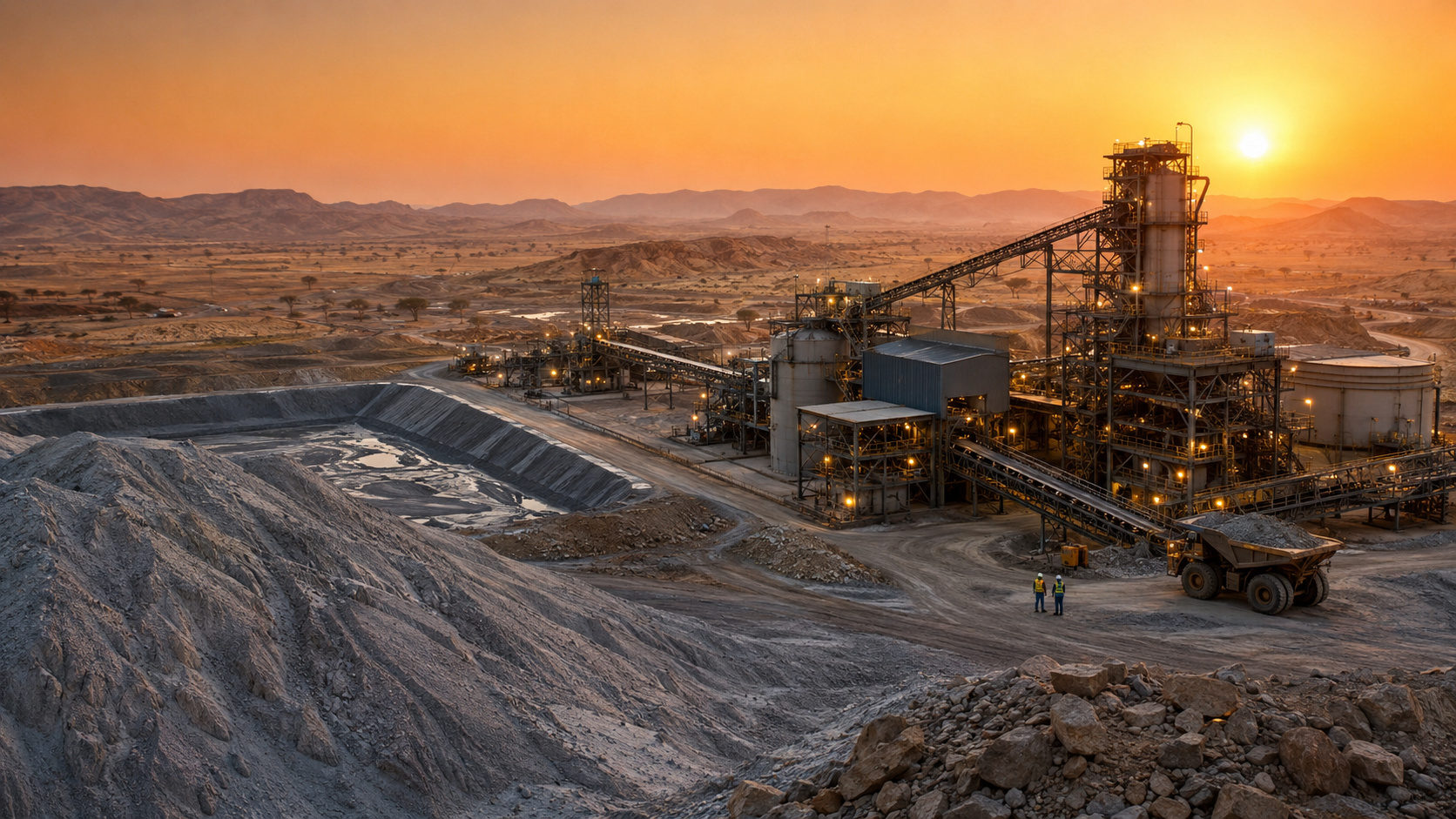
The company acquired 100% of Songeo Mineração. The Brazilian company fully controls the Serra Negra project. Oceana describes the asset as a rare earth deposit hosted in carbonatite. Additionally, the area also shows significant potential for niobium.
Deal structure involves millions and depends on technical milestones
Oceana structured the deal with direct payments and future milestones. The company will pay US$ 2.95 million in cash. Additionally, it will issue 20 million shares, valued at A$ 0.36 per share.
-
Canadian Investment Transforms Remote Brazilian Amazon Town into Copper Hub for Global Electric Vehicle and AI Data Center Markets

-
Brazilian Company in Minas Gerais Innovates by Using Electric Currents to Extract Critical Metals from Industrial Waste

-
U.S. Acquires Brazil’s Only Rare Earth Mine for $2.8 Billion, Diverting It from China

-
Indian Project Aims to Recover Zinc and Silver from Mining Waste, Targeting Over ₹3.8 Billion Revenue in 28 Months


The contract also includes additional payments. The company will pay US$ 750,000 after declaring an initial mineral resource. If it confirms a minimum resource of 100 million tons with an average grade of 4%, it will pay an additional US$ 1.5 million.
The sellers will retain a 2.5% royalty on the extracted minerals. This shows confidence in the project’s long-term potential.
Furthermore, Oceana raised about A$ 20 million in the market. The fundraising occurred in two institutional stages. Of this total, approximately A$ 14 million will fund drilling, geophysics, and technical studies at Serra Negra and other assets.
Project is still initial, but data indicates significant potential
Despite the interest, the Serra Negra project is still in its initial phase. It does not have a declared mineral resource. The company needs to advance through several stages before starting an operation.
First, it will be necessary to confirm the scale and grade of the mineralization. Then, the company must conduct metallurgical studies and assess economic viability. Additionally, it will need to obtain environmental licenses and secure financing.
Even so, old data indicates significant potential. In one of the drill holes, 17 samples showed an average of 3.4% rare earths. The results ranged from 0.39% to 8.4%.
In another drill hole, five samples recorded an average of 4.4%. These numbers attract attention in the market.
Additionally, the company identified niobium in the project. Some samples exceeded 1% Nb₂O₅. This mineral appears near the rare earth zones. This increases the strategic value of the asset.
Location favors logistics and development
The project is located in the Alto Paranaíba Igneous Province. This region is known for its carbonatite complexes.
The Serra Negra complex is about 10 kilometers in diameter. Oceana considers it the largest and least studied in the region.
The location also favors development. The project is near Patrocínio, in Minas Gerais. The area has access to highways, railways, energy, water, and labor.
Additionally, the asset is close to consolidated regions. Araxá, Catalão, and Tapira concentrate important projects. In Araxá, CBMM operates with niobium. Other rare earth projects are also advancing in the region.
Brazil gains prominence in the global race for rare earths
Foreign interest is growing rapidly. Brazil emerges as an alternative to China in rare earth production.
This movement gained strength after the purchase of Serra Verde by USA Rare Earth. The market began to see Brazilian assets as strategic opportunities.
Rare earths are essential for various industries. Elements such as neodymium, praseodymium, dysprosium, and terbium are used in high-performance magnets. These magnets equip electric vehicles, wind turbines, and electronics.
Despite its potential, Brazil still faces challenges. The country needs to advance in industrial stages. These include oxide separation, metallization, and alloy production.
Next steps include up to 20 thousand meters of drilling
Oceana has already defined the initial plan. The company will review approximately 8 thousand meters of old drillings.
In addition, it intends to carry out up to 20 thousand meters of new drilling. It will also conduct geophysical surveys and metallurgical tests.
The objective is to validate the old data. The company wants to confirm the continuity of the mineralized zones. After that, it intends to estimate the first mineral resource.
Even with positive results, the company adopts caution. There is still no guarantee of success. The current data depends on technical validation.
Therefore, the acquisition of Serra Negra represents a strategic bet. At the same time, it requires precise technical execution.
Do you believe Brazil will manage to become a global power in rare earth production, or are we still far from it?