






 Portuguese
  Spanish




Brazil Loses 1.1 Million Truck Drivers in a Decade; Young People Avoid Roads, While Professionals Over 60 Are Now Majority
Road freight transport in Brazil is facing a silent crisis, but with profound effects. In ten years, the number of truck drivers fell from 5.5 million to 4.4 million, a reduction of 20% — or 1.1 million professionals.
The difficulty in attracting young people to the profession contrasts with the rapid aging of the category and puts at risk the foundation of the logistics system that drives the national economy.
Data That Expose The Gravity Of The Problem
A survey by the Institute of Logistics and Supply Chain (ILOS) shows that in 2024, only 4.11% of drivers were under 30 years old, while 11.05% were already over 70.
-
Driver who “holds” the left lane can receive a hefty fine and 4 points on their driver’s license even if they think they are going at the correct speed for the road.

-
São Paulo Government puts R$ 343 million on the table and releases 31 km of duplication, 9.84 km of third lanes, 4 reinforced viaducts, and 8 grade-separated returns.

-
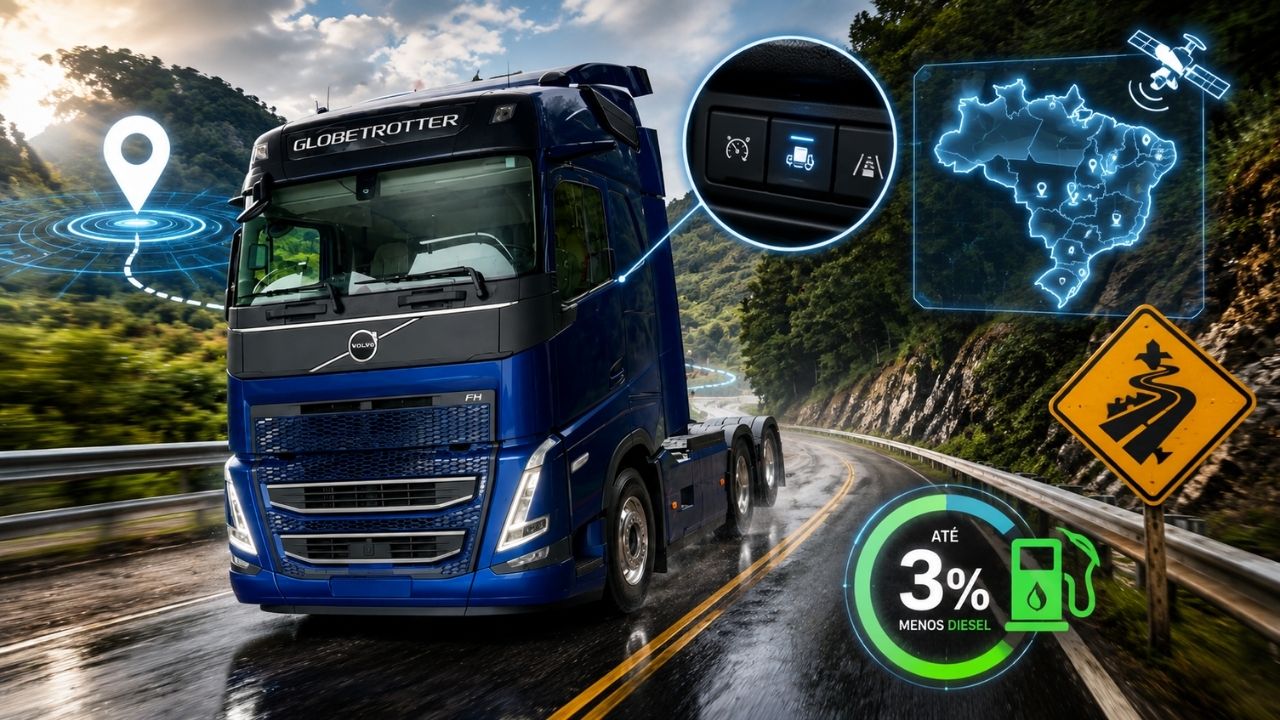
Volvo FH 2026 truck automatically reduces speed in risk areas in Brazil with GPS, activates engine brake without driver intervention, and combines safety with aerodynamics capable of saving up to 3% of diesel in some operations.

-
A viaduct over 40 years old in a city in Minas Gerais was closed due to the risk of collapse, blocked routes for months, exposed maintenance failures, and now requires a R$ 1.7 million project to prevent a collapse in the urban heart for decades.



The highest concentration is between 51 and 60 years, with 1.22 million professionals, followed by the age group between 61 and 70 years, which totals 898 thousand.
Today, one-third of truck drivers are over 60, and young people aged between 18 and 30 do not reach 200 thousand.
Although there is no significant dropout from the profession to other sectors, the replacement of the workforce does not keep pace with natural aging.
The result is a decline in the number of active professionals and a growing concern for companies that depend on road transport, responsible for 62% of everything produced in Brazil.
Autonomous Hiring In Check
Another point of pressure is in the predominant hiring model. Most drivers operate as independents, taking on both the provision of services and the costs of acquiring and maintaining the truck. This model, which was once the backbone of the category, now faces limitations due to the financial difficulties of those entering the profession and the new demands of the market.
Companies are beginning to invest in purchasing vehicles and offering formal contracts under CLT, especially in rural areas.
This movement aims to ensure the continuity of operations in a scenario of workforce scarcity.
Truck Market In Expansion
Data from the vehicle sector helps to outline the challenge. In 2024, Brazil registered 120 thousand new trucks, representing a net growth of 65 thousand units.
The increase in the fleet contrasts with the fall in the number of available drivers, highlighting the need for new hiring and training strategies.
Stories That Reveal The Impact
A report from SBT showed the journey of Eduardo, exemplifying the exceptions in the sector.
At 41, he fulfilled a childhood dream by becoming a driver after starting as an assistant and participating in training.
Today, he makes trips to Minas Gerais and highlights the gratification of achieving this goal. But cases like his are rare given the decline of 1.2 million drivers in recent decades.
To address the labor shortage, some transport and logistics companies have created training courses for employees interested in moving to the truck driver’s seat.
The goal is to encourage new generations and show that the profession can still offer stability and family support.
Reasons For Young People Leaving
Despite these initiatives, participation remains low. Many young people prefer to pursue other paths, such as driving app-based cars.
Among the reasons cited are low pay, the risks of cargo theft, the poor conditions of the roads, and the personal impact of being away from family.
One driver summarizes the dilemma: “We drive, but we don’t know if we’ll come back home. I have a 5-year-old son, and I don’t know if I’ll see him.”







A concise guide with practical steps — very helpful indeed.