






 Portuguese
  Spanish
  5 min of reading
  0 comments


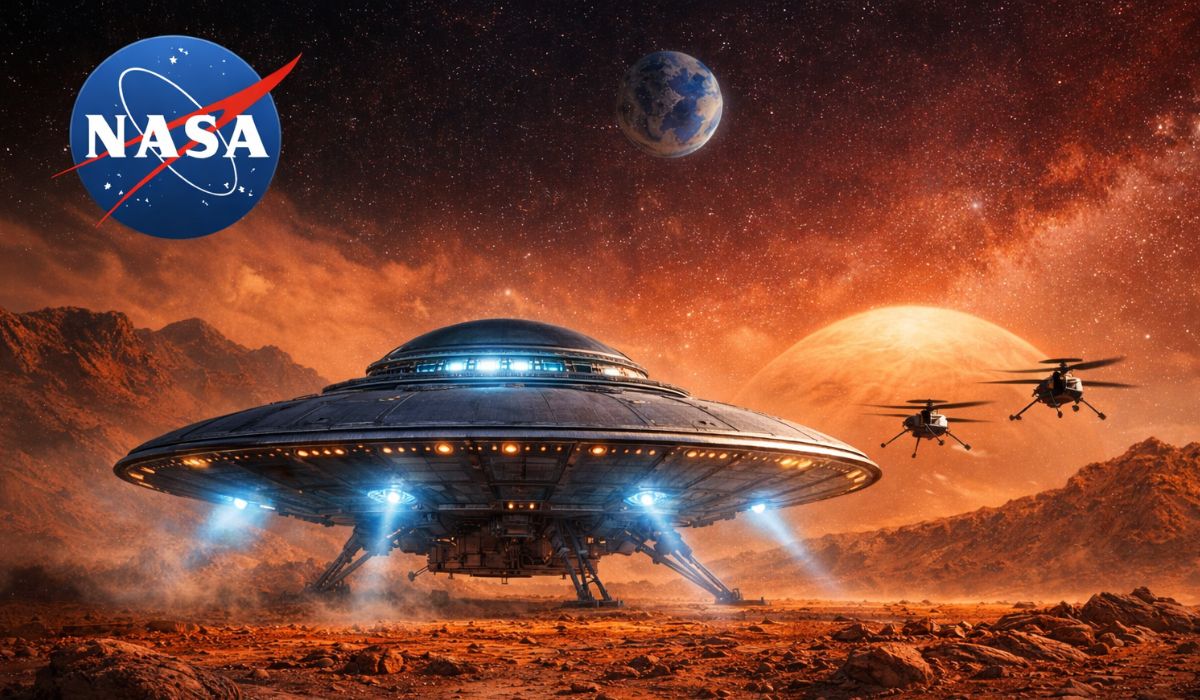
NASA mission focuses on the use of nuclear energy in deep space and repositions Mars at the center of tests for technologies that could influence future robotic operations and long-duration projects off Earth.
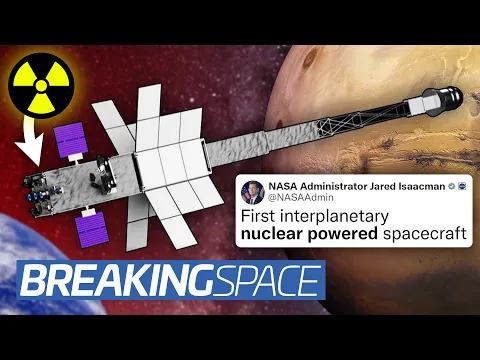
The NASA confirmed the development of the Space Reactor-1 Freedom, or SR-1 Freedom, a mission planned to test the use of nuclear electric propulsion on an interplanetary journey.
According to the agency, the launch is scheduled for December 2028, during a favorable window for Mars.
The goal is to deliver to the red planet the scientific payload Skyfall, consisting of three helicopters of the Ingenuity class, in addition to demonstrating the use of a fission nuclear reactor to propel a spacecraft beyond Earth’s orbit.
-
Brazilian mechanic invented a lamp made from a PET bottle during the 2001 blackout, the idea turned into an NGO present in 30 countries and has already illuminated 40,000 people in 200 communities without electricity in Brazil.

-
The first trillionaire in history, Elon Musk, opens his wallet and pays the equivalent of R$ 306 billion, or US$ 60 billion, for the artificial intelligence programming startup Cursor, in yet another AI investment made through SpaceX, his rocket company.
-
The future of computers may change sooner than expected: Amazon bets on commercial quantum computing within seven years, while qubits, the Ocelot chip, AI, and scientific simulations take center stage in the new race among big techs.

-
What does a Covid-19 vaccine have to do with heart attack and stroke? A study with over 1 million veterans reveals an unexpected link between immunization, the heart, and seniors over 75 years old.




NASA Announcement and Plan for 2028
The announcement was made by NASA on March 24, 2026, as part of a broader set of initiatives related to U.S. space policy.
In the official presentation, the agency stated that the SR-1 Freedom is expected to contribute to the creation of regulatory and operational references for future fission systems in space, with applications in long-duration missions, interplanetary transport, and power generation on surfaces like that of the Moon.

How Nuclear Electric Propulsion Works
Unlike probes powered by radioisotope thermoelectric generators, a technology used in previous NASA missions, the SR-1 Freedom is designed to employ a fission reactor associated with electric thrusters.
In this model, the reactor generates electricity to power the motors, rather than just providing energy to onboard instruments.
According to the agency, this system represents a shift from RTGs, because nuclear energy also becomes part of the spacecraft’s propulsion.
This is the central point of the proposal.
In chemical missions, thrust is high, but propellant consumption is also rapid.
The electric propulsion operates with gradual and continuous acceleration, for prolonged periods, with greater efficiency in the use of onboard mass.
For NASA, this type of architecture can enhance transportation capacity in longer missions and reduce limitations imposed by solar systems in more distant regions or in environments with less light availability.
Power of the SR-1 Freedom and Brayton Cycle
Although the original text mentioned more than 40 kilowatts of power, the official material released by NASA for the SR-1 Freedom states more than 20 kilowatts of electrical power, obtained from uranium fuel and energy conversion via Brayton cycle.
The agency also reported that the spacecraft will reuse hardware already developed for the Power and Propulsion Element, a module originally linked to the Gateway project.
In practice, NASA is trying to bring studies and operations closer to flight.
The official document states that the 2028 mission will function as a test on an operational scale, with a defined schedule and use of components already in an advanced stage.
Furthermore, the proposal involves cooperation with the U.S. Department of Energy, a partner cited by the agency in the effort to qualify the industrial chain, workforce, and safety procedures related to the use of reactors in space missions.
Skyfall and the helicopters that will be sent to Mars
The scientific payload helps explain why Mars was chosen as the destination for the demonstration.
When the SR-1 Freedom arrives on the planet, it is expected to release the Skyfall system, consisting of three helicopters inspired by Ingenuity.
These vehicles are expected to carry cameras, ground-penetrating radar, and radios to investigate areas of interest for future human operations, map possible water deposits below the surface, and provide navigation data for subsequent missions.


The history of Ingenuity serves as a direct reference for this stage.
The helicopter arrived on Mars with the Perseverance rover and conducted 72 flights between April 2021 and January 2024, becoming the first aircraft to operate in a controlled manner on another planet.
In the case of Skyfall, NASA reported that the helicopters will not only have a technological testing function.
The proposal, according to the agency, is for them to recognize the terrain, identify landing risks, and assist in characterizing subsurface ice, a resource deemed relevant for future exploration operations.
Technical challenges of the nuclear reactor in space
Still, the technical challenges remain at the center of the project.
The official material states that, after launch and exiting Earth’s gravitational field, the SR-1 Freedom should start the reactor and the electric thrusters within 48 hours.
This interval was included in the mission plan because the activation of the nuclear system occurs only after the initial flight phase.
From then on, the spacecraft will have to operate in a vacuum environment, under intense thermal variations, and with high reliability requirements.
This is because the reactor, energy conversion, and propulsion need to function in an integrated manner throughout the entire crossing.
According to NASA documentation, this stage will be crucial to assess the system’s performance under real mission conditions.
What the mission may represent for the Moon and future bases
Another relevant aspect is the technological demonstration role assigned to the project.
NASA states that the SR-1 Freedom should pave the way for the Lunar Reactor-1 (LR-1), a fission system designed to provide surface power on the Moon.
According to the agency, testing a reactor in flight first, without the additional complexity of a lunar landing, can reduce risks and accelerate the maturation of technologies for bases that need to continue operating for long periods without sufficient solar generation.
There is also a historical backdrop to this choice.
According to NASA itself, the United States invested for decades in space nuclear programs and launched only one reactor, the SNAP-10A, in 1965, without taking it beyond Earth orbit.
In this context, the SR-1 Freedom appears as part of an attempt to transform this line of research into effective mission capability, with a defined schedule, industrial integration, and operational objective.
Mission architecture is still under development
For now, the complete architecture of the mission has not been presented in all its details.
Space.com’s coverage, based on NASA’s presentation, reports that the final configuration of the project is still under development and that even the subsequent destination of the SR-1 Freedom, after the delivery of Skyfall on Mars, may still be revised.
What has already been documented, however, places the mission among the agency’s most relevant projects in the field of nuclear energy applied to deep space.
If the schedule is maintained and the spacecraft launches in 2028, the mission is expected to serve not only to transport helicopters to Mars but also to test a technology that NASA considers necessary to sustain operations beyond the immediate vicinity of Earth, including projects aimed at the Moon, Mars, and the outer solar system.




-

-

-

-

-

6 people reacted to this.