






 Portuguese
  Spanish


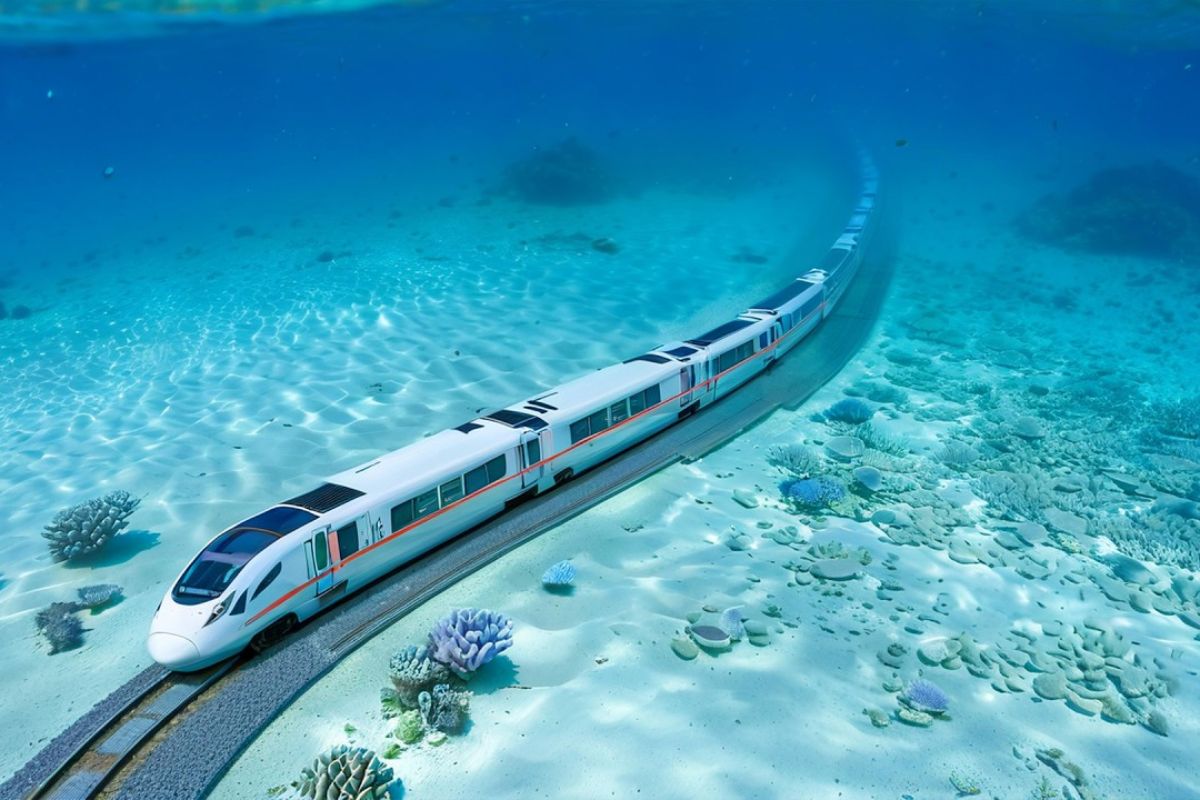


High-Speed Betting: The Jintang Submarine Tunnel Integrates the Yongzhou Railway and Promises to Shorten the Ningbo Zhoushan Journey with 16.18 km in Length, 11.21 km Bored Below the Seabed, and a Section of 14.5 m.
The Jintang submarine tunnel embodies China’s ambition to connect productive archipelagos to the mainland with a high-speed rail solution. It is a binary corridor for trains traveling at 250 km/h, designed for two tracks, crossing the channel between Ningbo and Zhoushan, along a route of 16.18 km. The construction combines tunneling by tunnel boring machines and millimeter precision solutions to maintain alignment, watertightness, and stability over the submerged course.
Beyond logistical reach, the project tests human and technological limits. Operating machines with a diameter of 14.5 m at dozens of meters below sea level requires stringent control of pressure, geology, and navigation, with real-time course corrections and special procedures for equipment retrieval after the underground meeting. The result is a construction designed to last and to support high train frequencies without compromising safety.
What It Is and Where It Is Located
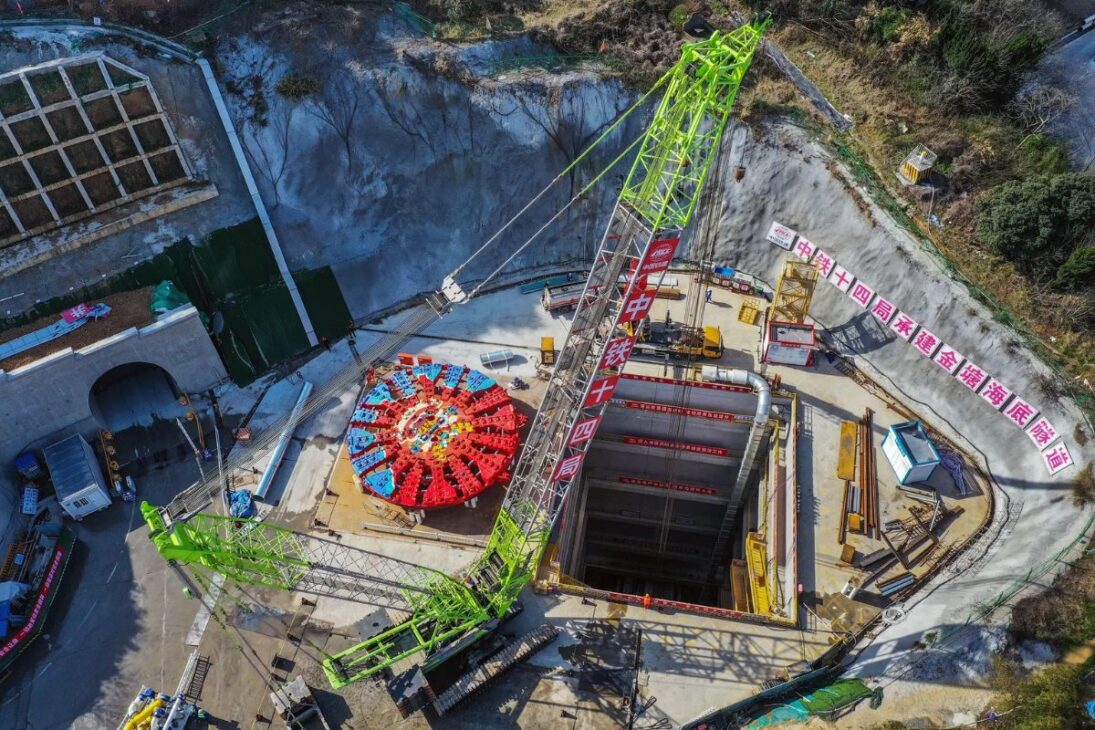
The Jintang submarine tunnel is the key element of the Yongzhou railway, a high-speed corridor connecting Ningbo and the Zhoushan archipelago in Zhejiang province.
-
Billionaire says the most valuable skill will help overcome job elimination caused by AI, following Bill Gates’ fears

-
A Dutchman created a ‘box’ that makes trees grow in the desert almost without water and without irrigation: the invention has already brought seedlings to dozens of countries and achieves up to 90% survival where common planting did not exceed 10%.

-
Abandoned warehouse hid a giant collection of rare computers, with over 2,000 artifacts from the 1930s to the 1980s.
-
Scientists warn that melting ice is triggering an alarming chemical transformation in preserved areas, and the first signs are already concerning researchers worldwide.




The total length is 16.18 km, of which 11.21 km run beneath the seabed, connecting banks that were previously separated by road crossings and variable weather conditions.
Designed for speeds of 250 km/h, the tunnel has a 14.5 m internal diameter, sufficient for two railway tracks.
The route reaches depths of about 78 m below sea level, an area where hydrostatic pressures and geotechnical demands require highly robust construction solutions.
How It Is Excavated and by Whom
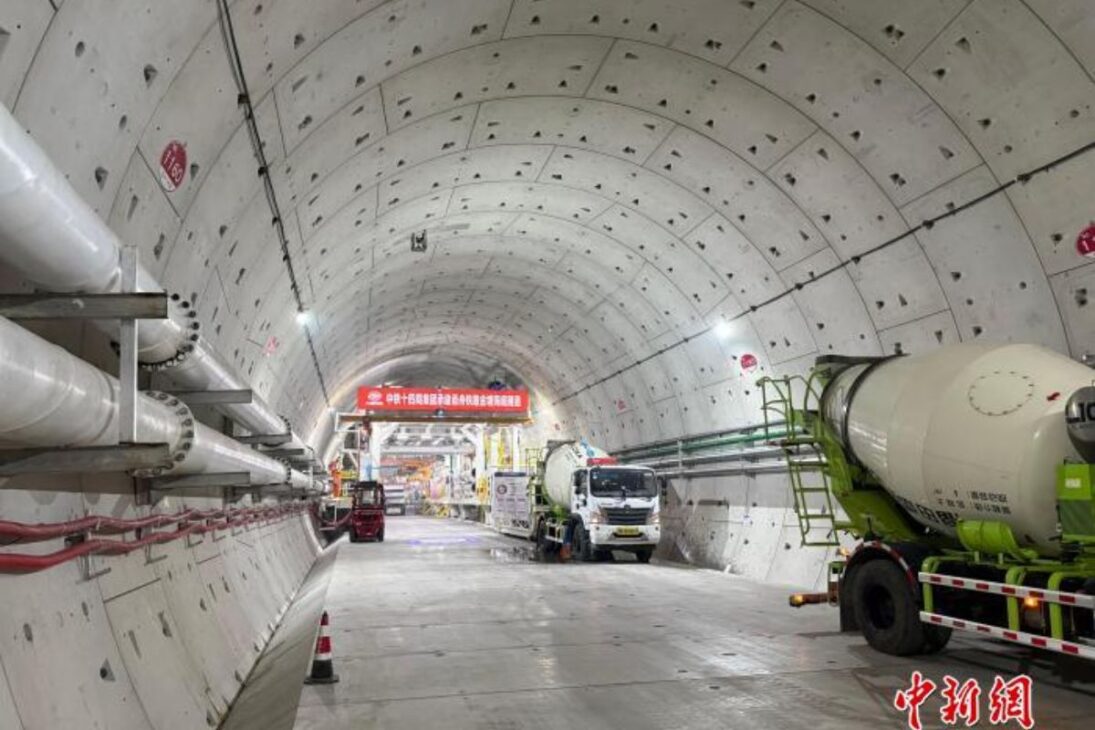
The construction of the Jintang submarine tunnel uses two large tunnel boring machines, Dinghai and Yongzhou, which advance from opposite banks to a defined meeting point in a stable rock mass.
The navigation system uses the BeiDou constellation for continuous trajectory correction, ensuring convergence within extremely tight tolerances.
At the meeting point of the shields, alignment error is controlled to within centimeters, an essential condition for continuity of the lining ring and structural performance.
As there is no free face after the junction, a method known as shell peeling is applied, dismantling the tunnel boring machines from the inside and incorporating remaining structures into the tunnel body.
Geotechnical Challenges and Solutions
The route crosses 28 geological transitions, alternating solid rock and soft soils, which require adjustments of chamber pressure, cutting torque, and differentiated advances.
Water injection systems have been installed at the cutting head to deal with sticky clays, reducing adhesion and stabilizing the flow of excavated material.
The operational depth requires reinforced seals and drive arrangements with a high safety factor, mitigating infiltration risks and ensuring the dynamic stability of the assembly.
Each ring section is assembled under strict geometry control, ensuring circularity and watertightness in a permanent regime.
Why the Project Is Unique
The Jintang submarine tunnel stands out for its level of rail speed in a submerged environment, with 250 km/h.
This performance surpasses established parameters of long underwater tunnels, by combining large diameters, dual track, and aerodynamic envelope suitable for pressure interactions between trains.
The 14.5 m section balances space for two tracks, technical passages, and ventilation and emergency systems without compromising the integrity of the lining.
The result is a rare standard of capacity and operational regularity in underwater tunnels, designed for high frequencies and predictable maintenance.
Timeline, Capacity, and Logistical Impact
The executive plan foresees complete tunnel breakthrough by the end of 2026 and the Yongzhou railway entering service in 2028.
The journey between Ningbo and Zhoushan is expected to drop to around 30 minutes, replacing trips subject to traffic, tides, and winds with a stable time window.
The high-speed operation on dual track creates capacity for pendulum flows of passengers and high-value cargo, strengthening industrial and port chains in Zhoushan.
By reducing time costs, the Jintang submarine tunnel reconfigures employment hubs and expands the effective market for services and tourism.
Precision and Risk Control
In submerged tunnels, small deviations accumulate over kilometers, which is why the project adopted rock meeting geometry and continuous correction via BeiDou.
Keeping alignment error around a few centimeters is crucial to avoid settlement, parasitic forces, and turbulence in joints.
After the meeting, the method of internal disassembly of the tunnel boring machines eliminates the need for additional wells under the sea and reduces environmental interference.
The remaining structural shells reinforce the tunnel, adding stiffness and contributing to durability.
Reference Lessons and Technological Maturity


The Chinese experience with submerged works includes large immersed tube tunnels, such as the Hong Kong Zhuhai Macau link, with modules of hundreds of meters and high precision positioning.
This industrial base, involving pre-fabrication and millimeter positioning, feeds the learning curve applicable to the Jintang submarine tunnel.
Although the technology and scale are impressive, projects of this nature require careful environmental and social assessment, from dredging and construction sites to maintenance routes and emergency response.
The consolidation of protocols and technical transparency is essential for long-term sustainability.
For the passenger, the Jintang submarine tunnel delivers predictability, reduced door-to-door time, and direct integration with high-speed networks.
For the regional economy, it enables a competitive corridor for services, logistics, and tourism, with positive externalities in innovation and qualification.
In engineering terms, the project pushes boundaries in excavation under pressure, precision navigation, and geological variability management, consolidating standards that can inform future endeavors in equally demanding contexts.
Do you see more value in connecting islands with high-speed submarine tunnels, or do you think bridges and maritime routes are still sufficient for the Zhoushan region?





Rotas submarinas..sou contra.. agora um pequeno percurso submerso se faz necessário em alguns casos.. que não haja outra alternativa .
Chineses são fo** mesmo❗
…se fosse no Brasil iria custar 30 X mais e promessa para terminar em 2050. Mas a construção iria sofrer inúmeras paralisações e a corrupção iria elevar os custos mais de 100 vezes… e ainda a obra seria reprogramada para terminar em 2100. E ainda assim… se terminar.