






 Portuguese
  Spanish
  3 min of reading
  0 comments


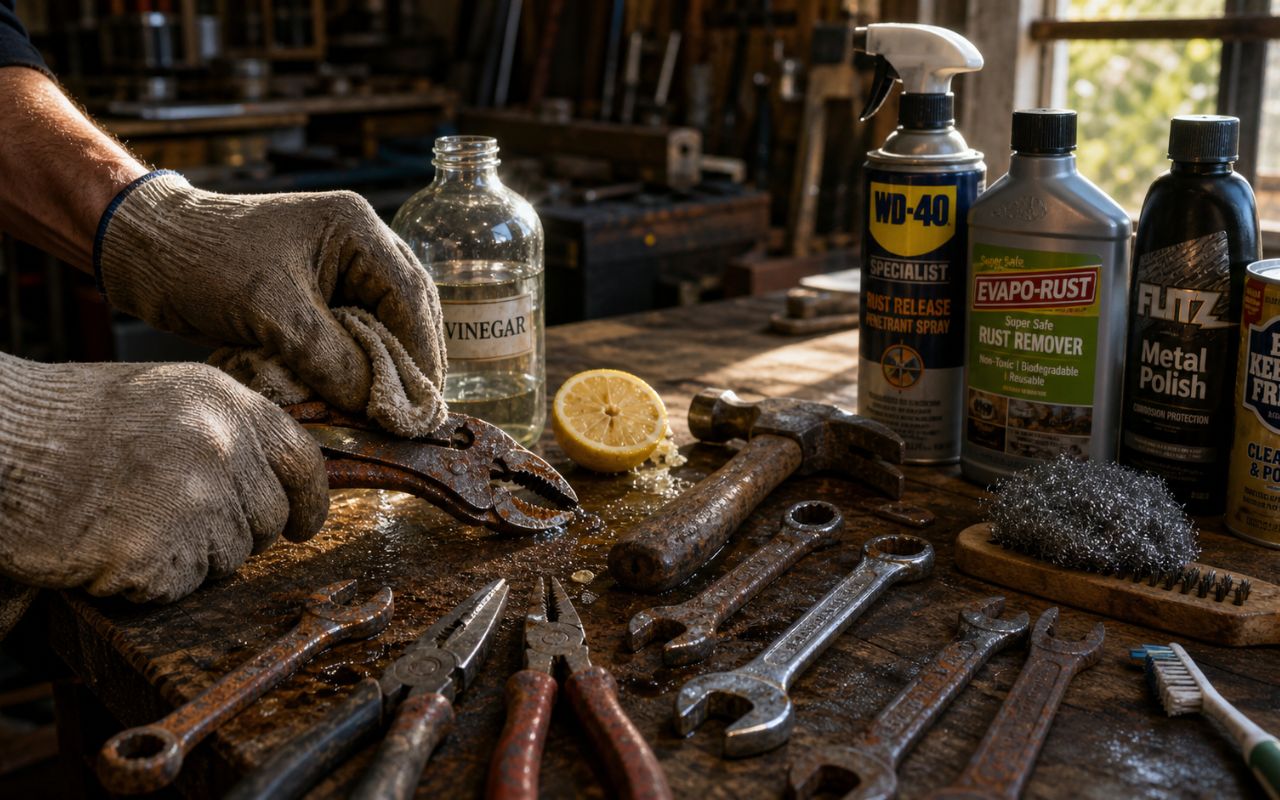
Discover foolproof methods for removing rust from tools. From vinegar to chemical converter, learn how to recover your equipment simply.
The durability of any metal equipment directly depends on how it is stored and cleaned after use. When iron or steel comes into contact with oxygen and water, oxidation occurs, a process that creates that coppery layer capable of jamming pliers and rendering keys useless.
Knowing how to remove rust from tools is, therefore, an indispensable skill for those who wish to preserve their investment and ensure safety in manual tasks.
Whether through homemade techniques with kitchen items or the use of professional chemical compounds, restoring oxidized pieces returns the original efficiency to items that seemed lost.
-
Survivor of 1966 SS Daniel J. Morrell Shipwreck in Lake Huron Recounts 38-Hour Ordeal in Extreme Cold

-
The Greatest Hoax in World Cup History? The Film That Denied Brazil’s 1958 Victory and Exposed How Fake Evidence Can Seem Convincing on TV
-
Fake South Korean Online Stores Offer Shopping Thrill Without Spending Money or Receiving Products
-
The War of Jenkins’ Ear: How a Severed Ear Sparked One of the 18th Century’s Most Unusual Conflicts


Professional methods and high-performance chemical products
For those seeking speed and definitive results, especially in cases of advanced corrosion, the market offers technological solutions that surpass home recipes.
The main professional allies for removing rust from tools are:
- Rust converter: Ideal for maintenance, it transforms oxidation into a protective black primer. According to experts, the great advantage is that it eliminates the need for heavy sanding before applying new protection.
- Rust neutralizer: It acts by interrupting the existing degradation, transforming rust into phosphates that ensure much better adhesion for painting gates, windows, or bodywork.
- Remover and stripper: This product chemically cleans carbon steel surfaces, removing corrosion residues and forming a phosphate film that prevents new stains from appearing quickly.

How to remove rust from tools with household items
Often, the solution to recover a jammed plier is inside the kitchen cabinet. Acidic or carbonated substances have properties that react with iron oxide, facilitating its manual removal.
One of the most effective techniques involves using white vinegar, which contains acetic acid. Simply leave the piece submerged for about 48 hours and finish the job with a steel sponge.
The use of cola soda follows a similar logic: due to the carbon dioxide, the drink helps loosen the dirt if the tool is soaked overnight. Other options include:
- Baking soda paste: Mix with water, apply to the piece, and let it act for a few hours.
- Lemon and salt: Rub the cut lemon with salt to create a natural sanding effect.
- Bed of potatoes: The ascorbic acid in the tuber, combined with detergent, helps remove rust and restore shine to the metal.
What is rust and how does it form?
Rust is the common name for the chemical process of oxidation. It naturally occurs when metal is exposed to air, but the process accelerates critically in high humidity environments.
Identifying the problem is easy: the surface turns copper-colored and the paint begins to peel. In civil construction, where contact with water is frequent, this is a constant challenge.
However, if the damage is only superficial, the piece can be completely saved with proper cleaning.


Prevention: the secret to always new tools
Knowing how to remove rust is important, but preventing it from appearing is even more essential. Prevention remains the most economical and effective form of conservation.
To protect metal parts, the ideal is to prevent contact with moisture and oxygen. Keeping tools stored in dry places — such as cabinets or pantries — and away from humid environments, like bathrooms and laundries, already greatly reduces the risk.
After cleaning, it is crucial to dry the items well and apply protective products, such as paints with a high zinc content or epoxy coatings, which slow down the oxidation process.
With information from Obramax





Be the first to react!