






 Portuguese
  Spanish
  3 min of reading
  0 comments


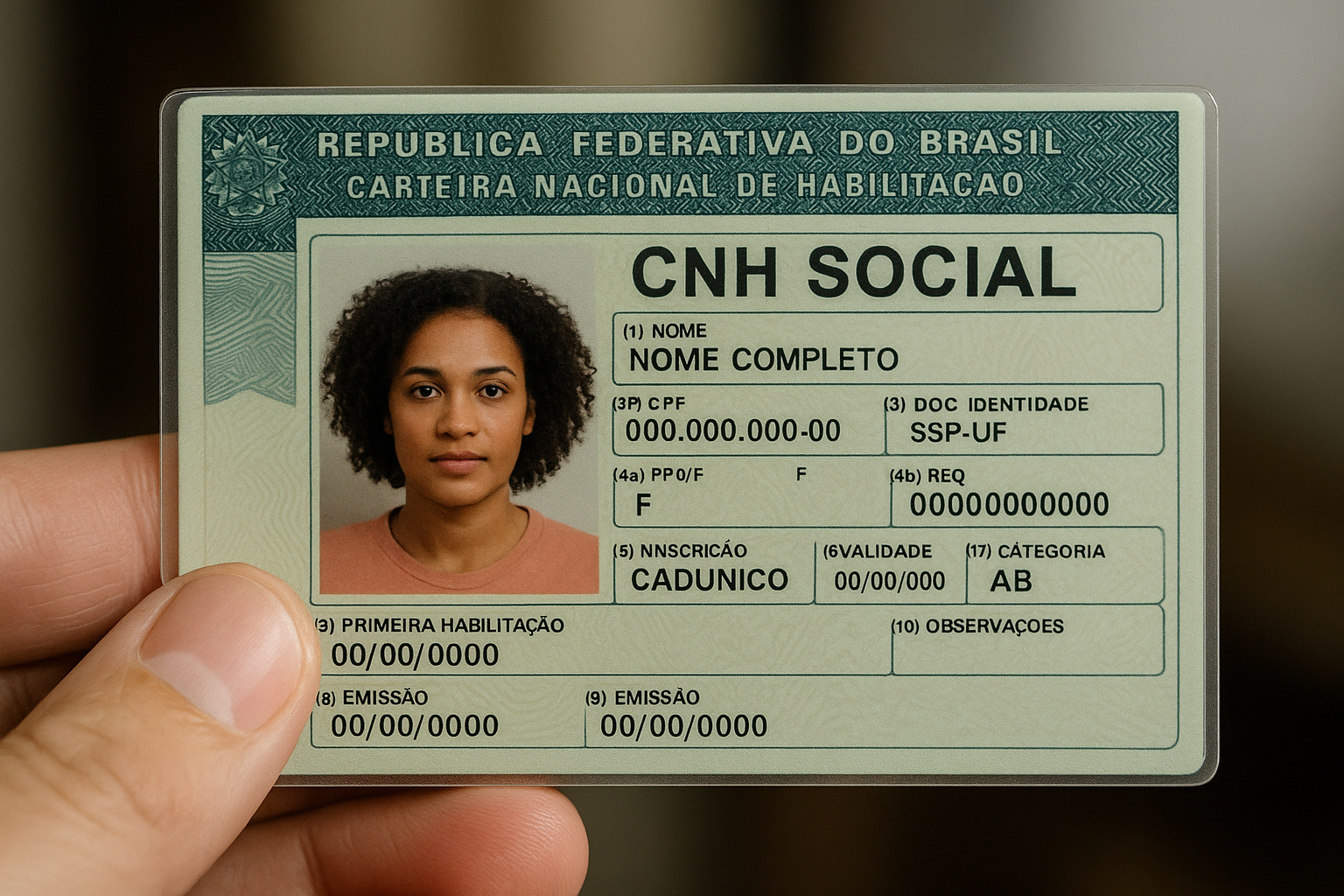
Federal Program Is Now In Effect And Prioritizes Women In Situation Of Social Vulnerability
Since August 12, 2025, the law that amends the Brazilian Traffic Code (CTB) allows low-income citizens to obtain a National Driver’s License at no cost, through the Social CNH.
In addition, the federal government finances the measure with resources from traffic fines, significantly expanding access to driver training throughout the country.
Social CNH Guarantees Equal Rights to Traditional License
The Social CNH offers validity and benefits identical to the paid license, ensuring the possibility to work as a professional driver.
Moreover, the program includes all stages of the licensing process, such as:
- Medical and psychological exams
- Theoretical and practical lessons
- Test fees
- Document issuance
Therefore, enrollment in the program will follow the rules established by the Detran of each state, which will also organize the selection process and oversee the implementation of the benefit.
-
Survivor of 1966 SS Daniel J. Morrell Shipwreck in Lake Huron Recounts 38-Hour Ordeal in Extreme Cold

-
The Greatest Hoax in World Cup History? The Film That Denied Brazil’s 1958 Victory and Exposed How Fake Evidence Can Seem Convincing on TV
-
Fake South Korean Online Stores Offer Shopping Thrill Without Spending Money or Receiving Products
-
The War of Jenkins’ Ear: How a Severed Ear Sparked One of the 18th Century’s Most Unusual Conflicts


Requirements to Obtain the Social CNH
To be eligible for the benefit, the applicant must meet the following criteria:
- Be 18 years or older
- Be enrolled in the CadÚnico — Unique Registration for Federal Government Social Programs
- Have a family income of up to half a minimum wage per person (R$ 706)
Thus, according to the Ministry of Transport, the law expands job market insertion opportunities and strengthens social mobility.
Additionally, the measure helps to reduce inequalities and provide better conditions for those who need it most.
Focus on Women in Social Vulnerability
The program prioritizes women in situations of social vulnerability, aiming to increase autonomy, income, and access to employment.
In this way, the expectation is that many will achieve their first license in categories A (motorcycle) or B (car), strengthening social and financial independence.
Thus, the measure consolidates as an effective tool to transform realities and create new life opportunities.
Current Scenario and Expected Impact
According to data from the National Register of Licensed Drivers (Renach), released in July 2025, Brazil has about 55 million men with a CNH and 31 million women licensed.
Therefore, the federal government expects the Social CNH to help reduce this gap and, at the same time, increase female participation in traffic and the professional market.
Furthermore, the program may encourage more people to train for passenger transport, cargo transport, and other services that require licensing.
Benefit with Potential for Social Transformation
The impact of the Social CNH goes far beyond free licensing.
This is because experts assert that, by providing training and documentation at no cost, the program stimulates income generation, creates new job opportunities, and reduces historical inequalities in access to transportation.
However, for the results to be achieved, it will be essential to maintain efficient management, transparency, and rigorous oversight.
Thus, the benefit will reach the right audience and resources will be applied responsibly and strategically, ensuring a positive and lasting social impact.





-

2 people reacted to this.