






 Portuguese
  Spanish


Tatiane Fávaro returned from São Paulo to help her father, inherited the trade, and started producing vegetables in greenhouses in Tupã. After facing prejudices, she became a supplier to two major supermarkets and helped inspire a proposal for a seal focused on female leadership in the local agribusiness in São Paulo in 2023.
The vegetables cultivated by Tatiane Fávaro in greenhouses in Tupã, in the interior of São Paulo, carry a trajectory marked by life change, family learning, and continuity. She left the São Paulo capital to help her father, learned part of the horticulture work from him, and took over the property after his death.
The story was publicized by the City Council of Tupã on August 29, 2023, during the presentation of a proposal to create the Seal of Support for Women in Agribusiness, known by the acronym AMA. The initiative aimed to identify products linked to rural female entrepreneurship, but the source does not inform if the project later became law.
Return from São Paulo brought daughter and father closer
Tatiane was living in São Paulo when she decided to return to Tupã to help her father on the rural property. He had dedicated a large part of his life to horticulture and passed on to his daughter the knowledge he managed to share during the period they worked together.
-
A rural school teacher uses a board with only 2 letters to form dozens of words, turning literacy into a game and making children learn to read with joy, while the simple method wins over educators across Brazil and takes the video to surpass 6.2 million views.

-
A man left a company he managed for 11 years, exchanged the office for a farm that needed renovations, and created a regenerative system that now feeds more than 2,000 people per week, using greenhouses, rotational grazing, and rainwater to produce for longer without destroying the soil.
-
A woman bought a 1912 lighthouse on a remote island in Norway, spent almost two decades restoring the structure, and transformed the Litløy Lighthouse into a refuge open to visitors in the middle of the North Atlantic.

-
The couple conquered the land after 16 years of struggle, transformed just half a hectare of vegetables into the family’s main source of income, and tripled their earnings with technical support. However, experts claim that the same area can still yield up to 10 times more without expanding the plantation.


The producer described that time as precious, precisely because the learning occurred shortly before her father’s death. The return did not represent just a geographical change, but the definitive entry into a trade built by the family.
After the loss, Tatiane remained at the forefront of production. The source does not inform when the passing occurred nor how long she has been managing the greenhouses alone.
Greenhouses and vegetables became the producer’s responsibility
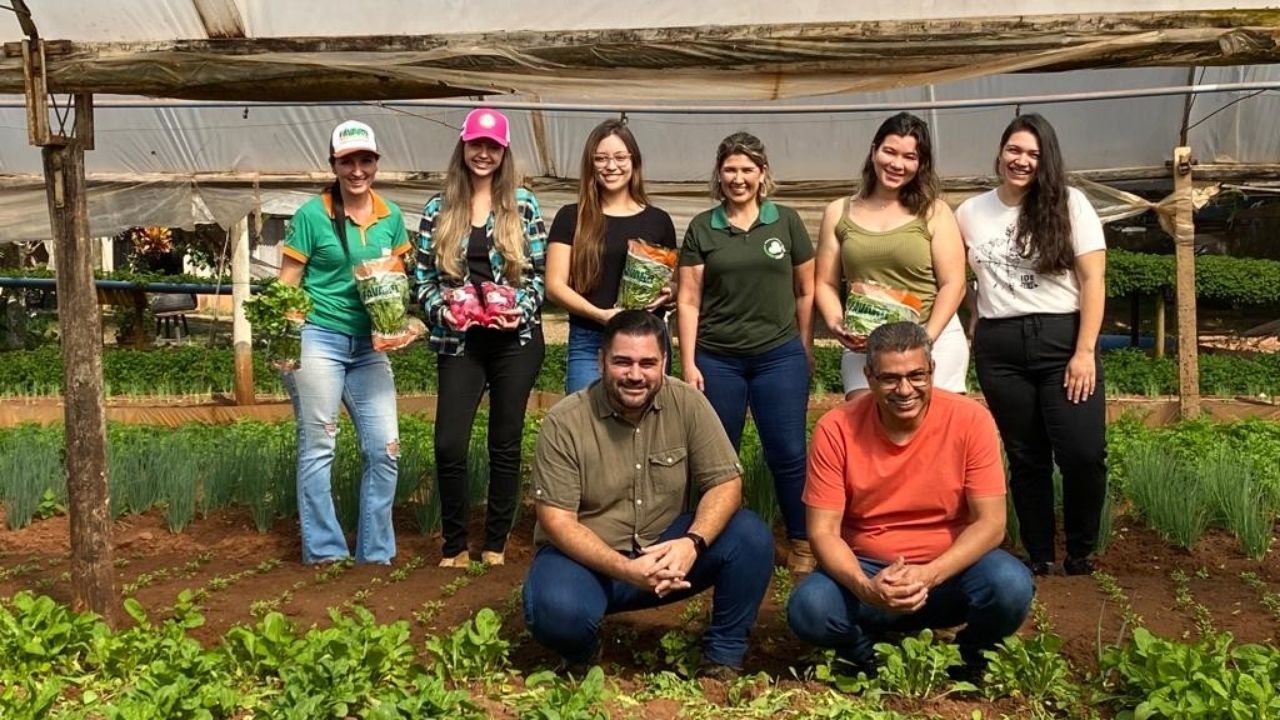
Upon taking over the property, Tatiane began to be responsible for managing the greenhouses and continuing the production of vegetables. The work required preserving the knowledge received and, at the same time, making her own decisions about management, production, and marketing.
The City Council did not detail which varieties are cultivated, the area of the greenhouses, or the volume produced. The confirmed data is that the activity reached a scale sufficient to supply two large supermarkets in Tupã.
This supply placed the property within a regular commercial chain. It also showed that a rural production managed by a woman could meet relevant companies in the municipal market.
Prejudices appeared after she took over the business
Tatiane reported encountering prejudices during her journey. The source does not reproduce specific episodes nor identifies who practiced these attitudes, but records that she faced resistance while managing the property.
The challenge was not only in producing vegetables. She also needed to assert her ability to manage a rural business in an environment where women’s work does not always receive proportional recognition.
The producer found support in other women who advocated for inclusion, qualified management, and leadership in the field. This articulation helped transform individual experiences into a broader network.
Two supermarkets started receiving the production
Tatiane’s property became a supplier of vegetables to two large supermarkets in Tupã. The information demonstrates that the business managed to surpass sales restricted to the property or small occasional buyers.
To maintain this type of commercial relationship, the production needs to meet recurring demands. The source, however, does not provide details on delivery frequency, contracts, prices, or quality criteria required by the companies.
The regular supply serves as concrete evidence of the management capacity built by Tatiane, even though the financial data of the enterprise has not been disclosed.
Network of women began to discuss recognition
The trajectory of the producer gained space in a group focused on female presence in agribusiness. The network brought together rural women, researchers, public representatives, and institutions interested in increasing visibility and support.
Among the organizers were Priscila MacLean, a professor at São Paulo State University and a Ph.D. in Agricultural Sciences, and Liliane Ubeda Morandi, a cattle rancher and a Master in Agribusiness. Both participated in the actions of the group Tribo Agro – Tupã.
The proposal was to show that women not only help in family properties but also manage, produce, market, and make decisions.
Female invisibility was identified as a problem
Liliane Ubeda Morandi drew attention to what she defined as the invisibility of women in the field. According to her, many work in different stages of production but still present themselves only as producers’ wives.
This way of viewing their own work can hide women’s economic and managerial contributions. When female activity is treated as help, and not as productive work, the protagonism disappears from statistics and social recognition.
The situation of Tatiane exemplified the opposite: she was formally in charge of vegetable production and was responsible for the relationship with large local buyers.
The idea of the seal was born in a support network
The proposal for the Agribusiness Women’s Support Seal emerged within the network formed by producers and supporters. The intention was to identify products linked to rural female entrepreneurship.
Councilman Pastor Eliézer de Carvalho committed to bringing the idea to the Tupã City Council. According to the publication, a bill was expected to be presented in the second half of 2023.
The seal aimed to transform symbolic recognition into a visible identification for the consumer. However, the source only reports the proposal’s elaboration phase and does not confirm its approval.
Unesp and city hall participated in the articulation
The São Paulo State University supported the network through actions linked to the involved researchers. The presence of the institution brought the initiative closer to technical knowledge, training, and collective organization.
The Municipal Agriculture Secretariat also participated in the discussions. The then-secretary Anderson Luiz argued that the seal should be more than a decorative mark, functioning as a protocol linked to good practices, training, and social inclusion.
The proposal sought to combine female recognition with criteria capable of conveying consumer confidence. However, the definitive criteria were not yet detailed in the publication.
Field day brought together producers and institutions
A meeting held on August 23, 2023, at one of the participating properties, ended up functioning as a field day. The meeting brought together creators, public representatives, and supporting institutions.
During the activity, details of the creation of the seal and the support network were discussed. The visit to Tatiane’s greenhouses allowed for a practical demonstration of a rural business managed by a woman and integrated into the city’s commerce.
The vegetables supplied to supermarkets gave materiality to the debate on female protagonism, taking the discussion out of the abstract field and bringing it closer to everyday production.
Seal intended to bring consumer and producer closer
The proposed identification would allow consumers to recognize products generated by companies and properties with significant female participation. This could increase the visibility of female producers and businesses managed by women.
Councilman Eliézer de Carvalho stated that large companies, small businesses, and rural properties led by women contribute to family income, jobs, and economic activity.
The seal could function as a recognition tool, provided it is accompanied by clear rules and oversight. The proposal itself mentioned good practices and training as necessary elements.
Tatiane’s story went beyond food production
Tatiane’s journey began with a family decision: to return to help her father. Later, it gained economic dimension when she took over the greenhouses and consolidated the supply of vegetables to supermarkets.
Later, her experience became part of a public discussion about women who sustain businesses in agribusiness. The case brought together family memory, rural production, management, and the search for institutional recognition.
Even so, the report does not provide information on revenue, number of employees, property size, or subsequent results of the legislative proposal. These data cannot be presumed.
Can recognition strengthen other women in the field?
Tatiane Fávaro continued her father’s work, faced prejudices, and maintained a production capable of supplying two major supermarkets. Her story also helped illustrate the need to make women’s work in agribusiness more visible.
The proposal for the AMA seal emerged as an attempt to identify and value businesses linked to this leadership. Do you believe that seals of this type help consumers recognize who truly sustains production in the field? Tell us in the comments if similar initiatives should be adopted in other cities.


