






 Portuguese
  Spanish


The bullet train will have 430 kilometers, will pass through Rabat and Casablanca, and will reduce the trip between Marrakech and Tangier to 2h40, while the route from Rabat to the main airport of Casablanca will drop to 35 minutes within a program that also includes 168 new trains and more cities connected throughout the country.
Morocco plans to build a bullet train with a projected speed of 350 km/h between Kenitra and Marrakech, passing through Rabat and Casablanca, within a railway program approved by King Mohammed VI on April 24, 2025. The new line is expected to be completed by 2030, the year the country will host the World Cup alongside Spain and Portugal.
According to a Reuters report by Ahmed Eljechtimi, published and updated on April 24, 2025, the complete plan was estimated at 96 billion dirhams, equivalent to about US$ 10.3 billion. Besides high speed, the investment will cover intercity trains, urban services, new connections, and measures to strengthen the Moroccan railway industry.
Railway plan exceeds US$ 10 billion
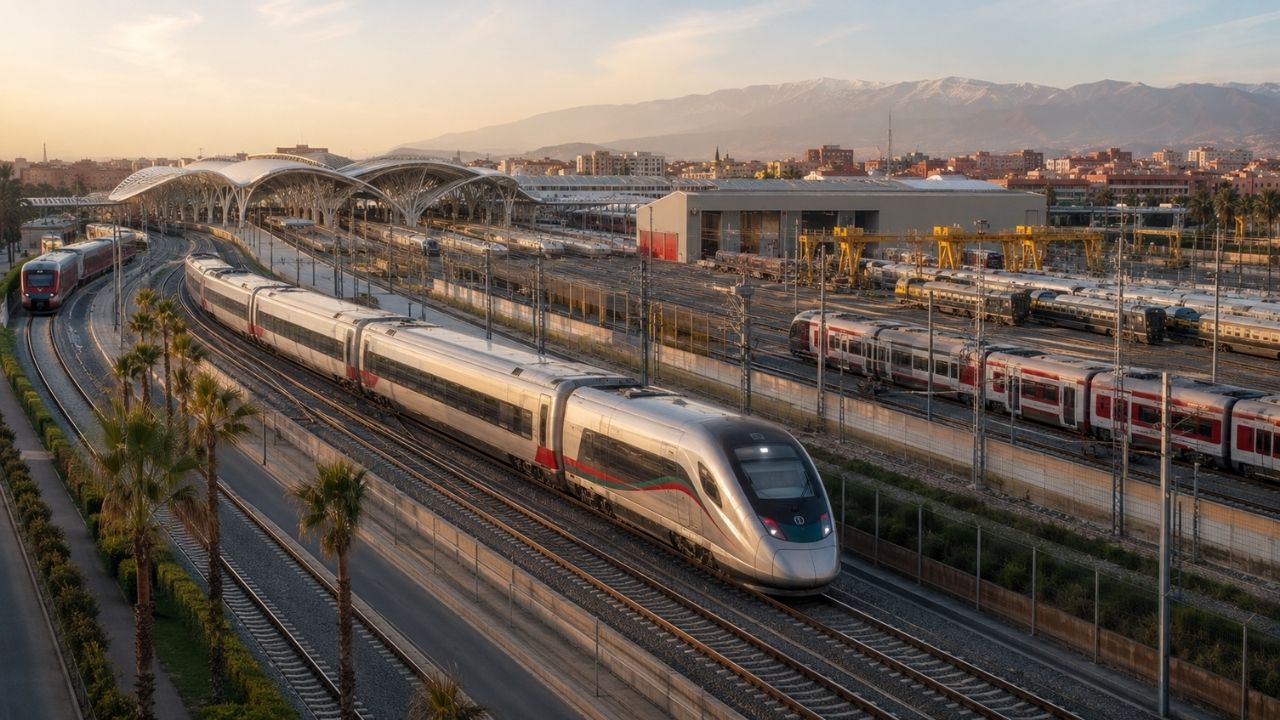
The program approved by the Moroccan government brings together different fronts of network modernization. Of the total 96 billion dirhams, approximately 53 billion will be allocated to the high-speed rail extension to Marrakech, the country’s main tourist center.
-
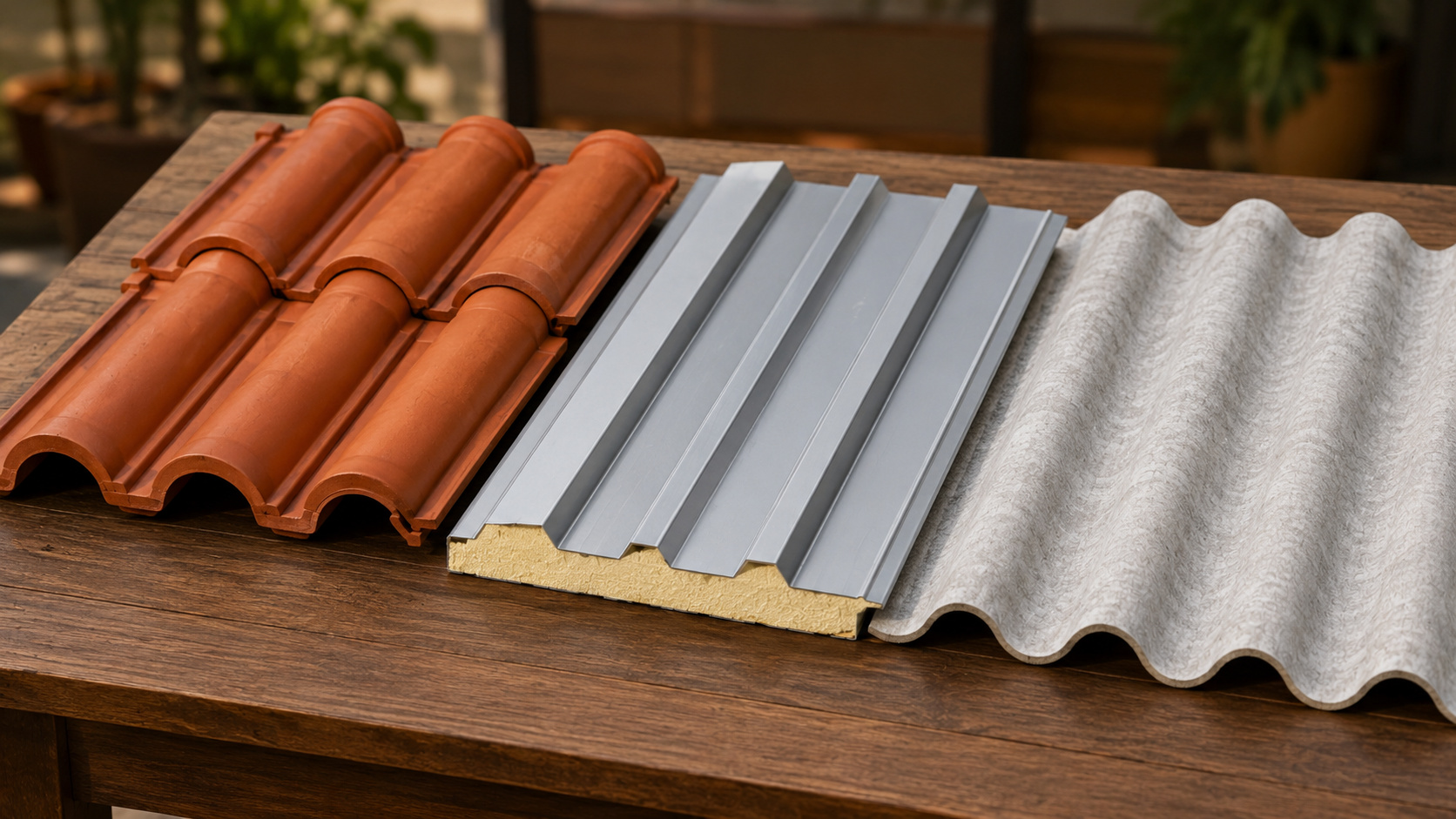
Advancements in construction materials place thermal tiles among the main solutions for tackling high temperatures, offering superior insulation and a direct impact on the comfort and energy efficiency of homes.

-
More than 1,200 concrete mixer trucks poured 12,000 cubic yards of concrete over 36 hours to complete the foundation of the Okan Tower, a 70-story skyscraper that is set to transform downtown Miami with a Hilton hotel, residences, offices, commercial area, and rooftop pool by 2027.

-
McDonald’s discovered a 45-meter Roman road and three burials during construction, funded the preservation, and opened the restaurant with customers walking over the find on a glass floor.
-
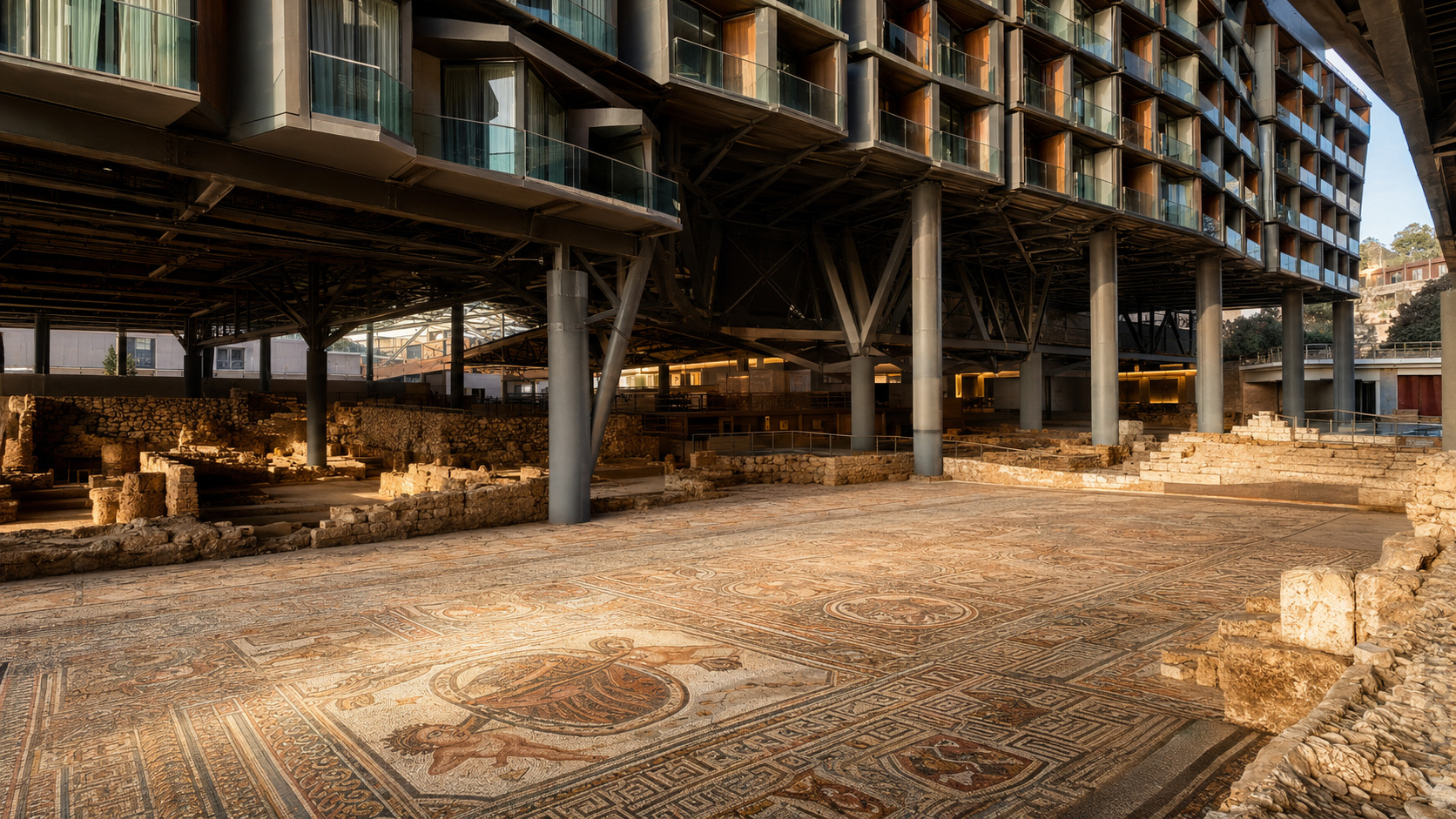
A 400-room hotel began construction in Turkey, but excavations uncovered 2,300-year-old ruins, a mosaic of over a thousand square meters, and 35,000 objects, forcing engineers to cut half of the accommodations and suspend the building over a museum.


The bullet train will be just the most visible part of a much broader transformation. The planning also includes the renewal and expansion of the fleet, the increase in the number of cities served, and industrial investments associated with the production and maintenance of railway equipment.
The expansion occurs at a strategic moment for Morocco. Besides trying to improve internal mobility, the country needs to prepare airports, stations, cities, and transport routes for the expected increase in movement during the 2030 World Cup.
Line will have 430 kilometers between Kenitra and Marrakech
The new railway will start in Kenitra, a city located on the Atlantic coast and already integrated into the Moroccan high-speed network. From this point, the tracks will follow approximately 430 kilometers south to Marrakech.
The route will include passages through Rabat, the administrative capital of the country, and Casablanca, its largest economic center. The route will connect four decisive urban areas for tourism, business, public services, and international travel.
With this configuration, the bullet train will extend the high-speed infrastructure southward that already serves the axis between Tangier and Kenitra. Marrakech will become part of a continuous rail link with some of the main cities in Moroccan territory.
Projected speed reaches 350 km/h
The line was designed to allow speeds of up to 350 kilometers per hour, although the operational speed of the trains may vary depending on the equipment, the section, and the circulation conditions. The main goal is to significantly reduce the time needed to cross the country.
The journey between Marrakech and Tangier is expected to be two hours shorter. With the new structure, the complete route will be completed in approximately 2 hours and 40 minutes, according to the data released about the project.
The reduction brings closer two cities separated by hundreds of kilometers and located at opposite ends of the railway axis. In practice, a journey that takes up a good part of the day can be done in a time comparable to regional commutes.
Rabat will be 35 minutes from Casablanca airport
Another expected result is the reduction of travel time between Rabat and Casablanca’s main airport. With the expansion, the rail journey should be completed in just 35 minutes.
The connection will facilitate access to Mohammed V International Airport, used by both national and foreign passengers. The connection may also reduce dependence on highways in a corridor subject to increased vehicle circulation.
For visitors arriving in Morocco during major events, the bullet train is expected to function as a link between air transport and major urban centers. The proposal is to integrate airport, stations, and cities without requiring long road trips.
Operator will purchase 168 new trains
ONCF, the state-owned company responsible for operating Moroccan railways, had announced in February 2025 contracts to purchase 168 trains. The vehicles will be supplied by companies from France, Spain, and South Korea.
The contracts were valued at 29 billion dirhams and cover different types of compositions. Part of the fleet will be used in the high-speed system, while the other vehicles will mainly serve intercity lines and urban networks.
The acquisition indicates that the expansion does not rely solely on the construction of new tracks. To increase frequencies, serve new cities, and transport more passengers, the country will also need to renew stations, operational systems, and maintenance structures.
French trains will have two floors and 640 seats
The French company Alstom will supply units of the Avelia Horizon model for high-speed services. The trains will have two floors, a capacity for approximately 640 passengers, and a cruising speed of 320 km/h.
Although the railway is designed for up to 350 km/h, the reported cruising speed for the compositions is lower than the projected infrastructure limit. This difference is common in railway systems, where the maximum line speed does not need to be maintained throughout the entire route.
The two floors increase the number of passengers transported without requiring excessively long trains. The capacity will be important during peak times and during international events.
Network expected to reach 43 cities
ONCF’s strategy goes beyond the connection between Kenitra and Marrakech. The operator intends to double the number of cities served by rail transport, reaching 43 municipalities by 2040.
With this expansion, the network is expected to be accessible to 87% of the Moroccan population. The goal involves high-speed services, intercity connections, and urban systems, each targeted at different distances and travel needs.
The bullet train will occupy the main axis between major centers, while other compositions can distribute passengers to smaller cities. The combination of services will be crucial to prevent the benefits of modernization from being concentrated in a few destinations.
Contracts aim to stimulate local railway industry
The agreements for the purchase of the trains also include investments in Morocco’s railway industry. The government hopes to use the network expansion to develop suppliers, maintenance activities, and technical knowledge within the country.
This strategy may reduce dependence on services performed abroad and create a chain linked to the operation of the new compositions. However, the results will depend on the level of participation reserved for local companies and the continuity of investments after the delivery of the first trains.
The railway is now treated as transport infrastructure and also as an instrument of industrial development. The larger the fleet, the greater the need for parts, specialized professionals, workshops, and control systems.
World Cup accelerates investments in mobility
The preparation for the 2030 World Cup has driven the expansion of high-speed, urban, and intercity rail networks. Morocco will co-host the tournament with Spain and Portugal, requiring efficient connections between airports, host cities, and tourist areas.
Although the projects may cater to the temporary flow of the championship, their utility is expected to continue after the event. The infrastructure will be incorporated into the routine of residents, workers, and tourists traveling between Marrakech, Casablanca, Rabat, Kenitra, and Tangier.
The challenge will be to coordinate construction, train acquisition, and station modernization within the scheduled timeline. A line capable of reaching 350 km/h requires signaling, safety, energy, and maintenance systems compatible with high-speed operation.
Project could change the scale of travel in Morocco
The new connection promises to alter the perception of distances between the north and south of the country. By placing Marrakech 2h40 from Tangier and Rabat 35 minutes from Casablanca airport, the bullet train could make rail transport more competitive against cars and some domestic flights.
The plan, however, will require that the billion-dollar investment results in affordable fares, integration with other transport modes, and reliable services. Speed alone does not guarantee that the population will use the railway, especially when stations and final destinations remain distant.
Do you believe that a 350 km/h bullet train can transform Morocco’s mobility and tourism, or should the investment prioritize urban networks and conventional lines? Leave your opinion in the comments and tell us which part of this project caught your attention the most.


