Dubai showed the first look at its new Metro trains on Sunday, November 22, as Crown Prince Sheikh Hamdan said the Dh20.5 billion Blue Line is nearly 30 per cent complete and on track to open in 2029.
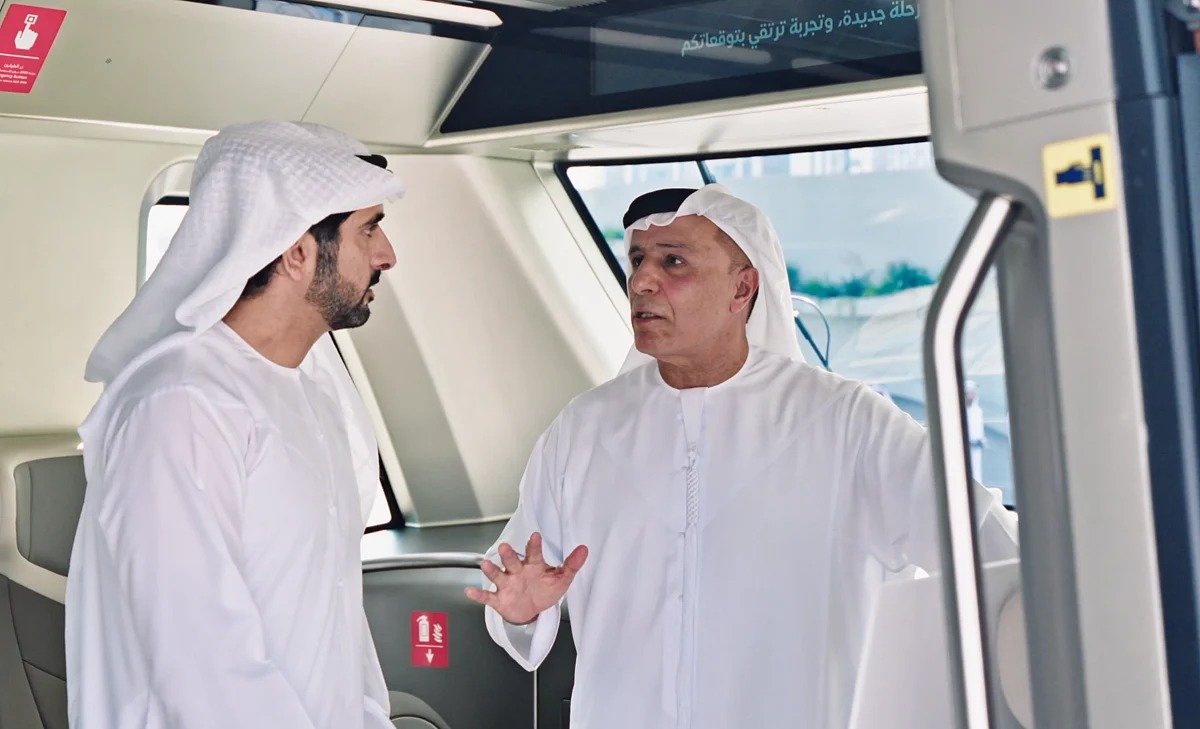
Sheikh Hamdan bin Mohammed visited the project at Dubai Festival City and met officials from the Roads and Transport Authority (RTA), which is building the line.
“The project is nearly 30% complete, with a team of 14,000 workers, engineers and supervisors having clocked 33 million working hours,” he wrote on the social media platform X.
14,000 workers and 33 million hours so far
The figures he gave show the scale of the job. A team of 14,000 workers, engineers and supervisors has logged 33 million working hours on the line so far.
-
Keolis Côte d’Ivoire chief Paulin Murhula has started preparing the crews for Abidjan’s first metro, a 37.4 km line with 18 stations designed for up to 540,000 passengers a day from January 2029.

-
Prime Minister Narendra Modi walked across Nitish Setu after opening the 9.76-km, six-lane bridge over the Ganges, built for about ₹4,280 crore to give north and south Bihar a new road link and take traffic off two older bridges.
-
Singapore Transport Minister Jeffrey Siow broke ground on Tuas Port’s third and largest finger, almost 400 hectares of reclaimed land with 21 mega berths 23 metres deep and an 8.6 km wharf that will start operating in 2028.
-
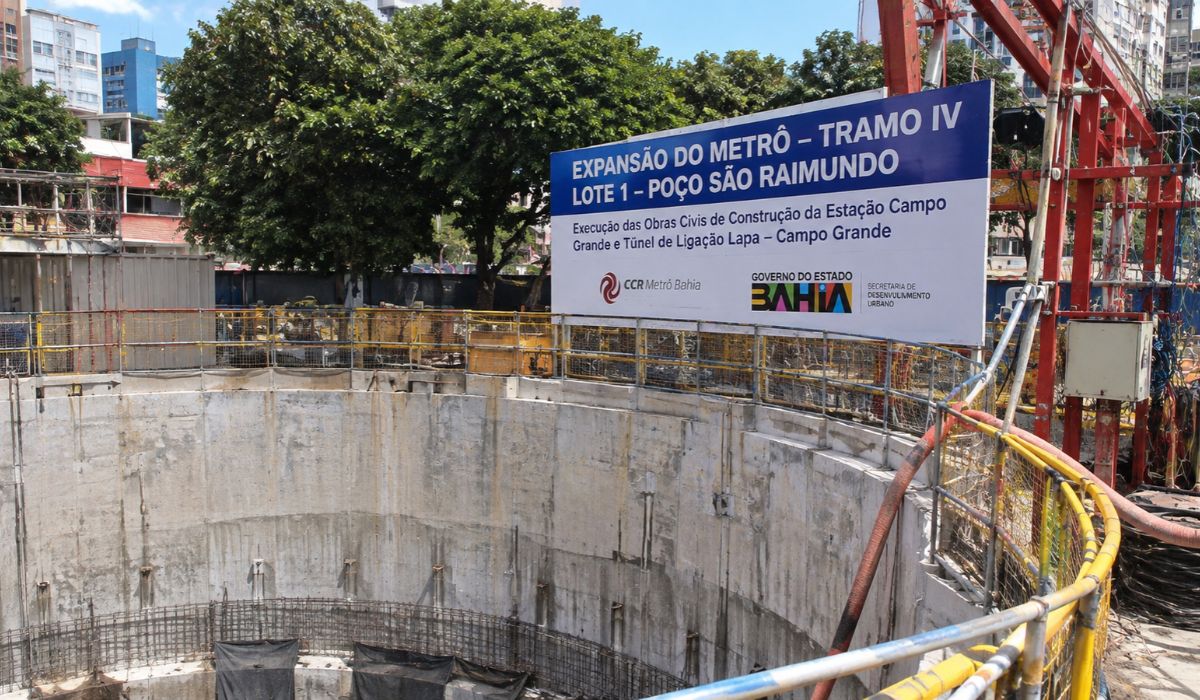
Salvador Metro digs 22-meter shaft beneath Barris to begin tunnel to Campo Grande as R$1.5 billion expansion advances


“Work is gathering pace ahead of the scheduled opening on 9 September 2029,” the Crown Prince said. During the visit he was also briefed on the interior designs of the new stations.
The opening date is symbolic. September 9, 2029 will mark exactly 20 years since the Dubai Metro was launched in 2009, The National reported.
30 km of track, 15.5 km of it underground
The Blue Line will add 30 kilometres to the Dubai Metro network. Of that total, 15.5 kilometres will run underground, a little over half of the route.
It will have 14 new stations on two branches and will connect to the existing Red and Green lines. When it opens, the whole Metro network will be 131 kilometres long with 78 stations and 168 trains.
The line will serve fast-growing districts such as Mirdif, Dubai Silicon Oasis, Dubai Creek Harbour and Dubai International City, according to The National.
Up to 1,246 passengers on each train
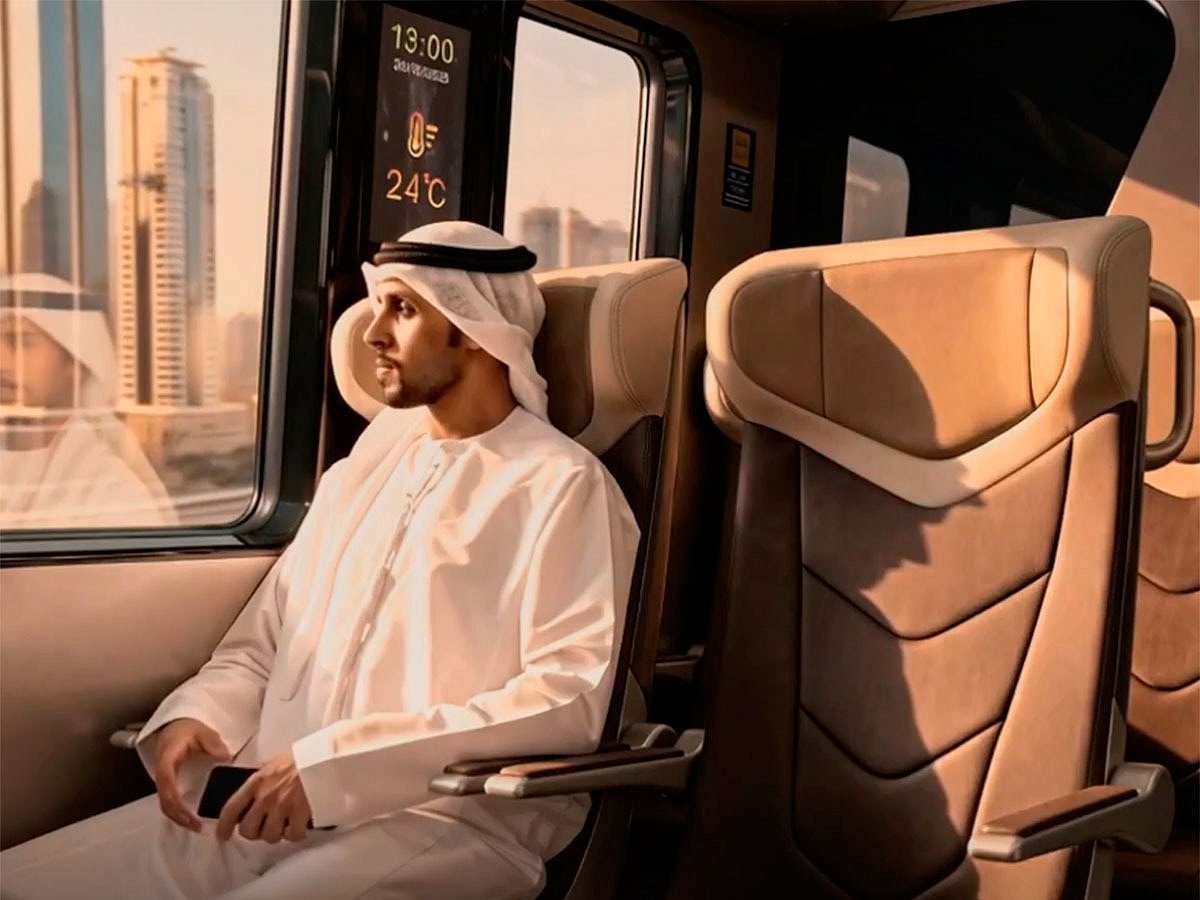
A video released by the Government of Dubai Media Office showed the new trains inside and out. Each one has a design capacity of 675 passengers and can carry up to 1,246 people per journey at most.
The trains will have three travel options. Gold Class is a premium section with upgraded seats. Silver Class is the standard seating for everyday trips.
There will also be a dedicated carriage for women and children, Gulf News reported.
Wireless charging and smart lighting on board
The new trains include wireless charging so passengers can power compatible phones and devices during the trip. Intelligent lighting systems are meant to improve the environment inside the cars.
Officials said other built-in smart systems will support safety, operational efficiency and the overall performance of the network.
A 74-metre station billed as the world’s tallest
Two stations stand out. Dubai Creek Harbour station, also known as Emaar Properties Station, will be 74 metres tall, which Gulf News describes as the tallest Metro station in the world.
International City 1 station will cover more than 44,000 square metres and is designed to handle up to 350,000 passengers a day. It will be the largest underground interchange on the network.
That station is where the two branches meet. One branch starts at Creek Interchange in Al Jaddaf, linked to the Green Line, and has 10 stations. The other starts at Centrepoint in Al Rashidiya, linked to the Red Line, and has four.
The Middle East’s first train systems laboratory
During the visit, the Crown Prince also reviewed how the RTA uses artificial intelligence to inspect and maintain railway track.
He was briefed on plans for a research and development centre with the signalling company CASCO Signal. It will house what officials call the Middle East’s first train systems development laboratory.
According to Khaleej Times, the lab will recreate real operating conditions so engineers can test signalling, communications and train control systems before they are used on the network with passengers.
Tunnelling started in May
Work on the tunnels was inaugurated in May by Sheikh Mohammed bin Rashid, Vice President and Ruler of Dubai, and the first phase of tunnelling has since been completed, The National reported.
The Blue Line is part of the Dubai 2040 Urban Master Plan, which makes easier commuting one of its priorities as the city’s population keeps growing.
Next comes a Dh34 billion Gold Line
The Blue Line is not the last big rail project in the emirate. In April, Dubai announced a Metro Gold Line worth Dh34 billion, about $9 billion.
That line will run 42 kilometres underground and is due to open on September 9, 2032, extending the network by a further 35 per cent, according to The National.
“We continue to invest in world-class infrastructure and a pioneering mobility network that anticipates future needs and keeps pace with the ambitions of Dubai and its people,” Sheikh Hamdan said.
With 70 per cent of the work still ahead, do you think Dubai will open the Blue Line on its 20th Metro anniversary in September 2029?