





 Portuguese
  English
  Spanish
  4 min of reading
  0 comments


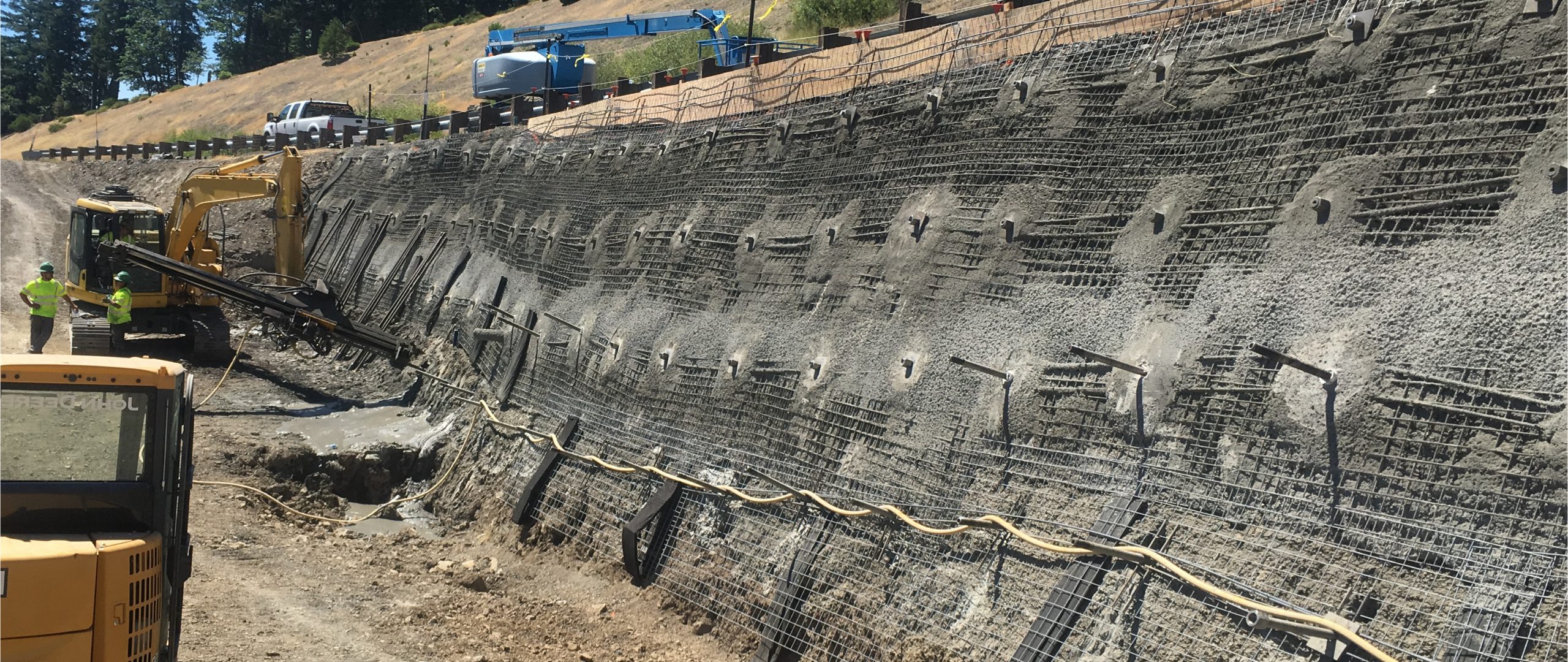
Used To Stabilize Slopes Without Visible Walls, The Soil Nailing Technique “Nails” The Soil From Within, Reinforcing Unstable Slopes And Preventing Landslides In Critical Areas.
In mountainous regions, dense urban areas, and infrastructure corridors where there is no space for large containment structures, a little-known technique outside of civil engineering has been used for decades to solve one of the world’s biggest geotechnical challenges: stabilizing slopes and unstable hillsides without the need for massive walls or large excavations. This technique is called soil nailing, or “soil nailing.”
Unlike visible solutions such as retaining walls, gabions, or reinforced concrete containment, soil nailing acts from the inside out, reinforcing the soil mass as if it were a single structural piece. The result is a slope that appears natural but internally functions as a high-strength engineered system.
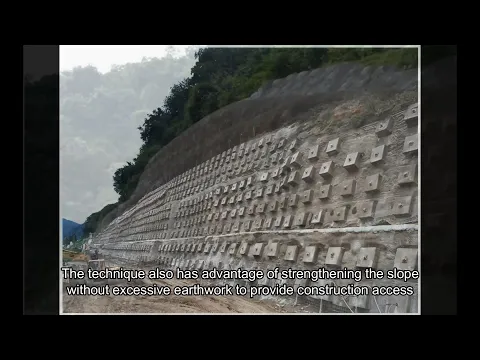

The technique began to gain international scale starting in the 1970s in France, initially applied in deep urban excavations. Since then, it has been used in highways, railways, established urban areas, slopes prone to landslides, and emergency works after extreme events.
-
The largest bridge in Finland has just been inaugurated and cars simply cannot pass on it; only trams, bicycles, and pedestrians are allowed to cross the 1.2 km giant with a 135-meter pillar over the Baltic Sea.

-
A spaceship-shaped building that cost around 1 billion marks and was once the largest congress center in Europe has been abandoned in Berlin since 2014, and now the city is looking for someone willing to renovate and operate it for 99 years almost for free.
-
Finland hides entire cities underground with gyms, playgrounds, and sports fields 25 meters deep, and now the whole world is lining up to learn how to build bomb shelters like the Finns.
-
China is building an artificial island in the middle of the sea, covering 20 km², to construct the largest offshore airport in the world, the Dalian Jinzhouwan. This $4.3 billion project is anchored on more than 3,000 pillars embedded in the rock beneath the ocean and is scheduled to open in 2035.



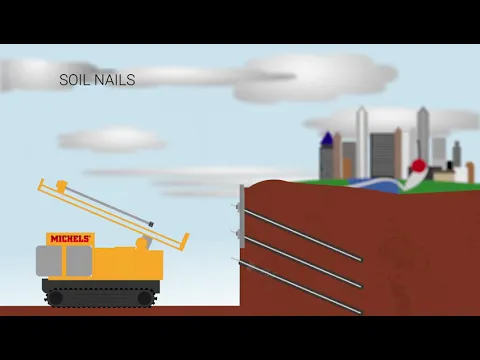
How The “Nailing” Soil Technique Works
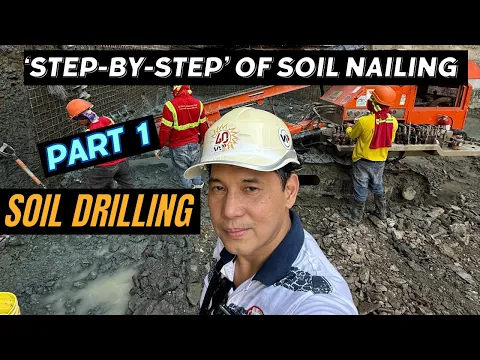
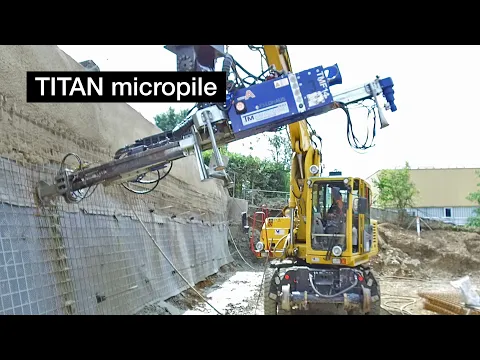
The principle of soil nailing is relatively simple, but its execution requires technical precision. High-strength steel bars, known as “nails,” are installed horizontally or slightly inclined within the soil, crossing unstable layers until they reach more resistant zones of the ground.
These nails typically range between 3 and 12 meters long, and can be longer in special works. After drilling, the bars are inserted and injected with cement grout, creating a solid bond between the steel and the surrounding soil.
On the slope surface, a layer of shotcrete is applied, which distributes loads and prevents surface erosion. In many cases, this layer can receive landscaping or vegetation finishing, making the containment virtually invisible.
The combination of soil + nails + coating functions as a reinforced block, capable of resisting shear forces, earth pressure, and vibrations.
Why This Technique Is So Effective
Unlike traditional walls, which resist soil pressure by “pushing back,” soil nailing increases the internal strength of the ground itself. The soil ceases to be just a load and becomes a proactive part of the structure.
Some of the main technical benefits include:
- Uniform load distribution along the slope
- Less need for heavy excavation
- Phased execution, following the progress of the work
- Possibility of application in urban areas without removing buildings
- Good performance in heterogeneous soils and existing slopes
Tests and monitoring show that slopes treated with soil nailing can achieve factor of safety greater than 1.5, even in regions subject to heavy rainfall or moderate earthquakes, when properly designed.
Where This Technique Has Been Applied Worldwide
Soil nailing is well documented in real-world applications around the globe.
In France, the country where the technique was systematized, it has been used since the 1970s in deep urban excavations, subways, and temporary and permanent containment.
In the United States, the method was incorporated into official manuals beginning in the 1990s. The Federal Highway Administration (FHWA) documents dozens of applications in interstate highways, especially in mountainous states such as California, Colorado, and Washington.
After landslides caused by extreme rainfall, soil nailing has been adopted as a rapid response solution, as it allows stabilization of slopes without long construction timelines.
In Japan, a country highly susceptible to earthquakes and intense rainfall, the technique is used in combination with deep drainage and monitoring systems, ensuring stability even under seismic events.
In Brazil, soil nailing began to gain traction from the 2000s, mainly in mountainous highways, dense urban areas, and emergency containment after landslides. There are documented applications in regions such as Serra do Mar, Rio de Janeiro, Minas Gerais, and São Paulo, often in places where it would be unfeasible to construct large containment walls.
When Is Soil Nailing The Best Option
This technique is not universal, but it stands out in specific scenarios. It is especially indicated when:
- There is space restriction for large structures
- The slope already exists and cannot be fully removed
- The work needs to progress in phases
- The visual impact should be minimal
- The cost of large walls would be prohibitive
On the other hand, it is not recommended for extremely soft soils, organic soils, or areas with very high groundwater levels without prior treatment.
An Engineering That Almost No One Notices But Supports Entire Cities
The most impressive aspect of soil nailing is its invisible nature. Millions of people pass daily through highways, tunnels, and slopes stabilized by this technique without realizing that, behind the seemingly natural landscape, there is a complex underground structure, made up of dozens or hundreds of steel bars working continuously to prevent collapses.
In a scenario of climate change, with increasing frequency of extreme rainfall and soil instability events, techniques like this tend to gain even more relevance.
Not for being grand or eye-catching, but for solving critical problems in a silent, efficient, and proven manner.





-

-

-

-

-

-

15 people reacted to this.