Portuguese
  Spanish


Industrialized bricks used in constructions in China spark interest for reducing the use of traditional mortar, accelerating construction stages, and improving wall alignment, although actual performance depends on proper engineering, specification, and execution.
The bricks used in certain industrialized construction systems in China have drawn attention for creating the effect that they “stick” to each other with the application of water, reducing the use of traditional mortar between courses. The proposal gained prominence by associating speed, cleanliness, and productivity with residential constructions, especially in projects seeking more controlled execution and less waste.
The topic involves modern block systems, manufacturers of industrialized materials, and professionals responsible for design and installation, in a context of constructions that demand greater precision and speed. What stands out is that, despite the almost futuristic visual appeal, the technology does not negate the need for calculation, technical criteria, or correct product selection, as safety and performance remain linked to the overall construction, and not just to how the blocks are laid.
How bricks achieve fixation with water
The idea that bricks stick with just water needs to be understood carefully. In industrialized systems, the union between blocks can occur through mechanical interlocking, thin-layer adhesives, or materials that react to humidity, creating a cleaner and more precise fixation than conventional masonry.
-
Engineering Feat in Brazil: 6.4 km Tunnel and Powerful Pumps Overcome 200-Meter Elevation to Save São Paulo’s Cantareira Water System

-
Engineering Students Build Off-Grid Tiny Home with Sustainable Features and Offer Free DIY Guide
-
Historic Brazilian Championship Stadium Demolished for New Supermarket and Shopping Center Development

-
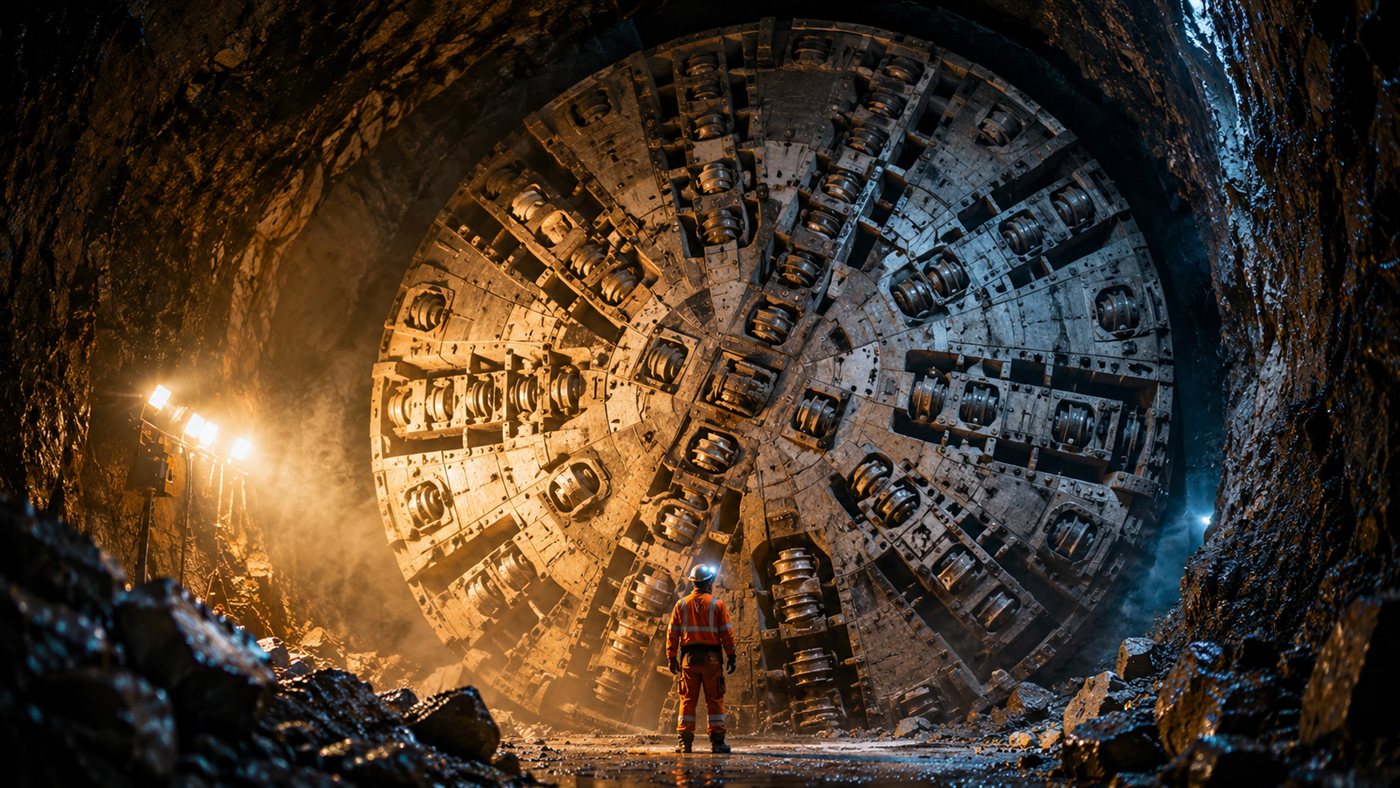
Workers excavate one of the world’s longest railway tunnels beneath the Alps between France and Italy, stretching nearly 60 km, 600 meters deep, with an investment of 11 billion euros.


This means that the “sticking with water” effect does not transform any common brick into a structural piece just because it was wet. What exists, in practice, is a construction system designed to work with dimensional precision, compatible materials, and a different laying logic than that used in traditional walls.
Why these bricks attract so much attention in civil construction
Interest grows because the sector seeks solutions that accelerate construction without losing control of execution. When bricks are part of a more standardized system, construction tends to gain pace, reduce improvisation, and decrease rework, something valuable in popular housing, projects with tight deadlines, and those that prioritize productivity.
Furthermore, the visual appeal is strong. Seeing blocks being laid with less mortar between pieces gives the sensation of advanced technology and a more efficient construction. However, the true differential is not just in the appearance of the laying, but in the system’s ability to deliver more predictability, less mess, and better wall regularity.
What advantages can these bricks bring to construction
When properly specified, bricks from industrialized systems can reduce the consumption of traditional mortar, improve the fit between pieces, and make the construction site cleaner. This helps control material, reduce debris, and accelerate wall construction.
Another important gain is standardization. More uniform blocks facilitate plumb, level, and alignment, reducing the need for subsequent corrections. In practice, this can mean a more organized construction, with less waste and faster progress in the sealing stages.
What changes in practice compared to traditional masonry

In conventional masonry, the mortar between pieces plays a central role in accommodation, leveling, and laying. In these systems, however, bricks work with a more precise logic, where the bonding material can be thinner and the fit needs to be more controlled.
This changes the construction routine. Execution tends to be cleaner, project interpretation gains even more importance, and the tolerance for error decreases. Instead of relying on constant corrections on site, the system requires accuracy from product selection to the labor that will perform the installation.
Do these bricks replace all use of cement in the house
No. Even when bricks reduce the use of mortar between courses, construction can still depend on foundations, pillars, beams, lintels, counter-lintels, grout, reinforcements, coatings, and waterproofing solutions, as per the project.
This is an essential point to avoid misinterpretations. Innovation can reduce part of the traditional mortar in wall construction, but this does not mean that the entire house will function without other structural and technical elements. The performance of the work remains linked to the complete system and the function of each wall within the project.
The difference between sealing and structural function changes everything
One of the most sensitive points is understanding whether the wall made with these bricks serves only for sealing or if it helps support loads. This difference completely alters the calculation, the type of product chosen, and the technical responsibility involved.
Therefore, treating all blocks as if they were the same is a mistake. A solution may work very well for enclosing spaces but not be suitable for a structural function. What defines this is not a beautiful assembly video, but the correct specification, material testing, and approval by the responsible professional.
What precautions should be taken before choosing the system
The main caution is not to decide based solely on visual effect. Before adopting these bricks, it is necessary to verify the compression resistance informed by the manufacturer, indication for sealing or structure, behavior in the face of humidity and infiltration, need for trained labor, compatibility with Brazilian technical standards, and availability of complementary parts and technical assistance.
It is also essential to evaluate whether the system makes sense for the local climate and the type of construction. A material may seem extremely efficient in a certain context and lose performance if used without adaptation or without installation control. The promise of economy and speed is only sustained when the right product meets the right project and the right execution.
Why correct design and certified material outweigh the “sticking” effect


What makes a wall safe is not just the fact that the bricks seem to join with water, but the set formed by design, certified material, technical installation, and quality control. Without this, the system loses reliability and can transform a promise of productivity into a risk of pathology and rework.
It is precisely for this reason that innovation attracts attention, but also demands prudence. The market likes the idea of faster, cleaner, and more economical constructions, but civil construction continues to be a sector where real performance depends on method, verification, and technical responsibility.
Why these bricks may gain ground in the coming years
The search for faster and more predictable constructions tends to keep this type of solution on the market’s radar. Industrialized systems with more precise bricks and less dependent on traditional mortar align with a growing demand for productivity, waste reduction, and more organized works.
At the same time, the expansion of this model depends on technical confidence. The more manufacturers offer certified material, the more professionals master the installation, and the more projects are done correctly, the greater the chance for these systems to gain real traction instead of remaining just an internet curiosity.
If these bricks truly deliver faster, cleaner, and more economical construction, will they become the new standard, or will they still face challenges in cost, adaptation, and lack of specialized labor?