Portuguese
  Spanish


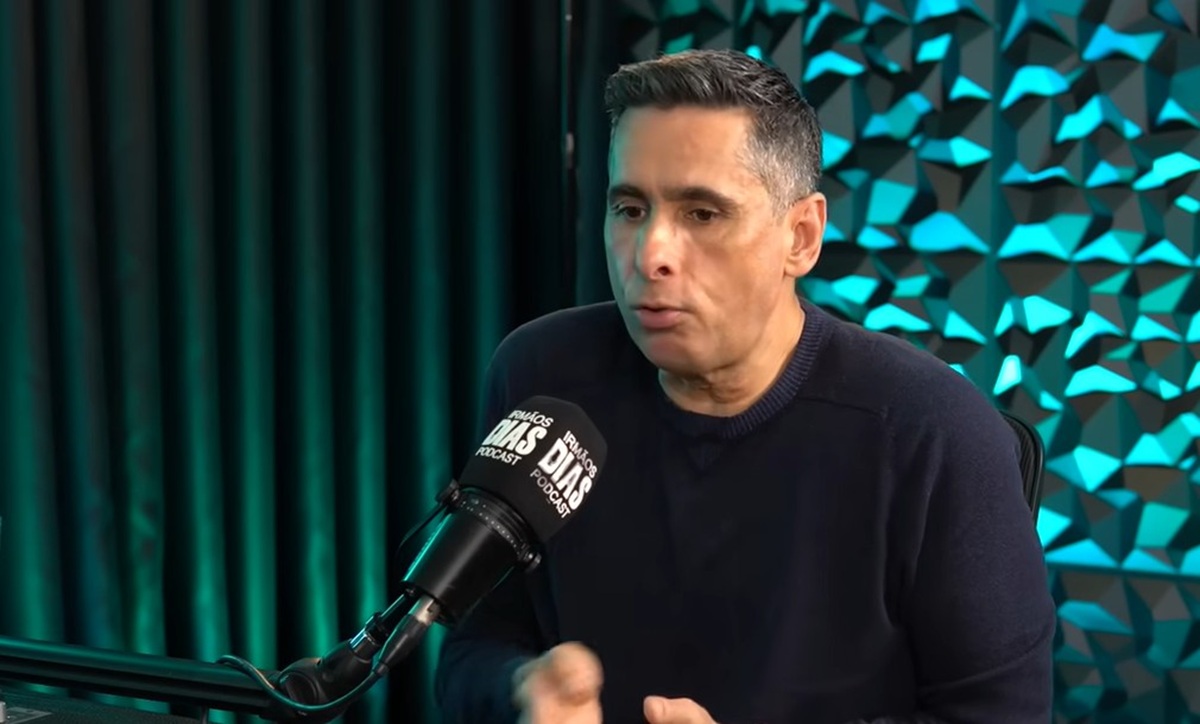

Flávio Augusto’s Speech on the Irmãos Dias Podcast Details Why Knowledge, Mindset, and Mastery of Sales Form the True Divide Between Those Who Remain Stuck in the System and Those Who Achieve Financial Independence.
The conversation presented on the Irmãos Dias podcast, featuring Flávio Augusto, develops a lengthy reflection on poverty, mindset, knowledge, dependence on the state system, sales, leadership, and paths to financial ascension.
Throughout the dialogue, Flávio details his view on how individuals can transform their own reality based on knowledge that, according to him, does not appear in schools or universities.


Flávio’s View on Poverty and Knowledge
Flávio claims that he does not believe anyone is poor because they want to be, but he also rejects the idea that poverty is a result of victimization.
-
Cameroon’s Wealthiest Billionaire to Invest Nearly Entire Fortune in $900 Million Airline to Boost Central African Connectivity

-
China Transforms South China Sea Landscape by Dredging Sand to Build Artificial Islands with Runways, Hangars, Radars, and Ports on Contested Reefs
-
Brazil to Phase Out Gasoline Subsidy, Fuel Prices Set to Rise Amid National Debate

-
Brazil Aims to Boost Critical Mineral Production to 12.2% of Global Output, Targeting Battery and Tech Industries




For him, these extremes do not explain reality. His central argument emphasizes that people who remain in poverty lack knowledge.
He cites Brazil as a place full of contradictions and opportunities, although he describes it as a madhouse that he avoids commenting on repeatedly.
According to the businessman, there is a mistaken perception that only those who commit fraud become wealthy.
He emphasizes that there are both rich and poor crooks, and that he has encountered this type of person on both sides. For him, wealth does not depend on morality, but on knowledge and the ability to take action.
Within this perspective, Flávio assesses that the school provided by the state does not deliver the bare minimum, let alone provide self-esteem to students. He advocates that schools could be centers of recovery, but they do not fulfill that role.
The Role of Sales as a Turning Point
Flávio highlights that he learned to sell to escape poverty. He states that sales, despite being overlooked by many intellectuals, generate revenue and drive businesses and people.
He exemplifies with companies like McDonald’s and Apple, which achieve billion and trillion-dollar valuations because they sell a lot.
For him, the system wants people dependent on fixed salaries and social security and considers that this model creates dependency.
He recounts that he dropped out of college, never had a formal job, and learned to sell English courses until he built his own school. He claims he exploded in the market and sold his business for 500 million dollars.
According to Flávio, getting rich does not require someone to become a billionaire. He describes the emergence of billionaires as a result of alignment between macroeconomics, microeconomics, and business sales operations.
Within this reasoning, he reinforces that a millionaire does not need to have a great fortune; someone with 5 or 6 million already achieves stability.
What separates poverty from wealth, according to him, is a block of knowledge that neither schools nor universities teach, including sales, marketing, business models, people management, and financial management.
The Impact of Autonomy and Criticism of the System
Flávio argues that no government wants people to become independent. For him, governments prefer individuals dependent on benefits and crumbs.
He states that those who master the block of knowledge mentioned tend to improve their lives. He mentions hundreds and possibly thousands of people he has observed applying this knowledge to ascend financially.
The businessman shares that he mentors 8,200 entrepreneurs in Brazil, who started from scratch and are not heirs.
According to him, these mentees create over 1 million jobs. He states that a small tip given to an experienced entrepreneur can produce millions in results.
The Mindset as the First Step to Entrepreneurship
When asked how he would start in the current landscape marked by artificial intelligence and new technologies, Flávio responds that the starting point is mental liberation.
For him, many people feel trapped because they carry ideas about security, guarantees, and dependence on the state.
He believes that the system guarantees nothing and that living dependent on social security poses a greater risk than entrepreneurship. He emphasizes that people should be terrified of depending on the state and classifies the system as mediocre.
From this point, he asserts that understanding the real risk changes the perception of entrepreneurship. In his view, staying where you are represents certainty of failure, while entrepreneurship at least opens the possibility of freedom.
Flávio states that the fear of entrepreneurship disappears when one understands that the alternative is even more dangerous.
Learning Sales as an Essential Tool
After achieving mental liberation, Flávio argues that the next step is to learn to sell.
He criticizes the cultural idea that sales are inferior activities, mentioning examples of parents who treat sales as something less valuable when seeking jobs for their children.
He reinforces that sales free people from poor and uncertain salaries. Professionals from all fields, according to him, depend on sales to survive.
Without selling, lawyers, doctors, and entrepreneurs are left without clients. For the businessman, learning sales acts as a revolutionary move against the system.
Flávio claims that even shy people can learn to sell. He insists that he is also shy but learned to overcome his shyness to lead and build projects. He believes that shyness must be confronted; otherwise, it dominates the person and diminishes them.
The businessman uses personal examples and those of other salespeople to argue that shyness does not prevent success in sales.
For him, the combination of ambition and technique creates good salespeople. He states that sales have statistics, techniques, and emotional demands that need to be learned.
Leadership as an Advanced Stage of the Journey
After mental liberation and sales, Flávio presents the third step: learning to lead. He states that those who sell well do not return to poverty, but those who learn to lead take an even bigger step.
Flávio describes leadership as the ability to reveal talents, train people, and free them through sales. He says that he has always worked with the goal of liberating people so that they can follow their own paths.
The dialogue conducted on the podcast summarizes Flávio’s view on how people can transform their own trajectories. His analysis revolves around three pillars: mental liberation, mastery of sales, and development of leadership.
The businessman repeatedly emphasizes that the system does not intend to free individuals and that the knowledge necessary to advance financially is not available in traditional education.
Based on his personal experience and his work as a mentor, he argues that those who break free from these limitations can achieve autonomy, independence, and significant improvement in their lives.