






 Portuguese
  Spanish


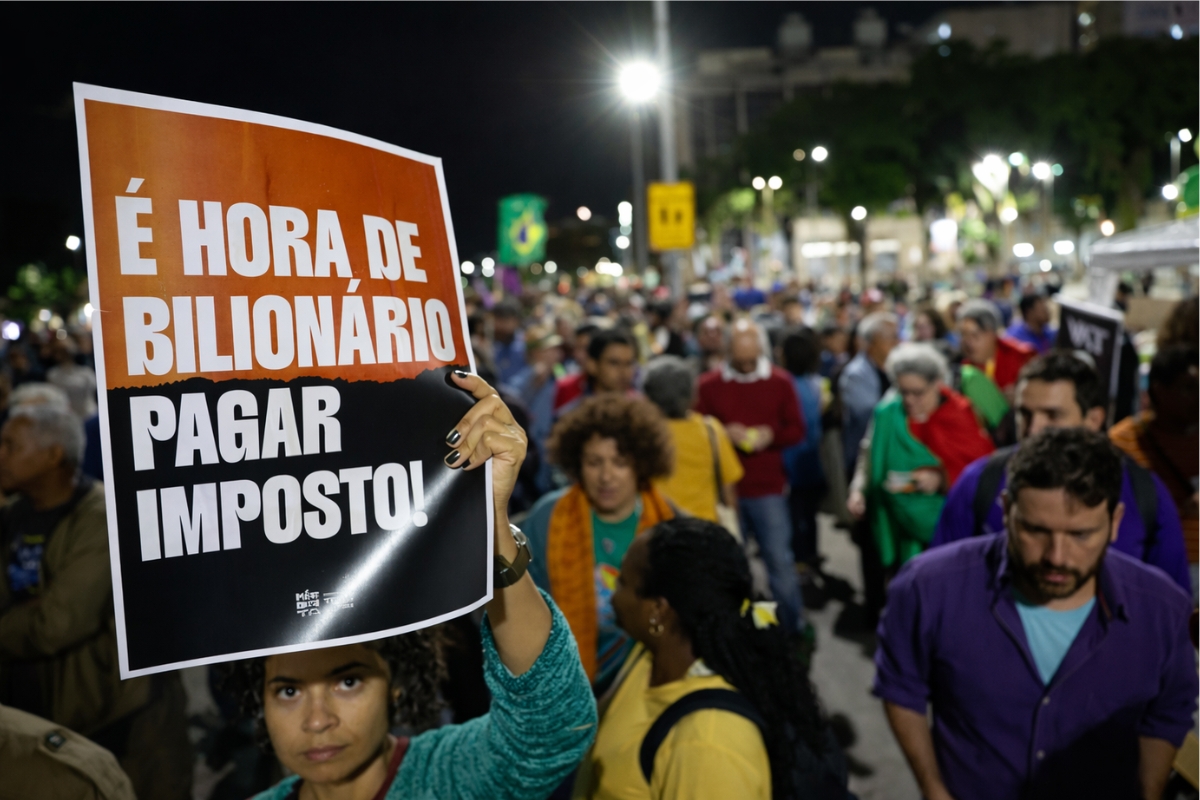

Brazil aims for R$ 30 billion by proposing a minimum tax of 2% on fortunes above R$ 500 million, increasing the burden on the super-rich and placing inequality back at the center of national debate
Brazil may open a new revenue front with the potential of R$ 30 billion per year by creating a minimum charge on very high assets. The measure targets those who concentrate billionaire wealth and currently pay, proportionally, less than most of the population.
In practice, the proposal seeks to correct an old distortion in the tax system. Today, a large part of the burden falls on consumption, which makes the average citizen feel the impact of taxes more in their daily lives.
With the new rule, the expected effect is to increase the contribution from the top of the pyramid, reinforce fiscal progressivity, and give new weight to the debate on social inequality in Brazil.
-
Brazil’s 2026 Tax Refund: Record 9.58 Million Filers in Largest Payout Ever, But a Key Detail on Priority Recipients Draws Nationwide Attention

-
Itaú Alters Hybrid Work Model, Increasing Office Days from 2028, Prompting Employees to Adjust to New Routine
-
Facing Labor Shortage, Japan Plans to Invest $34 Million to Attract Foreign Workers in Construction, Healthcare, Industry, and Commerce

-
Brazilian City Makes Remarkable Leap, Becomes 4th Wealthiest in the Country with GDP of R$ 134.1 Billion




Charge targets assets above R$ 500 million
The proposal sets a floor of 2% per year for individuals with a net worth above US$ 100 million, an amount close to R$ 500 million. The logic is simple: if the total paid in taxes in a year is below this level, the taxpayer pays the difference.
This means that the charge does not come in as another separate tax. It acts as an adjustment to ensure a minimum level of taxation on large fortunes, even when declared income is low.
The target is very broad wealth structures, capable of concentrating profits in companies, assets, and equity stakes. This format reduces the personal taxable base and opens up space for lower effective payments.
Distortion makes the top of the pyramid pay less than average
Today, an average citizen in Brazil faces an effective rate of 42.5% on their income, heavily driven by consumption taxes. At the extreme top of wealth, however, this rate drops to 19.7%.
This difference arises because many super-rich individuals manage their wealth in a way that generates little taxable personal income. Retained earnings in companies and exempt dividends help to reduce the final charge.
If the new floor comes into effect, the effective rate for the top of the pyramid could rise to nearly 50%. This would change the burden of revenue collection on those who concentrate more wealth and expand the distributive effect of the system.
2% rule changes the calculations for billionaires
According to International Tax Observatory, an entity that released a report on taxation in the region, Brazil could collect US$ 6.1 billion per year with this correction on large fortunes. In the seven analyzed countries in Latin America, the potential totals US$ 24 billion, equivalent to 0.6% of the regional GDP.
The mechanism is based on the total taxes already paid by the person throughout the year, including income tax, capital gains, and inheritance tax. If this total meets the required minimum, nothing changes. If it falls below, a complementary charge applies.
For a fortune of R$ 2.5 billion, for example, the annual minimum would be R$ 50 million. If the taxpayer has already paid R$ 60 million, there would be no adjustment. If they have only paid R$ 20 million, the difference charged would be R$ 30 million.
Model distances itself from old taxes on fortunes
The proposal aims to avoid mistakes that weakened previous experiences. Instead of creating a parallel tax with various exceptions, the idea is to use a broad wealth base, without loopholes for business assets and off-market holdings.
Another central point is the entry threshold. While old models reached much smaller fortunes, the new charge focuses on ranges above R$ 500 million. This reduces the pressure for exceptions and concentrates the measure on a very restricted group.
There are also provisions to prevent wealth flight. Among them is the exit tax for those who move to another country and the maintenance of taxation for a period of 5 to 10 years after the transfer of residence.
Debate advances from the G20 to Congress with international pressure
The proposal gained strength when the topic reached the G20 in Rio de Janeiro in 2024, with support from Brazil during its presidency in the group. From there, the taxation of large fortunes began to occupy unprecedented space in international discussion.
At the same time, the Brazilian government opened a domestic front with a minimum tax rule of up to 10% on the income of individuals earning above R$ 1.2 million per year. The difference is that this already approved measure acts on income, not on wealth.
The debate also gained support from figures in the market itself. Jayme Garfinkel, controller of Porto Seguro, has stated that he receives exempt dividends and investment income, and therefore does not pay effective income tax, calling the current structure incredibly unfair.
The advancement of this discussion places Brazil at the center of an agenda that has gained traction in countries like France, United Kingdom, and Spain. As a result, the pressure on super-rich individuals shifts from being a distant thesis to demanding concrete decisions.
If the proposal comes to fruition, the country could combine increased revenue, correction of distortions, and reinforcement of fiscal justice in a single measure. The impact goes beyond the budget and repositions Latin America.
By targeting the top of wealth concentration, the change alters the logic of who pays more and who pays less in the Brazilian system. It is a movement that pressures the region.







