





 Portuguese
  English
  Spanish
  4 min of reading
  0 comments


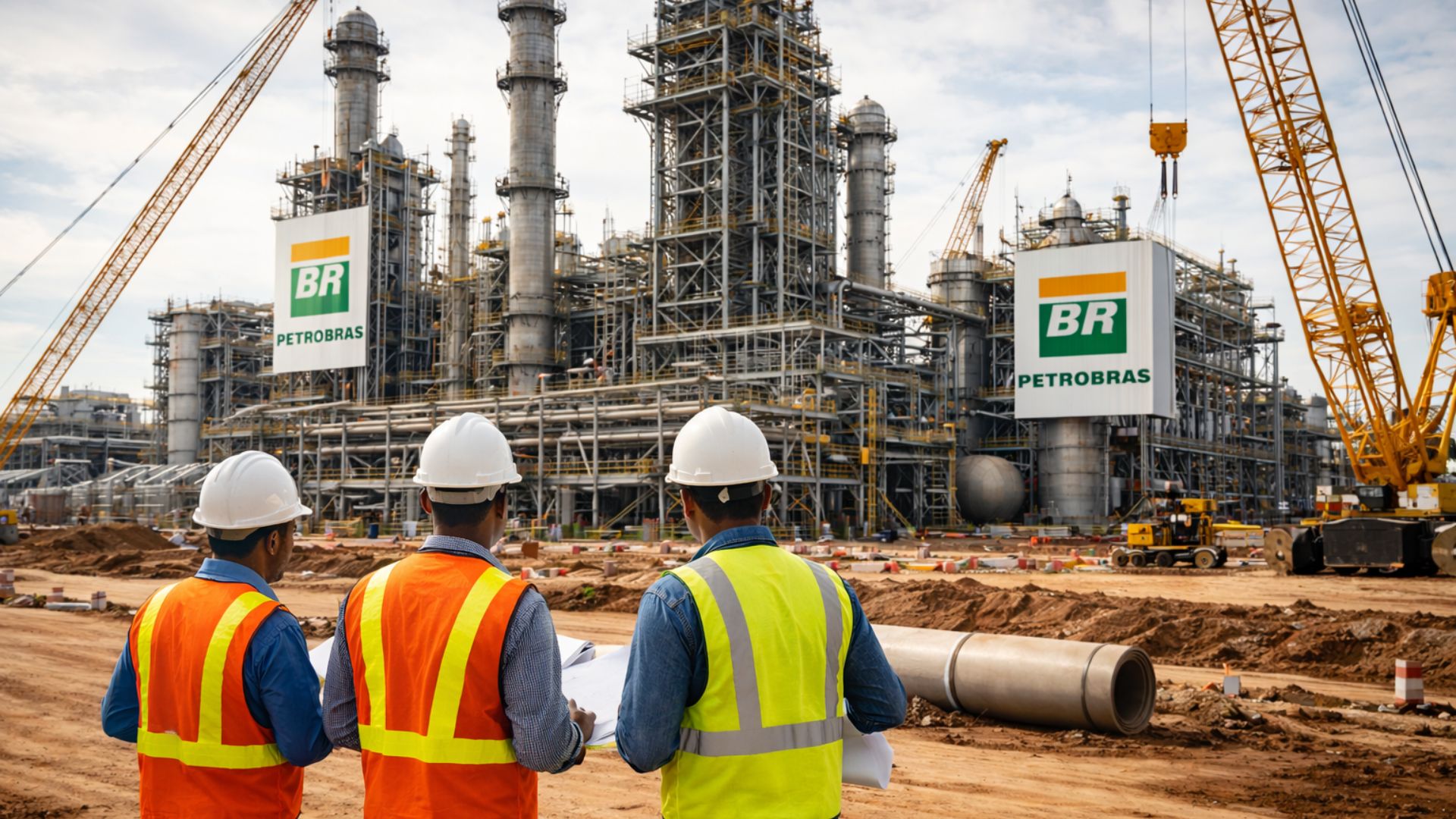
Billion-dollar investment puts strategic project back on the radar and attempts to reduce external dependence on fertilizers, with a direct impact on Brazilian agribusiness and on the use of natural gas by the state-owned company, after more than a decade of paralysis and uncertainties.
Petrobras approved on April 13, 2026 the resumption of construction of the Nitrogen Fertilizer Unit III, in Três Lagoas, Mato Grosso do Sul, with an estimated investment of around US$ 1 billion and a forecast for the start of commercial operations in 2029.
The decision puts back in motion a project that had been interrupted for more than a decade and reinforces the state-owned company’s strategy to expand its presence in the fertilizer market.
Paused since 2015, the plant was re-evaluated starting in 2023, when the company decided to resume investments in the segment, considered strategic for national supply.
-
Starting June 7, 27 European countries prohibit asking about previous salary in interviews, and Brazil has chosen a different path.

-
Billionaire Anne Marie Werninghaus, heir to WEG with R$ 9.1 billion, inaugurated the a.marie store at Casarão Emmendörfer in Jaraguá do Sul.

-
While millions of Brazilians still face unemployment and low wages, Chinese companies are increasing the hiring of foreigners, bringing more than a thousand Chinese people to Brazil each month, and changing the industrial reality of Bahia.

-
China is about to get its hands on one of Brazil’s largest nickel sources, but the European Union has decided to hold up the $500 million deal and may even block the sale permanently in the coming months.


According to Petrobras, the technical and economic re-evaluation confirmed the project’s viability, with a positive Net Present Value in the scenarios examined by the internal approval process.
The board of directors’ deliberation also became part of the Business Plan 2026-2030, approved at the end of 2025, in which the completion of UFN-III appears as the main investment project of the company in the fertilizer area.
With the final decision, Petrobras announced that it will proceed to sign the necessary contracts for the resumption of construction, expected in the first half of 2026.
Resumption of UFN-III after more than a decade halted
UFN-III began construction in 2011, during a period when Petrobras maintained an expansion policy in various industrial segments.
The interruption occurred in 2015, when the unit was at an advanced stage of implementation, and since then the asset has gone through years of uncertainty, attempts at sale, and revisions regarding its viability.
In February 2022, the state-owned company announced progress in the sale process of the factory to the Russian group Acron.
However, the transaction did not proceed, and in April of that year, Petrobras communicated that it would abandon the deal, claiming that the proposed plan made the necessary government approvals for the continuation of the operation unfeasible.
By recovering the project, the company is putting back into planned operation an asset that had been hibernated and, at the same time, is trying to address a recurring problem in Brazilian agribusiness: the strong external dependence on fertilizers.
Data released by the federal government shows that the country imported 45.5 million tons of fertilizers in 2025, a record in the historical series, which helps explain the strategic weight attributed to domestic production.
Production capacity and focus on agriculture
When completed, the unit will have a nominal capacity to produce about 3,600 tons per day of urea and 2,200 tons per day of ammonia.
Of this total, approximately 180 tons per day of ammonia will be available for commercialization, according to Petrobras, increasing the national supply of inputs related to the nitrogen fertilizer chain.
Production will be primarily directed to states such as Mato Grosso, Mato Grosso do Sul, Goiás, Paraná, and São Paulo, regions with strong demand from the agriculture sector.
The location of the factory, close to significant consumer markets in the Midwest, South, and Southeast, is considered by the company as one of the factors that supported the investment approval, due to logistical advantages and supply potential.
Petrobras also argues that the resumption of the unit reinforces the utilization of natural gas and increases integration with production chains linked to agriculture.
In a statement published by the state-owned company, the director of Industrial Processes, William França, stated that the return of investments in the segment helps reduce the country’s dependence on fertilizer imports and strengthens the company’s connection with the agriculture sector.
Timeline, jobs, and regional impact
In addition to the industrial impact, Petrobras estimates the generation of around 8,000 jobs during the construction phase, which is expected to boost the economy of Três Lagoas and the region.
The official forecast is that the physical resumption of the construction site will occur in the first half of 2026, following the contractual formalization that follows the board’s approval.
The new schedule represents a change from previous projections.
In a corporate document released in early 2025, the company was still working with the completion of UFN-III in 2028; however, in the announcement made in April 2026, the schedule indicated the start of commercial operations in 2029, reflecting the project’s update after a new round of internal evaluations.
The resumption of the factory in Mato Grosso do Sul occurs at a time when Petrobras is trying to reorganize its operations in fertilizers after years of contraction.
In the current plan, the state-owned company maintains the completion of UFN-III as the central axis of the area, while directing other assets in the segment towards operational continuity, in an agenda that seeks to increase local production without advancing beyond what has already been officially approved.







Be the first to react!