Portuguese
  Spanish


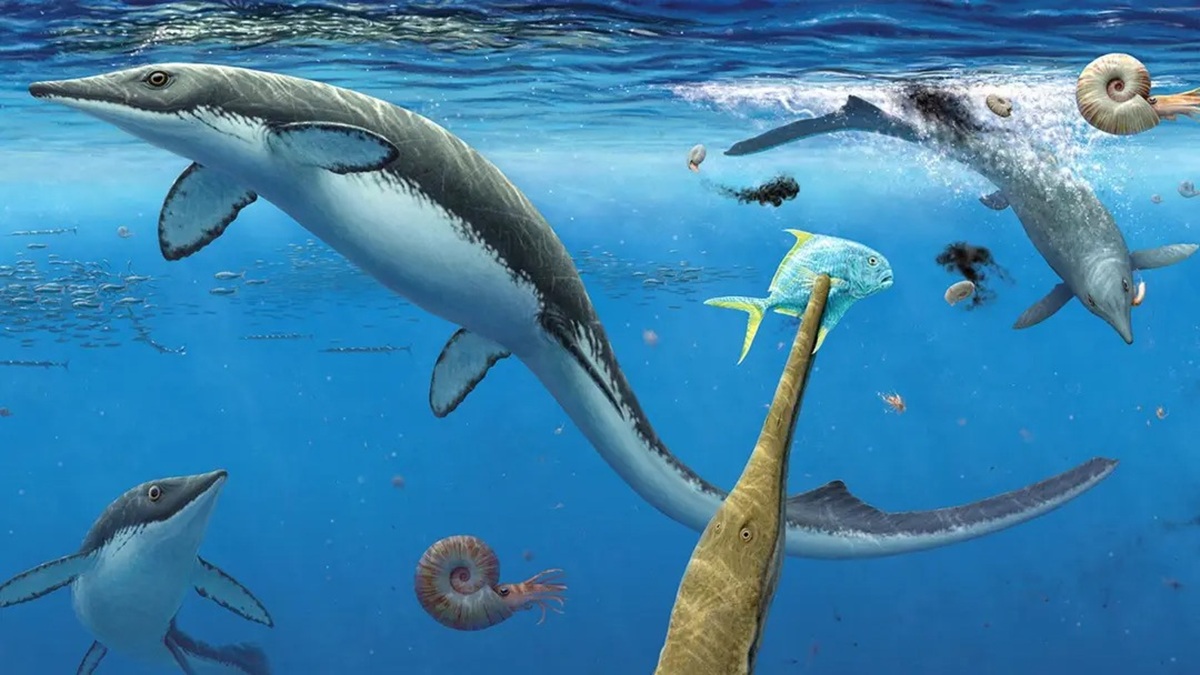

Discovery of 30,000 Fossils on Spitsbergen Island Reveals That Marine Ecosystems Recovered Much Faster After the “Great Extinction.”
Fossils dating back 249 million years prove that marine life recovered rapidly after the “Great Extinction”. In 2015, researchers found an impressive set of 30,000 teeth and bones on the Arctic island of Spitsbergen.
After years of analysis, specialists identified remains of marine reptiles, amphibians, bony fish, and extinct sharks.
The institutions involved, such as the Natural History Museum of the University of Oslo and the Swedish Museum of Natural History, suggest that this material belonged to an ecosystem that thrived right after the event that nearly wiped out life on Earth.
-
China Unveils 300-Ton Hybrid-Electric Truck as the Heavy Machinery of the Future

-
Brazilian mechanic invents simple solar lamp using water and chlorine in a PET bottle, providing up to 60 watts of light during the day

-
Swiss glaciers melting fast enough to fill an Olympic pool every 6 seconds, France confirms 3,700 heatwave deaths, and WMO predicts strong El Niño intensifying extremes until 2027

-
Sudden Sea Recession in São Paulo Sparks Tsunami Alert and Online Debate on Giant Wave Risks in Brazil


Challenging Previous Assumptions
Spitsbergen Island, located in the Svalbard archipelago, was already known for revealing fossils from the early Dinosaur Era. This new fossil deposit reinforces the scientific importance of the region.
The fossils are preserved in layers that were once mud at the bottom of an ancient sea connected to the superocean Panthalassa. Dating techniques indicate that the bone bed is approximately 249 million years old.
Researchers recovered more than 800 kg of material, consisting of tiny fish scales, shark teeth, giant bones of marine reptiles, and even fossilized feces.
Some of the discoveries belong to reptiles and amphibians with unusual characteristics, documenting one of the oldest adaptations of land animals to deep water environments.
For a long time, the scientific community debated how recovery occurred after the Permian-Triassic extinction, considered the most devastating in history.
This event eliminated over 90% of marine species about 252 million years ago. It was caused by intense volcanic activity associated with the fragmentation of Pangea, leading to extreme warming, loss of oxygen in the oceans, and acidification.
The prevailing hypothesis indicated that the reconstruction of the oceans would have been slow, lasting approximately eight million years. The idea suggested that amphibians and reptiles advanced into the open ocean in gradual stages.
However, the large concentration of fossils found in Spitsbergen challenges this understanding by suggesting a much quicker return of ecological complexity.
Rapid Recovery of Ecosystems
The fossil site shows that marine ecosystems reorganized in an extremely rapid manner. Complex food chains, with numerous marine reptiles predators and amphibians, were already established just three million years after the mass extinction of the Permian-Triassic.
For researchers, this demonstrates a surprisingly short geological interval, providing new information about the marine communities that emerged shortly after the catastrophic event.
The fossils also reveal a great diversity of fully aquatic reptiles. Among them are archosaurs, ancient relatives of crocodiles, and various ichthyosaurs.
These creatures varied significantly in size, from small squid-hunters under one meter to giant predators exceeding five meters.
Based on a global comparative analysis, the Spitsbergen collection stands out as one of the richest in species of marine vertebrates from this period.
The recorded diversity suggests that the origins of marine reptiles and amphibians may be much older than previously thought, possibly even predating the Permian-Triassic extinction itself.
The reorganization of the ecosystem, according to researchers, paved the way for new food functions. This process influenced the formation of modern marine communities. The study, which redefines the understanding of the pace of recovery of life after a global collapse, was published in the journal Science.