






 Portuguese
  Spanish
  3 min of reading
  3 comments


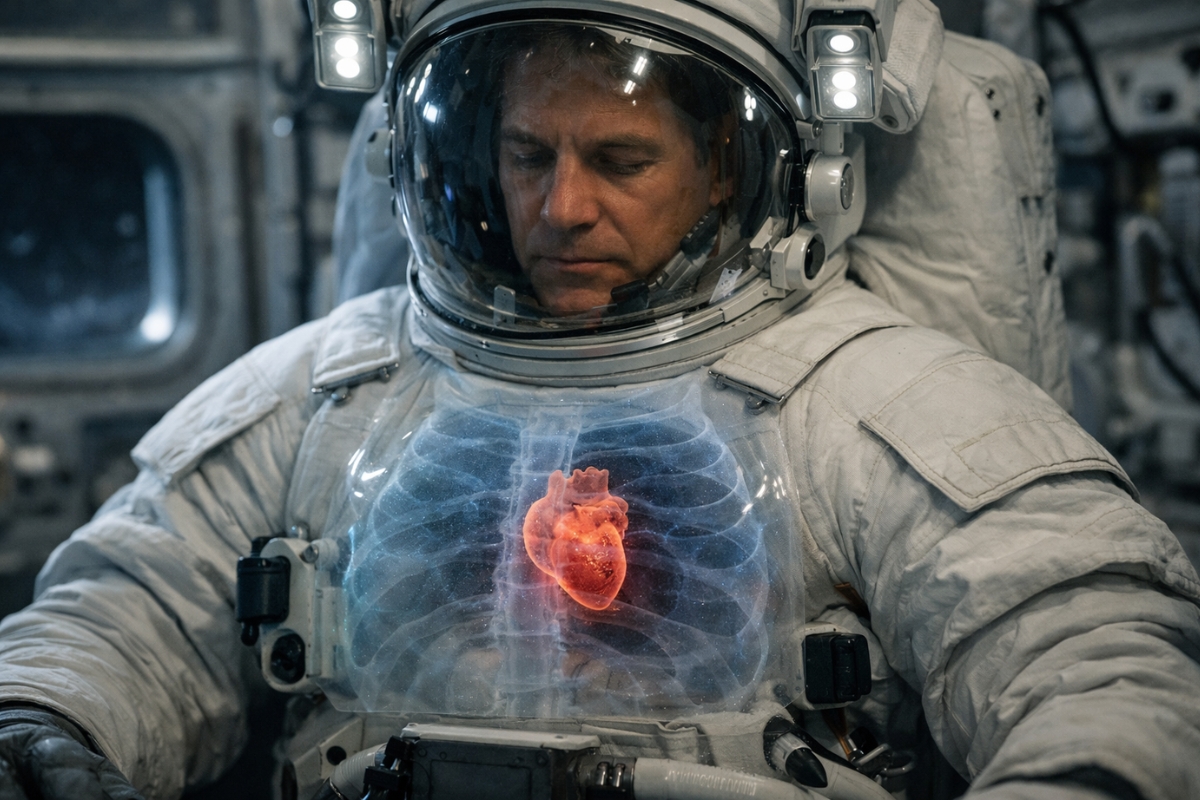


Return to Earth Raises Doctors’ Alert After Lunar Mission: Accelerated Muscle Loss, Blood Pressure Drop, Dizziness, and Reduction in Heart Volume Show How Space Quickly Takes Its Toll on Astronauts
The Artemis II mission came to an end with the return of the four astronauts after a 10-day trip around the Moon. Even though it was a short period, the journey through space was enough to provoke significant changes in the body.
The effects appear in various parts of the body. Among the most noticeable points are muscle loss, blood pressure drop, and reduced heart effort, which starts to function differently outside of Earth.
10 Days in Space Are Sufficient to Change the Body
Those who spend long periods at the International Space Station often face known physical wear and tear. However, in this case, what stands out is that a much shorter mission also leaves clear marks.
-
Survivor of 1966 SS Daniel J. Morrell Shipwreck in Lake Huron Recounts 38-Hour Ordeal in Extreme Cold

-
The Greatest Hoax in World Cup History? The Film That Denied Brazil’s 1958 Victory and Exposed How Fake Evidence Can Seem Convincing on TV
-
Fake South Korean Online Stores Offer Shopping Thrill Without Spending Money or Receiving Products
-
The War of Jenkins’ Ear: How a Severed Ear Sparked One of the 18th Century’s Most Unusual Conflicts


The lack of gravity alters how blood circulates, changes the perception of balance, and reduces the demand on muscles and bones. The result is a body that needs to adapt quickly and then readjust everything upon returning to Earth.
Muscles Can Lose Up to 20% in Just 15 Days
Doctors are closely monitoring the impact on the musculoskeletal system. The estimate is that muscle mass can drop by up to 20% in just 15 days in space.
The most affected are the muscles used to keep the body upright on Earth. This group includes quadriceps, back, and calves, areas that lose important function when gravity ceases to act as it does down here.
Spine Grows Between 5 and 7 Centimeters and Bones Also Suffer
Without the normal pressure of body weight, the spine tends to elongate. The discs between the vertebrae expand, and astronauts’ height can increase by between 5 and 7 centimeters during their time outside of Earth.
This effect is usually temporary and disappears upon return. The bones also feel the impact, with a loss of mineralization that can reach 2% per month, especially in the lower extremities.
Inner Ear Fails and the Brain Feels Disorientation
In space, the body loses basic references of up and down. This happens because the inner ear, which helps with balance and position sense, stops functioning the same way when gravity disappears.
According to El Mundo, a Spanish newspaper covering health and current affairs, this adaptation can cause nausea, headaches, dizziness, and disorientation for up to three days. There may also be an increase in pressure inside the skull, worsening headaches and blurred vision.
Heart shrinks, pressure drops, and the face may swell
The redistribution of blood and fluids is one of the most visible changes. Therefore, some astronauts appear with a more swollen face during broadcasts, an effect linked to slight facial edema.
Blood pressure also drops significantly. At the same time, the heart works with less effort, as it does not need to overcome gravity to push blood from the lower body to the head.
Heart volume may decrease by about 15% after the mission
With less demand, the heart also changes. The organ may lose about 15% of its volume, a sign that the entire body enters another functioning pattern during the stay in space.
This set of changes does not mean permanent damage in all cases, but it reinforces how even short missions require strict medical monitoring. The return to Earth becomes as important a stage as the journey itself.
The experience of Artemis II shows that just a few days outside the planet are enough to affect muscles, bones, balance, circulation, and the heart. The practical impact is direct for future crewed missions.
More than a curiosity about life in space, this type of bodily response helps measure limits and real risks. And this changes the perspective on short missions in lunar orbit.





Do you mean the space shuttle was not covered
That’s bad 😞
While most of those effects are certainly measurable, keep in mind that humans have spent up to a year on International Space Station, returned safely and sometimes have flown further missions (three of the four Artemis Crew members have already spent 160+ days in space. Most of the descriptions and implications here are highly exaggerated.