





 Portuguese
  English
  Spanish
  6 min of reading
  0 comments


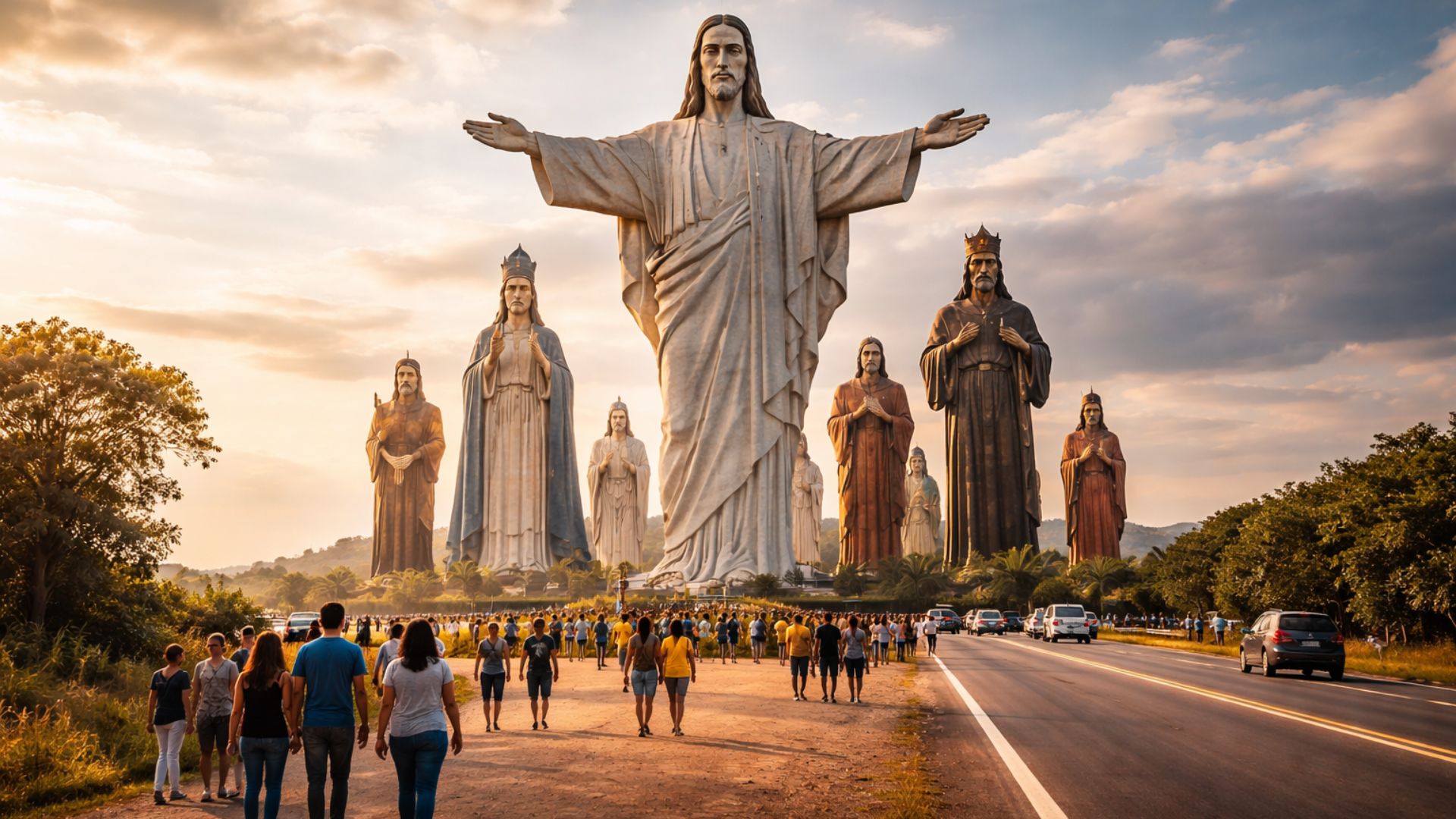
Religious space in the interior of São Paulo brings together monumental sculptures, operates 24 hours, and attracts visitors from different countries, transforming a stretch of highway into a point of pilgrimage with continual and growing tourist interest.
Located on the banks of the Assis Chateaubriand Highway, at km 444 of SP-425, between Presidente Prudente and Regente Feijó, in the interior of São Paulo, an open-air religious space has begun to attract visitors from various regions of Brazil and also from abroad.
Known as Path of the Devotees, the site features 11 sacred sculptures that reach up to 10 meters in height, maintains a chapel open 24 hours a day, and has established itself as a frequent pilgrimage point for those traveling along the highway.
Origin of the Path of the Devotees and history of the founder
The creation of the sanctuary is directly linked to a personal episode experienced by businessman Agesner Monteiro, which he describes as decisive in transforming a family experience into a permanent space of faith and welcome.
-
After ten days orbiting the Moon, science confirms that the astronauts of the Artemis II mission return with altered bodies.

-
Pernambuco paradise with 59% of preserved area advances with R$ 2 billion in e-methanol, aims for 900 tons/day, grows 38.6% and builds electrified terminal of 400 thousand TEUs.

-
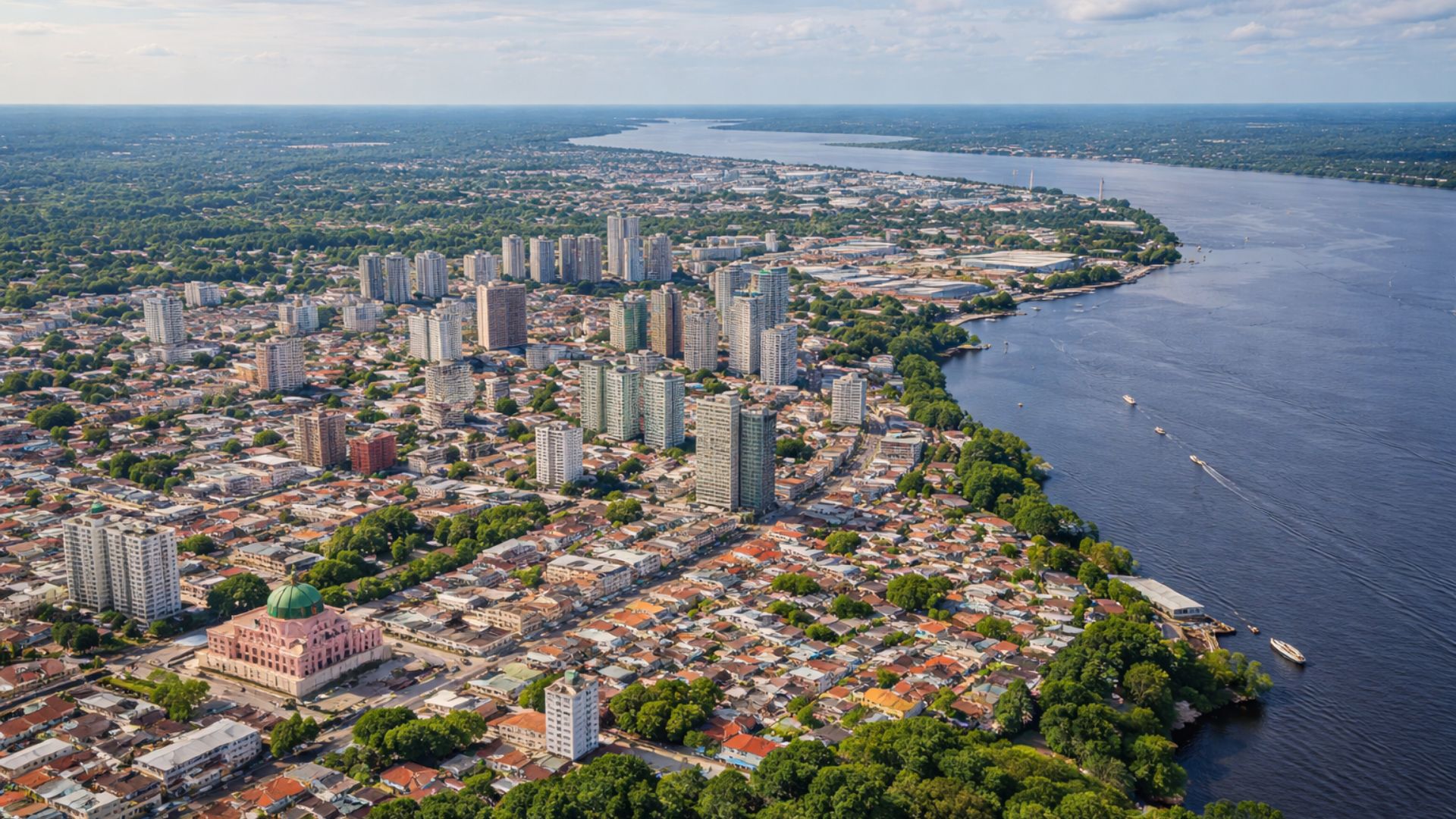
The most ‘isolated’ city in Brazil has over 2.06 million inhabitants, is the 7th largest in the country, has no road connections, hosts a billion-dollar industrial hub, and is located in the heart of the Amazon.
-
CEO reveals that daily nap at 4 PM was essential for building a 2.9 billion dollar company.

In 2020, his son Ravi, then five months old, fell from the bed, suffered severe traumatic brain injury, and needed to undergo emergency surgery, a situation that mobilized the family during a critical moment.
After the child’s recovery, the decision to build the space arose as a form of gratitude, giving rise to a project that, over time, ceased to be merely personal and began to welcome visitors from different backgrounds.

Religious tourism grows and attracts international visitors
As the months passed, the flow of visitors exceeded regional limits and began to include people from different states and also from abroad, expanding the site’s reach as a religious tourism destination.
According to Agesner, the Path of the Devotees receives visitors from all regions of the country, including states such as Paraná, Mato Grosso do Sul, Minas Gerais, Rio de Janeiro, and Rio Grande do Sul, as well as foreigners coming from Argentina, Paraguay, Peru, and Italy.
This international movement, especially with the presence of Europeans, contributes to the space being seen as a destination that goes beyond the local circuit, consolidating its visibility outside Brazil.
Commenting on this diverse presence, Agesner stated: “It is a great joy to see that faith knows no boundaries and that people from far away feel touched to come here.”
In practice, this reality is reflected in a more intense routine, marked by the constant arrival of families, groups of friends, and caravans that use the space as a meeting point for collective moments of prayer.
Pilgrimage, access, and visitor experience
Access to the sanctuary occurs through different means, which broadens the profile of the audience and allows visitors to choose their mode of arrival according to their possibilities and intentions of pilgrimage.
While many arrive by car or bus, there are also those who choose to travel the route by bicycle or even on foot, especially in more traditional demonstrations of faith.
Among these practices, the pilgrimage of devotees departing from neighboring cities, such as Santo Expedito, stands out, proceeding in prayer until they reach the set of images installed along the highway.
Among the sculptures that attract the most attention are those of Jesus Christ, Our Lady Aparecida, Saint Expedite, Saint Francis of Assisi, and Saint Camillus of Lellis, which help compose the visual scenery of the place.
At the same time, the proposal combines monumental dimension with devotional function, transforming the space into a stopping point for both occasional travelers and pilgrims planning their visit.

In addition to the images, the site houses a chapel inaugurated in December 2021, where there is no entrance fee and where candles and prayer cards are offered free of charge to visitors.
Chapel open 24 hours and continuous operation
The uninterrupted operation reinforces the accessible nature of the space, allowing visitors to stop at any time, regardless of the hour or the flow of the highway.
Thus, those passing through the location can enter to pray, make requests, or give thanks for graces attributed to the visit, contributing to the constant flow of circulation.
As a result, the Path of the Devotees stands out from other sanctuaries that operate with defined hours, establishing itself as a religious stopping point available at all times.
Testimonies of the faithful and reach on social media
As visibility of the space increased, so did the number of testimonies shared by visitors reporting experiences associated with passing through the site.
These accounts range from thanks for positive results in medical exams to recoveries of family members, always interpreted by the faithful themselves as signs of religious intercession.
Part of these testimonies circulates on the sanctuary’s social media, which already has more than 20 thousand followers and serves as a showcase for visits, pilgrimages, and expressions of faith.
Among the cases mentioned by Agesner is that of a woman who was accompanying her mother hospitalized in an ICU in Presidente Prudente and decided to stop at the site while passing by on the highway.
On that occasion, she reportedly heard the prayer of Saint Camillus de Lellis for the first time, made a request, and later returned to thank for her mother’s recovery.


Another account mentioned involves a six-year-old boy from São José do Rio Preto, who reportedly returned to the sanctuary with his family after having a neurological exam with no changes.
As these are personal testimonies, these episodes do not have independent confirmation beyond the information disclosed by the person responsible for the space.
Expansion of the sanctuary and regional impact
Plans for expanding the space are still underway, with the installation of new sculptures expected to enhance the existing set and reinforce the site’s visual identity.
This growth accompanies a broader movement, where easy access via the highway, free visitation, and continuous operation contribute to attracting an ever-increasing number of visitors.
At the same time, the circulation of content on social media strengthens the promotion of the sanctuary, expanding its presence beyond the regional audience.
Even without the institutional structure of large traditional pilgrimage centers, the Path of the Devotees has begun to occupy a relevant space in the religious tourism of the interior of São Paulo.
In this context, the combination of personal history, monumental sculptures, and facilitated access has transformed the site into a frequent stop for those seeking moments of prayer and contemplation.
According to Agesner, the proposal has always been to offer an environment where people could find what they seek spiritually, keeping the space open and accessible to different profiles of visitors.
Still according to the creator, observing emotional visitors, in prayer and returning to the site to give thanks reinforces the meaning of the project and sustains the continuity of activities at the sanctuary.
In this way, the Path of the Devotees has consolidated itself as a road sanctuary that emerged from a personal experience and gained prominence by attracting visitors from different parts of Brazil and abroad.






Seja o primeiro a reagir!