





 Portuguese
  English
  Spanish
  5 min of reading
  0 comments


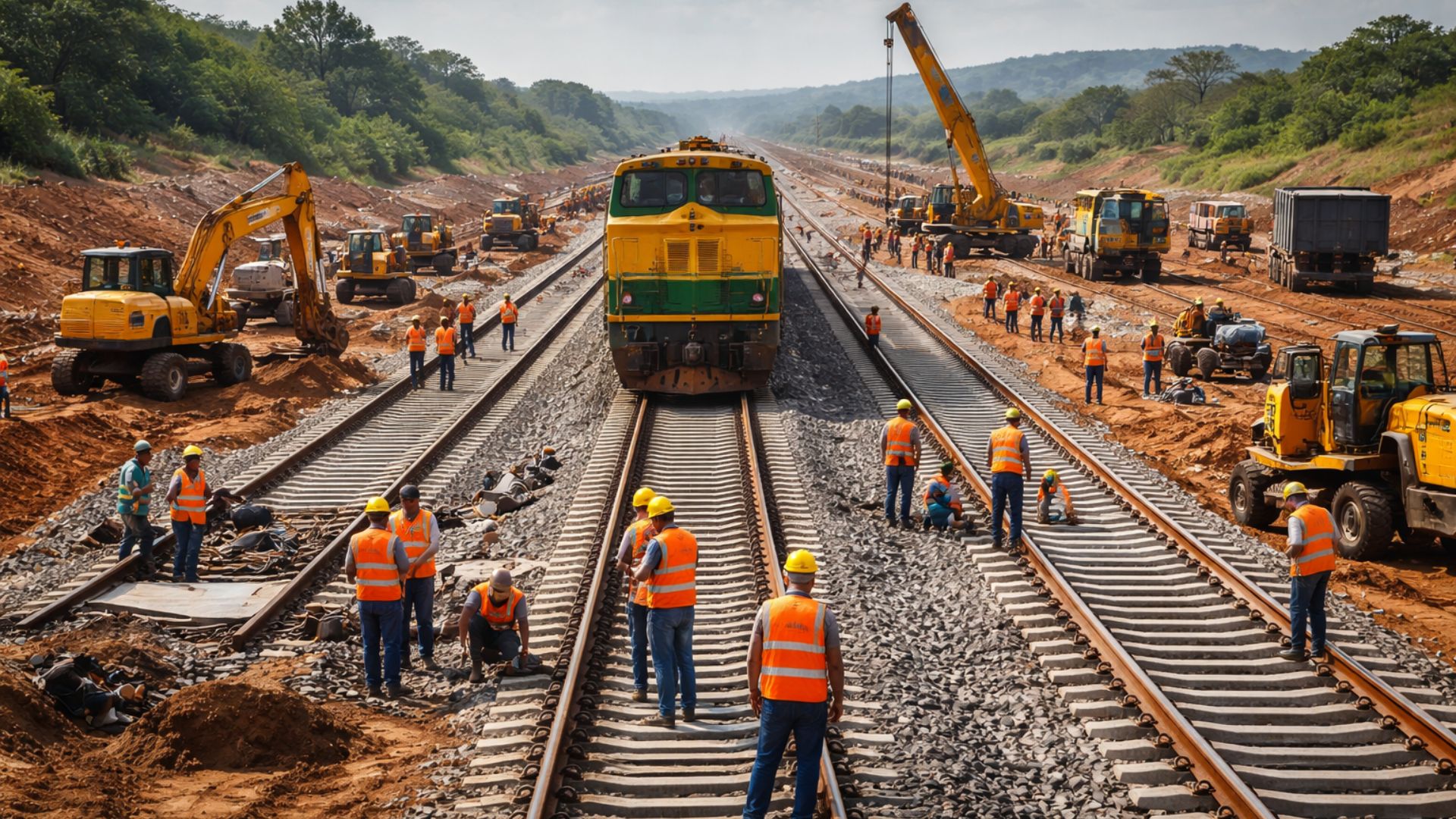
Study details abandoned railway network, billion-dollar costs, and dependence on subsidies for recovery, revealing structural challenges, limitations of financial return, and the central role of the State in the reactivation of thousands of kilometers of tracks in Brazil.
The recovery of a significant part of the abandoned railway network in Brazil faces a central issue: without direct participation from the public power, the projects cannot sustain themselves economically, according to a diagnosis prepared by federal agencies in partnership with an international institution.
Prepared by Infra S.A., linked to the Ministry of Transport, in conjunction with the Inter-American Development Bank, the study indicates that 7,412 kilometers of currently inactive tracks could resume operations, although none of the 61 segments analyzed is viable solely with private capital.
As a general reference, the estimated cost for reconstruction and initial operation of these segments is around R$ 75 billion, a value calculated based on an approximate average of R$ 10 million per kilometer, which may vary according to the specific conditions of each railway segment.
-
A R$11.9 billion train that promises to revolutionize mobility in São Paulo and make trips of about 1 hour gains new progress with the inclusion of another city in the project.

-
The United Arab Emirates will inaugurate the country’s first passenger train in 2026 — 1,200 km of tracks through the desert, linking 7 emirates in less than 2 hours.

-
Austria inaugurates Europe’s first high-speed railway outside China — trains travel at 250 km/h through 33 km tunnels in the Alps that took 27 years to drill
-
Brazil has built 37,000 km of railway tracks since the 1950s, but abandoned a third of them — meanwhile, China already operates 50,000 km of high-speed rail and plans 60,000 by 2030.
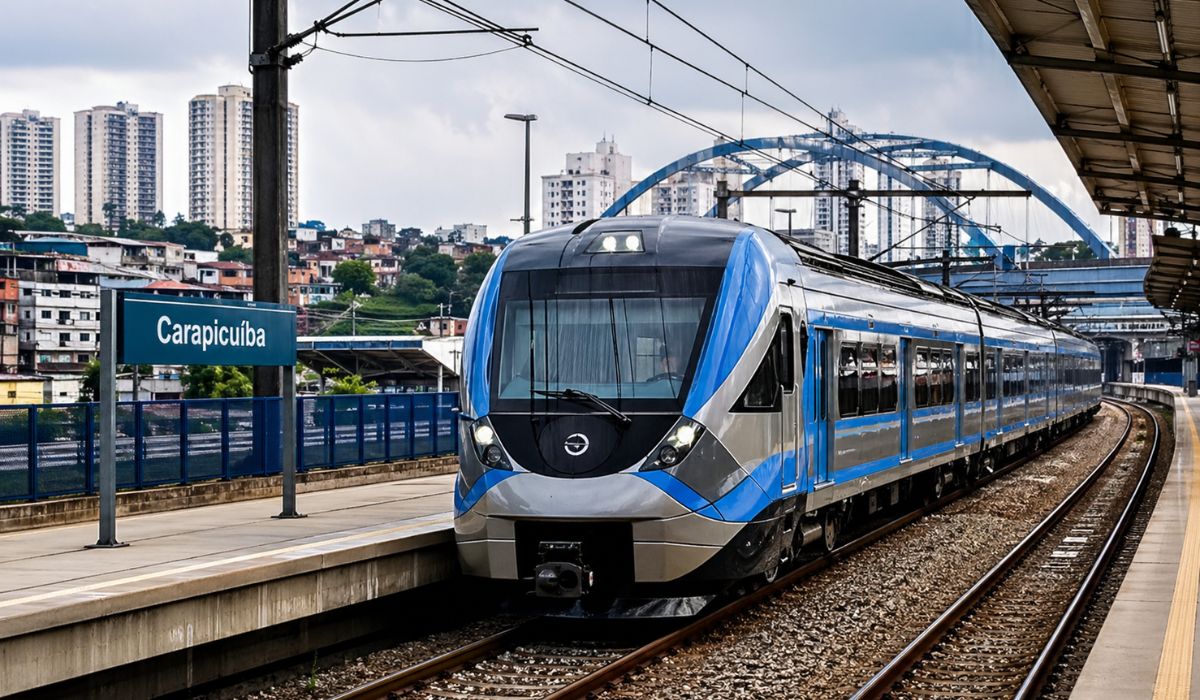


Diagnosis of the abandoned railway network in Brazil
In total, the survey analyzed 9,845 kilometers distributed among three major regional systems, including the Northeast, Central-East, and South networks, which concentrate returned, underutilized, or completely abandoned segments over the last few decades.
From this universe, 37 segments, totaling 7,412 kilometers, were classified as potentially reactivatable with some form of state support, while another 24 segments, with 2,433 kilometers, were considered unviable even with public investments.
This scenario reflects distinct levels of physical deterioration and loss of economic relevance, especially in regions where urban occupation has advanced over the tracks or where productive chains have ceased to depend on the railway as a structuring logistical axis.
Degradation of infrastructure and recovery challenges
More than just reconstructing tracks, the recovery involves dealing with liabilities accumulated over years of abandonment, including invasions, alteration of layouts, and disconnection from productive hubs that, in many cases, have already migrated to other modes.
In this context, the study sought to map not only the physical state of the infrastructure but also the real possibilities for economic use, considering demand scenarios, operational costs, and logistical impacts in different regions of the country.
Within the set considered viable, there are significant differences regarding the degree of dependence on the State, as approximately 1,310 kilometers would require public investment mainly for initial restructuring, while the majority would demand ongoing support.
About 6,102 kilometers, according to the diagnosis, would require permanent operational subsidies, highlighting that, even after the recovery of the infrastructure, the revenue generated would not be sufficient to cover costs and ensure an adequate return to the investor.
Predominance of freight transport in viable segments
When analyzing the usage profile, the study points to a clear predominance of goods transport as the main vector of economic viability, especially in corridors with potential for integration between producing areas and strategic ports.
Of the 7,412 kilometers considered recoverable, approximately 5,900 kilometers would have a priority vocation for freight, while about 1,200 could operate in a mixed model, combining goods and passenger transport.
Meanwhile, the segments designated exclusively for passenger transport total about 300 kilometers and are concentrated in metropolitan regions or areas of higher population density, still depending on continuous subsidies to operate.
This design reflects a structural characteristic of the Brazilian railway sector, where large-scale freight flows tend to offer greater predictability and revenue generation capacity than regular passenger services over medium distances.
Even in these cases, however, the study concludes that the projected demand would not be sufficient to enable private investments without some form of financial compensation from the State.
Regional distribution of segments with reactivation potential
In the Northeast Network, which includes 2,984 analyzed kilometers, the tracks cross states such as Pernambuco, Paraíba, Ceará, Rio Grande do Norte, and Alagoas, connecting metropolitan areas, productive regions, and significant port complexes.
Among the segments identified as viable is the Centro Recife Trunk, with an extension of 611.2 kilometers, as well as branches like Cabedelo in Paraíba, Crato in Ceará, and Macau between Paraíba and Rio Grande do Norte.
In turn, the Centro-Leste Network, with 3,577 kilometers, covers a vast area that includes Bahia, Sergipe, Minas Gerais, Espírito Santo, Rio de Janeiro, Goiás, the Federal District, and part of the São Paulo territory.
In this set, the corridor between Visconde de Itaboraí and Vitória stands out, identified as one of the connections with the greatest logistical potential within the scope analyzed by the study.
In the South region, where 3,284 kilometers were evaluated, segments are distributed among Paraná, Santa Catarina, Rio Grande do Sul, and São Paulo, including connections such as Ourinhos to Cianorte and Cruz Alta to Passo Fundo.
Role of subsidies and new concession models
At the center of the discussion is the need to structure mechanisms that make viable projects that, in isolation, cannot generate sufficient financial returns to attract large-scale private investors.
In this sense, the federal government has been seeking regulatory alternatives, such as public calls and more flexible concession models, to try to reactivate railway sections considered strategic for national logistics.
In April 2025, the Ministry of Transport indicated that the country has about 10,000 kilometers of deactivated tracks, advocating for the creation of instruments that allow their reoccupation under regimes more adapted to the current reality.
Recent projects, such as EF-118, also incorporate this logic by anticipating concession models in which the competitive criterion involves the lowest subsidy amount necessary to make the venture viable.
Thus, the diagnosis presented by the study reinforces a recurring point in the sector: the resumption of the Brazilian railway network depends on public coordination and financial mechanisms capable of balancing economic interest and collective benefit.




Be the first to react!