Portuguese
  Spanish


Fiat Uno was born in 1983, arrived in Brazil in 1984, popularized the Mille, marked generations, and reached about 9.5 million units.
The Fiat Uno made history as one of those cars that seem simple at first glance but change the logic of an entire brand. Introduced in 1983, the compact hatch was created to replace the Fiat 127 in Europe and quickly became a symbol of efficiency, interior space, economy, and mass production.
According to Stellantis Heritage, the Uno had a transverse front engine of 903 cm³, 45 hp at 5,600 rpm, a top speed of 140 km/h, a weight of 700 kg, and a design signed by Giorgetto Giugiaro. The model could have a three or five-door hatch body, a practical solution that helped consolidate its image as a small car on the outside and big on the inside.
Success came quickly. According to Stellantis Heritage, the Fiat Uno was elected Car of the Year in 1984 and drew attention for its ample space for up to five occupants, easy-access trunk, innovative dashboard with side controls, and single-arm central windshield wiper.
-
Turbo, spacious and with 605 liters in the trunk: with a 1.4 TSI engine of 140 hp, 7-speed DSG transmission, seven airbags, and fuel consumption of up to 14.8 km/l, this used wagon appears as a surprising alternative to compact SUVs; meet the 2016 Volkswagen Golf Variant Highline.

-
Cheaper than many used compact SUVs: with a 1.4 turbo engine of 153 hp, 6-speed automatic transmission, six airbags, and fuel consumption of up to 13.6 km/l, this Chevrolet mid-size hatchback has become a forgotten option in the used car market; meet the 2018 Cruze Sport6 LTZ.
-
The country that requires the purchase of a board game before issuing a driver’s license to new drivers

-
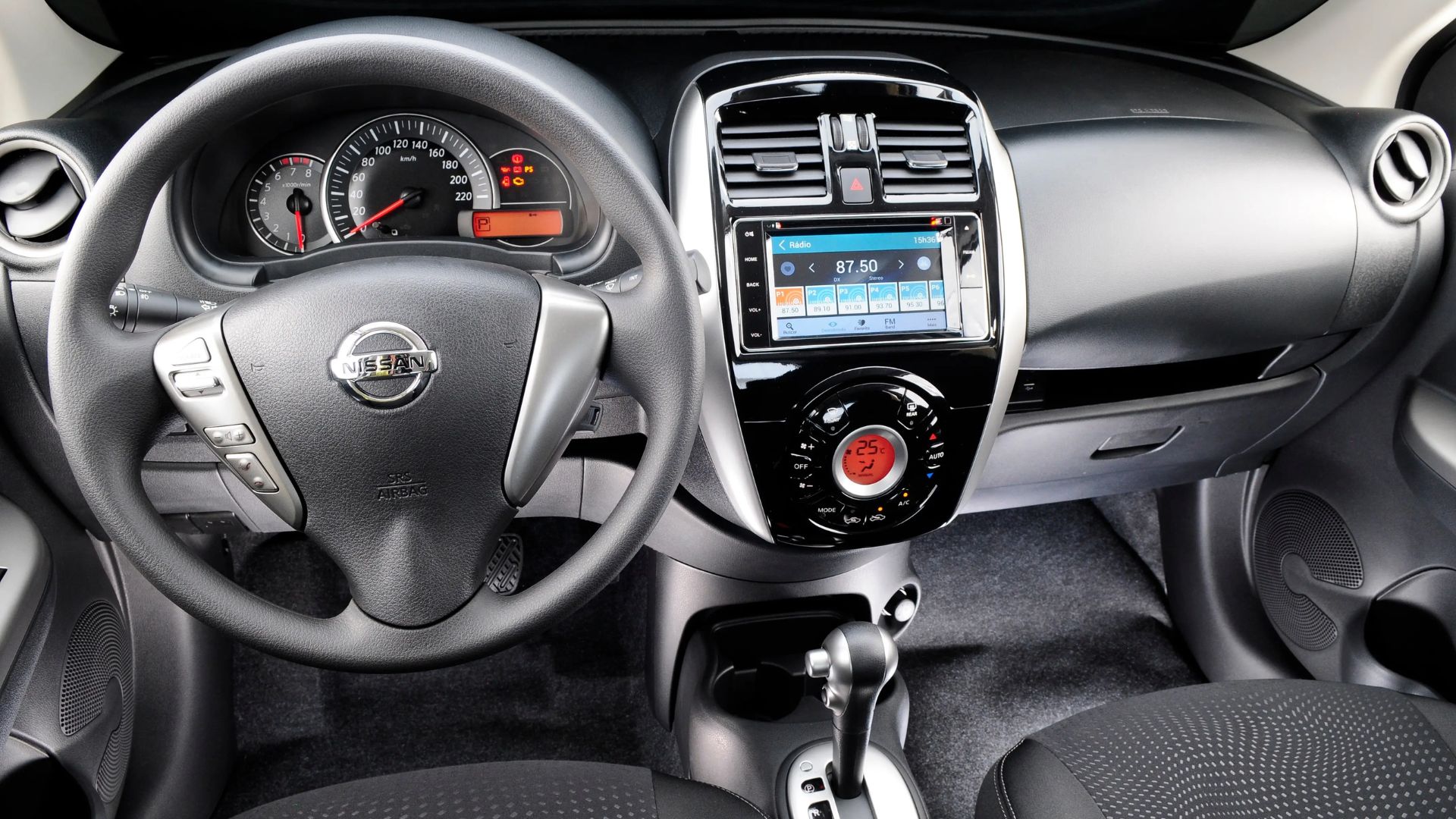
Cheaper than Polo Highline: with a 1.6 engine of 111 hp, CVT transmission, fuel consumption of up to 15 km/l, and Fipe price close to R$ 71,000, this forgotten Japanese hatch surprises in the used market; meet the Nissan March SL 2020



Launch in Cape Canaveral gave the Uno an image of a car of the future
Fiat did not present the Uno as a common compact. According to Stellantis Media, the international launch took place on January 19, 1983, in Cape Canaveral, United States, a city associated with the American space program. The choice of location reinforced the idea of a car designed to redefine the urban segment.
The strategy made sense because the Uno was not just a new model. According to Stellantis Media, the project involved five years of research and development, with an investment of about one trillion liras, the largest made by Fiat in a vehicle up to that point.

The Uno also marked an industrial turning point. According to Stellantis Media, the model used the Robogate system, developed by Comau, with dozens of robots in assembly, welding, and body coating processes. Most of the project’s investment was directed towards factory automation, improving production uniformity and quality.
FIRE engine transformed the Uno into a symbol of economy and reliability
One of the most important chapters in the history of the Fiat Uno came in 1985, with the arrival of the FIRE engine. According to Stellantis Media, the Uno was the first Fiat vehicle to receive this engine, produced at the Termoli 3 factory. The acronym FIRE stands for Fully Integrated Robotized Engine, referring to the robotized method used in its manufacturing.

Also according to Stellantis Media, the FIRE engine was more compact, weighed only 69 kg, had 95 fewer components than the previous engine, adopted overhead camshaft, and was more reliable and easier to assemble. The same Stellantis also highlights that this engine family was produced for 35 years and surpassed 23 million units.
This set helped create the Uno’s reputation for economy and durability. The car was light, had a good internal area, relatively simple maintenance, and engines focused on low consumption. In Brazil, these attributes would be decisive in transforming the model into a popular phenomenon.
Uno arrived in Brazil in 1984 and became a car made for harsh roads
In Brazil, the Fiat Uno was launched in August 1984. According to Stellantis Media Brazil, the model brought to the country a new global concept of automobile, with the proposal “small on the outside and big on the inside”.
Stellantis reports that the design was by Giorgetto Giugiaro and that the Brazilian version was adapted to tropical uses and customs, with greater resistance to severe use, roads, and streets of the country, as well as a larger trunk.
The first national line had 1.050 gasoline and 1.300 engines, with S, CS, and SX versions. According to Stellantis Media Brazil, the Uno stood out for its modern lines for the time, good aerodynamics, performance, fuel economy, high and angular body, ample internal space, and large windows with good visibility.
The car also introduced curious solutions in the Brazilian market. Stellantis Media Brazil reports that the single-arm windshield wiper appeared for the first time in the country on the Uno. The dashboard with satellite controls, allowing functions to be activated without taking hands off the steering wheel, reinforced the image of a modern project for the time.
Fiat Mille made the Uno a reference among popular cars in Brazil
The strongest turnaround in Brazil came in 1990, with the Fiat Uno Mille. According to Stellantis Media Brazil, Fiat developed the model based on an analysis of the market and the real needs of the consumer. The name Mille referred to the 1,000 cm³ engine and the goal was to be practical, economical, and the cheapest car in Brazil.
The result was immediate. According to Stellantis Media Brazil, Brazil’s first 1.0 car sold 100,000 units in its first year. Stellantis also claims that the success continued throughout the 1990s and solidified Fiat as a major leader in the 1.0 car market.


The Mille became a symbol of access to the automobile. It was simple, economical, cheap to maintain, and suitable for consumers who needed an urban, durable, and low-cost car. In many ways, it was the Uno that helped define the format of the popular Brazilian car of the 1990s.
Uno popularized technologies and versions that marked the Brazilian automotive sector
The Fiat Uno was not limited to basic versions. According to Stellantis Media Brazil, the model was a pioneer in the 1,000 car segment, it was the first turbo car manufactured in series in the country and also popularized items such as air conditioning and four-door bodywork in segments where these features were less common.
The sports version also had significant weight. Stellantis Media Brazil reports that the Uno 1.5R, launched in 1987, had a look with side stripes, sports wheels, a black rear lid, and red seat belts. The engine generated 86 hp, with a top speed of 162 km/h and acceleration from 0 to 100 km/h in 12 seconds.
In 1994, the Uno Turbo arrived. According to Stellantis Media Brazil, it was the first mass-produced passenger car in Brazil with a turbocharger. The model accelerated from 0 to 100 km/h in 9.2 seconds and reached a top speed of 195 km/h, very strong numbers for a national compact of the time.
Global production reached about 9.5 million units
The global scale of the Fiat Uno shows why the model became a legend. According to Stellantis Heritage, Italian production ended in 1995 after about 6 million units were manufactured in 12 years, but production outside Italy continued in markets such as Brazil, former Yugoslavia, Poland, Morocco, Turkey, India, Pakistan, the Philippines, and South Africa. The source reports that the global total reached about 9.5 million units.

In Brazil, the numbers are also impressive. According to Stellantis Media Brazil, by July 2019, about 4 million units of the Fiat Uno had been produced at the Fiat Automotive Hub in Betim, Minas Gerais.
This volume explains the massive presence of the Uno on Brazilian streets. The model became a family car, a student car, a self-employed worker’s car, a fleet car, a delivery car, and a small business car. Few compacts have managed to occupy so many roles at the same time with the same strength.
Fiat Uno became a legend because it combined simplicity, space, economy, and resilience

The Fiat Uno marked the industry because it managed to combine production technology, functional design, and popular appeal. In Europe, it was born as a modern, efficient, and innovative car. In Brazil, it became a symbol of resilience, low cost, and practicality.
The square shape, often treated as a joke, was part of the project’s intelligence. It helped to expand internal space, facilitated access, improved visibility, and made the car extremely functional for daily use. This combination allowed the Uno to cross decades without losing relevance.
With about 9.5 million units produced globally, approximately 4 million manufactured in Betim by 2019, and a decisive role in the popularization of 1.0 cars in Brazil, the Fiat Uno became much more than a compact hatch. It became a central chapter in automotive history, the kind of car that seems simple but helped change the market.