Portuguese
  Spanish


Turbo engine, large cargo capacity, and uncommon equipment among used cars place the Golf Variant Highline in a unique position compared to compact SUVs, while performance, safety, consumption, and transmission characteristics help explain why the wagon continues to spark interest in the Brazilian market.
The Volkswagen Golf Variant Highline 2016 combines a mix that is increasingly rare among used cars sold in Brazil, consisting of a family body, turbo engine, large luggage compartment, and dynamic behavior close to that of a medium hatch.
By offering 605 liters in the trunk, seven airbags, and a seven-speed DSG transmission, the wagon caters to consumers who need to transport people and luggage but do not consider the elevated driving position an indispensable requirement when choosing their next vehicle.
1.4 TSI engine combines 140 hp and torque at low rpm
Under the hood, the mechanical set uses the 1.4 TSI gasoline engine, with 140 hp and 25.5 kgfm of torque, paired with a seven-speed dual-clutch automated transmission with the possibility of sequential shifts.
-
He was born in the 1980s, weighed only 700 kg, brought an efficient FIRE engine, became popular in Brazil and worldwide, and reached about 9.5 million units produced; meet the Fiat Uno, the square that became a legend.

-
Cheaper than many used compact SUVs: with a 1.4 turbo engine of 153 hp, 6-speed automatic transmission, six airbags, and fuel consumption of up to 13.6 km/l, this Chevrolet mid-size hatchback has become a forgotten option in the used car market; meet the 2018 Cruze Sport6 LTZ.

-
The country that requires the purchase of a board game before issuing a driver’s license to new drivers

-
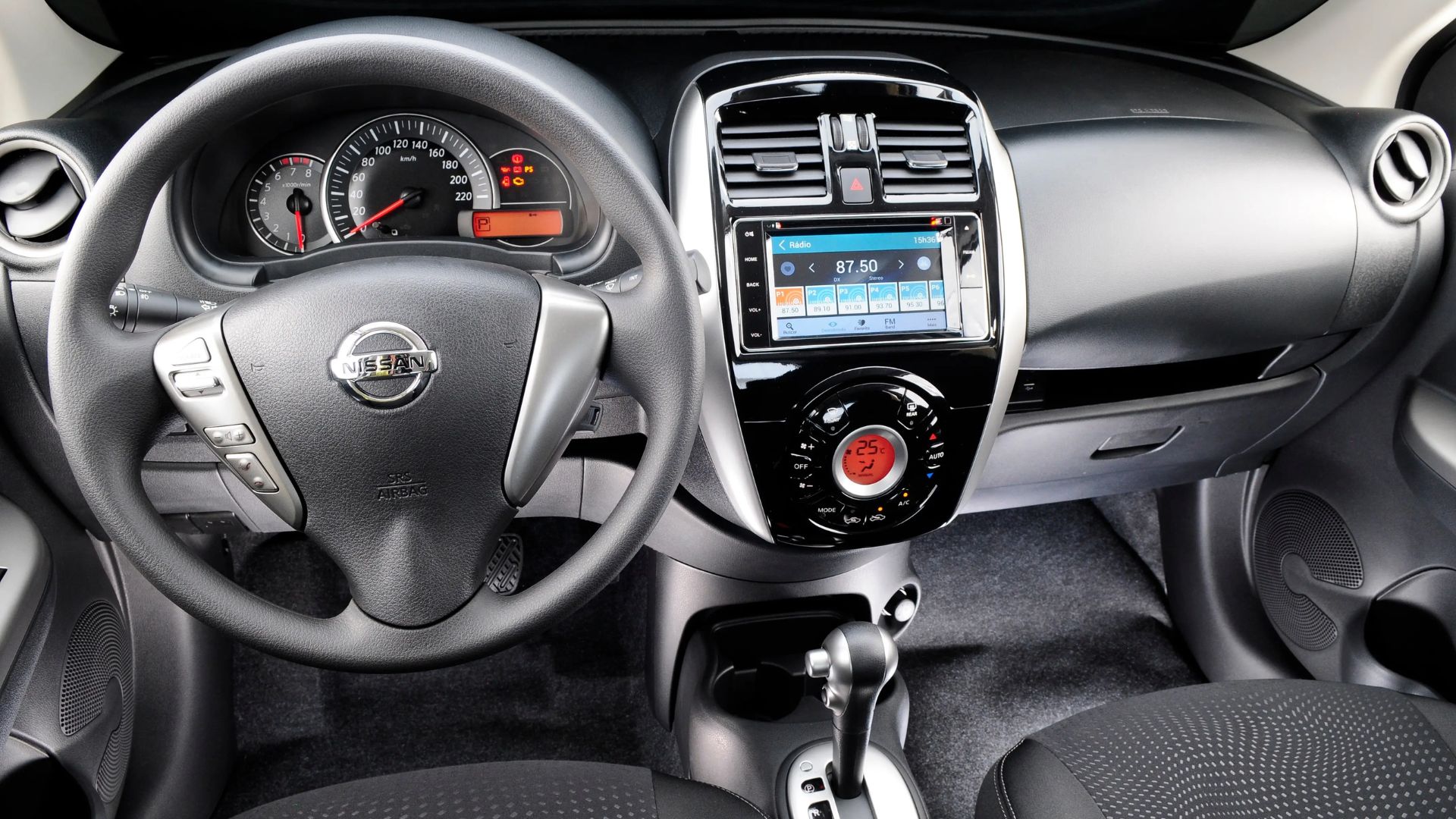
Cheaper than Polo Highline: with a 1.6 engine of 111 hp, CVT transmission, fuel consumption of up to 15 km/l, and Fipe price close to R$ 71,000, this forgotten Japanese hatch surprises in the used market; meet the Nissan March SL 2020



According to the test published by Quatro Rodas, which also gathered specifications provided by Volkswagen, the Golf Variant accelerated from zero to 100 km/h in 9.3 seconds and achieved 11.7 km/l in the city and 14.8 km/l on the highway.
Available from 1,500 rpm, the maximum torque favors quick responses during recoveries and overtaking, while the seven-speed gearing keeps the engine working in suitable ranges for both urban traffic and longer highway trips.
This balance between available power at low rpm and measured consumption in different conditions helps explain the interest in the model among drivers looking for family space without sacrificing sufficient performance for trips and everyday use.
605-liter trunk changes the Golf’s proposition
Concentrated behind the rear axle, the main difference compared to the Golf hatch is in the extension of the body, which adds 30.7 centimeters to the total length and takes the Variant to reach 4.562 meters, without altering the 2.63 meters of wheelbase.
Thanks to this extension, the luggage capacity increases from 313 liters in the hatch to 605 liters in the wagon, significantly enhancing the vehicle’s utility for families, trips, and transporting bulky items.
When the rear seats are folded down, the compartment offers 1,620 liters, a volume that allows for easier accommodation of suitcases, strollers, sports equipment, and other long items compared to various compact utility vehicles.
In addition to the available space, the wide opening of the rear hatch facilitates access to the compartment, while the lower body shape preserves the appearance of a conventional car, despite the load capacity comparable to larger vehicles.
Multilink suspension preserves dynamic behavior
Although it weighs 1,357 kilograms, approximately 119 kilograms more than the Golf hatch used as a reference in the evaluation, the Variant maintained similar dynamic behavior, with direct steering and suspension adjusted to balance stability, firmness, and absorption of road irregularities.
At the rear, the independent multilink system allows each wheel to respond separately to terrain variations, a solution that contributes to body control in curves and to occupant comfort during travel on different types of pavement.
Instead of adopting the elevated height typical of compact SUVs, the wagon retains a lower center of gravity, a characteristic that influences stability and brings its driving experience closer to that offered by the traditional Golf, even with the extended body and enlarged trunk.
The dimensions of 1.799 meters in width and 1.468 meters in height reinforce this lower profile, creating a configuration aimed at those who value interior space and luggage capacity without necessarily migrating to a vehicle with a utilitarian proposal.
Seven-speed DSG gearbox requires careful evaluation
Responsible for managing the turbo engine’s power, the seven-speed DSG gearbox uses two clutches and operates differently from a conventional automatic transmission equipped with a torque converter, although it dispenses with the use of a clutch pedal.
While one gear remains engaged, the next can be pre-selected, an architecture developed to speed up shifts and reduce interruptions in power delivery, especially during accelerations, recoveries, and sequential changes made by the driver.
As it is a used car, the transmission’s operation should be observed during starts, maneuvers, recoveries, and gear changes, always paying attention to noises, vibrations, hesitations, or alerts displayed on the instrument panel.
More important than considering just the year or the announced mileage, the evaluation must include a history of revisions, origin, service notes, and specialized inspection, factors directly related to the actual condition of the mechanical set.
Seven airbags enhance the safety package
In terms of safety, the list includes seven airbags, distributed among two front, two side, two curtain, and one for the driver’s knees, an uncommon configuration in many used cars available in the same market range.
In addition to the airbags, the model offers electronic traction and stability controls, hill-start assist, electronic differential lock, and a multi-collision braking system, designed to reduce the risk of a second impact after an initial collision.
Although these features are part of the described configuration, an in-person inspection remains essential to confirm the absence of alerts, the functioning of electronic systems, and the integrity of the safety components installed in the analyzed unit.
The inspection should also consider possible structural repairs, tire condition, brake functionality, and vehicle provenance, as the technical sheet does not replace the individual conservation analysis conducted before purchase.
Highline version combines comfort and optional equipment
Among the comfort items, the Highline version offers seats partially covered in leather, dual-zone automatic air conditioning, and cruise control, in addition to rain, light, and parking sensors integrated into the equipment set.
The multimedia center completes the cabin, while more sophisticated features could be grouped into optional packages, creating significant differences between two units apparently identical in year, engine, and version advertised in the used market.
Depending on the configuration chosen by the first owner, the wagon could receive keyless access and start, bi-xenon headlights, rearview camera, larger multimedia screen, fatigue sensor, and adaptive cruise control.
Offered separately, the panoramic sunroof does not appear in all models, which is why photographs, chassis number, manual, and in-person verification help identify the equipment actually installed in each advertised car.
Interior space retains the base of the seventh-generation Golf
As the wheelbase remains the same as the Golf hatch, the gain provided by the elongated body appears mainly in the trunk, not in a significant increase in the legroom available for rear passengers.
Even so, the cabin maintains five seats, three-point seat belts for all occupants, and air conditioning vents for the rear seat, although the central position offers less comfort than the side seats.
To transport large volumes, folding the seats expands the available space, but also reduces the number of passengers and alters the separation between the cabin and the cargo, requiring attention to the correct accommodation of objects.
Even with a maximum capacity of 1,620 liters, suitcases and equipment must respect the vehicle’s weight limit and remain properly positioned, preventing movement during braking, curves, or more abrupt maneuvers.
Used Golf Variant appears as an alternative to compact SUVs
By combining a low body, long trunk, independent suspension, and turbo engine, the Golf Variant follows a different proposal from that adopted by compact SUVs, which usually prioritize greater ground clearance and elevated driving position.
This difference allows consumers to compare not only cargo capacity and equipment but also dynamic behavior, ease of access to the trunk, travel space, and driving characteristics present in each type of bodywork.
Before closing the deal, the buyer should examine the maintenance history, mileage, structural integrity, tires, electronic systems, and the functioning of all options, especially in units equipped with a panoramic roof, bi-xenon headlights, or adaptive cruise control.
Between a turbo wagon with 605 liters of trunk space and a compact SUV with a higher body, which of these sets would better meet the needs of your routine?