






 Portuguese
  Spanish


At 23 years old, an heiress left her apartment in Paris fleeing the Second World War and never returned but continued paying the rent until she died at 91. In 2010, the property sealed since 1942 was opened and revealed a time capsule with a portrait by Boldini valued in millions.
Few stories unite war, mystery, and art like that of a French heiress who abandoned an apartment in Paris and never set foot in it again. According to The Daily Beast and AnOther Magazine, she fled the French capital in 1942, at 23, amid the chaos of the Second World War and yet continued paying the rent of the property religiously until her death, almost seven decades later.
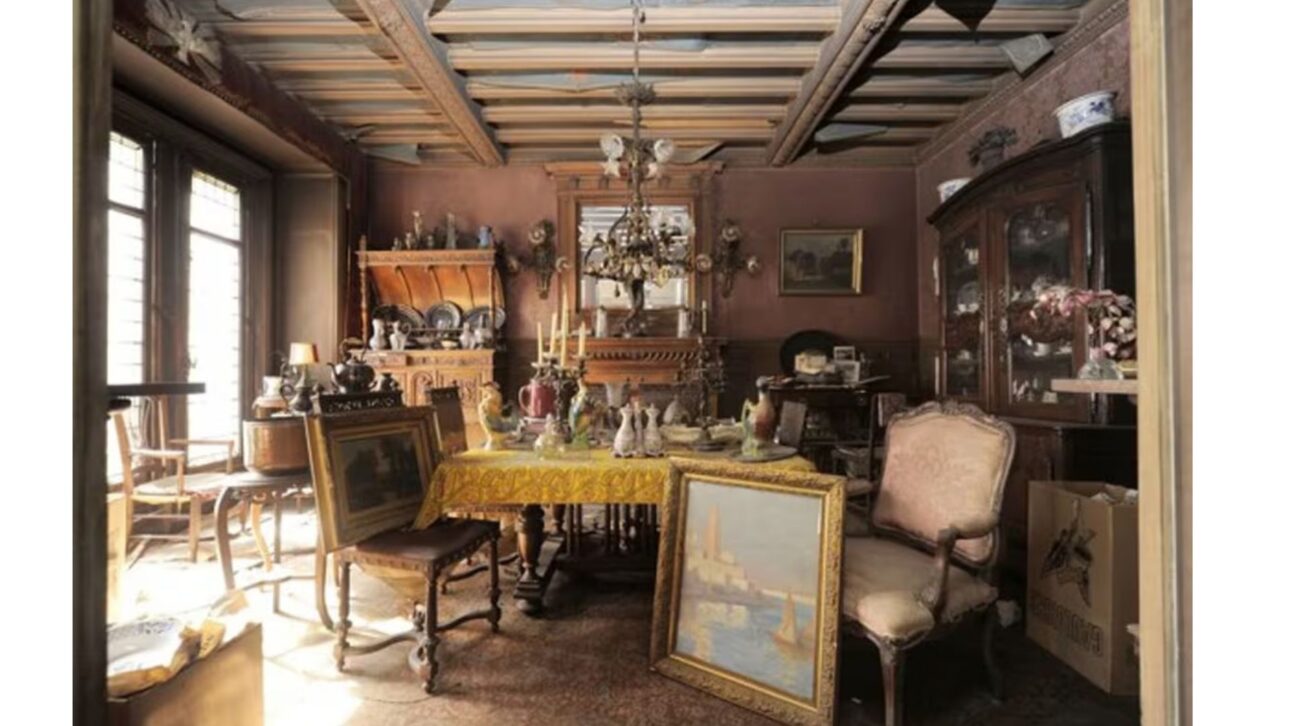
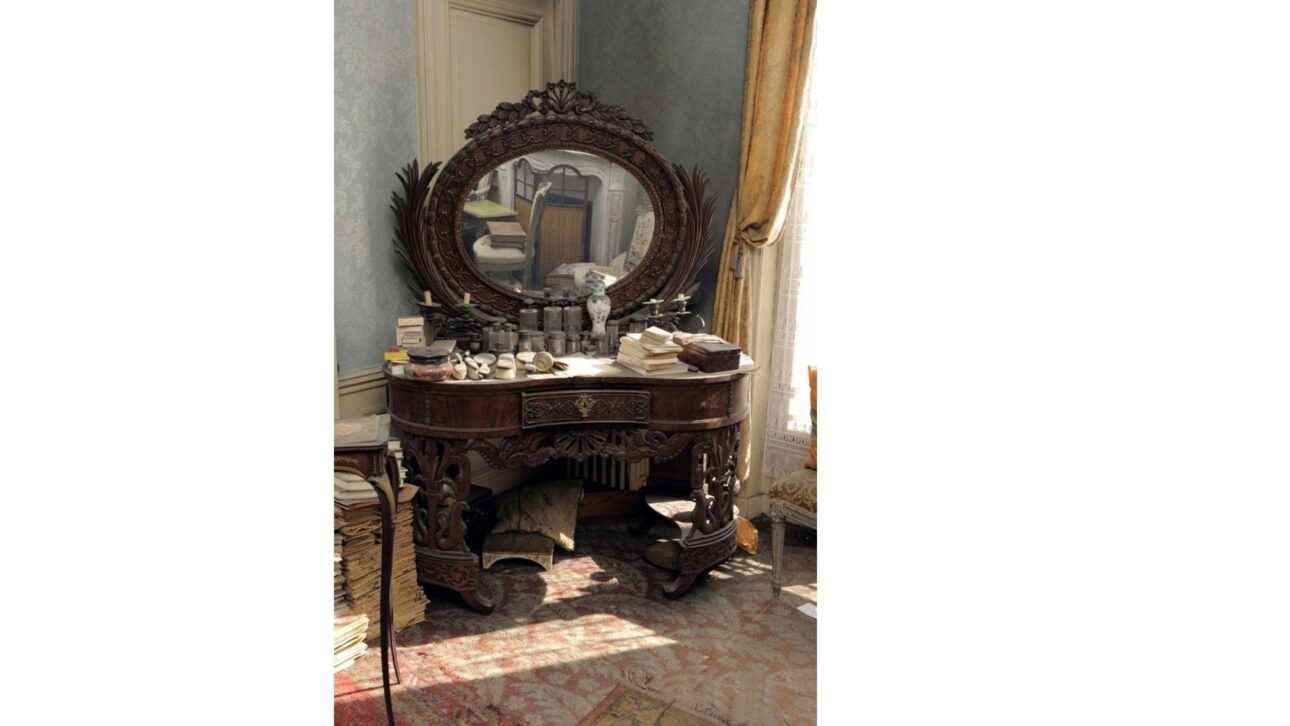
When the door was finally opened, what appeared on the other side seemed like a movie scene. The apartment was exactly as it had been left in 1942, covered in dust and frozen in time, hiding among luxurious furniture and piled objects, an artistic treasure that no one knew existed.
The heiress who fled Paris and never returned
The protagonist of this story is known as Madame de Florian (Solange Beaugiron), granddaughter of a famous Parisian socialite. She inherited from her grandmother a stunning apartment on the right bank of the Seine, in the heart of Paris, at an address that breathed the elegance of the Belle Époque.
-
Couple transforms old trailer into a treehouse to stand out on Airbnb, accommodation becomes a success on the platform, and now they plan to take the business to other countries.

-
Time capsule hidden since 1957 appears inside a school wall in the United States during renovation, surprising workers with a sealed copper box and prompting graduates from Schenectady to prepare a new legacy for students who are only expected to discover the message in 70 years.
-
Infinite energy: a discovery just 200 meters above the ground could transform villages, drastically reduce climate control costs, and reveal a solution that promises to change the future of energy.

-
Car prohibited: village over 1,600 meters above sea level holds a treasure discovered in the 18th century and surprises tourists with a rare experience that few imagine finding in winter



But the story took another turn with the war. At 23, in 1942, at the height of the chaos of the Second World War, the heiress fled Paris heading to the south of France and, as it seems, never returned to the property that was rightfully hers.
The departure was so sudden that it became a frozen landmark. The apartment remained exactly in the state it was on the day of the escape, as if time had simply stopped the moment she crossed the door for the last time.
Almost 70 years paying rent for an empty property
The most intriguing detail of the story might be this. Even from afar, even without ever returning, the heiress continued paying the rent of the building until her death at 91 decades and decades maintaining an address she never visited again.
No one knows for sure the reason. There is no public record explaining why she kept the property untouched, yet paid for, for so long, which continues to fuel speculations about trauma, attachment, or simply a desire to preserve the family memory.
The practical result of this decision, however, is indisputable. It was this silent payment, year after year, that preserved the apartment intact and allowed the world, almost 70 years later, to access a perfectly preserved piece of the past.
December 2010: the door that no one had opened for decades
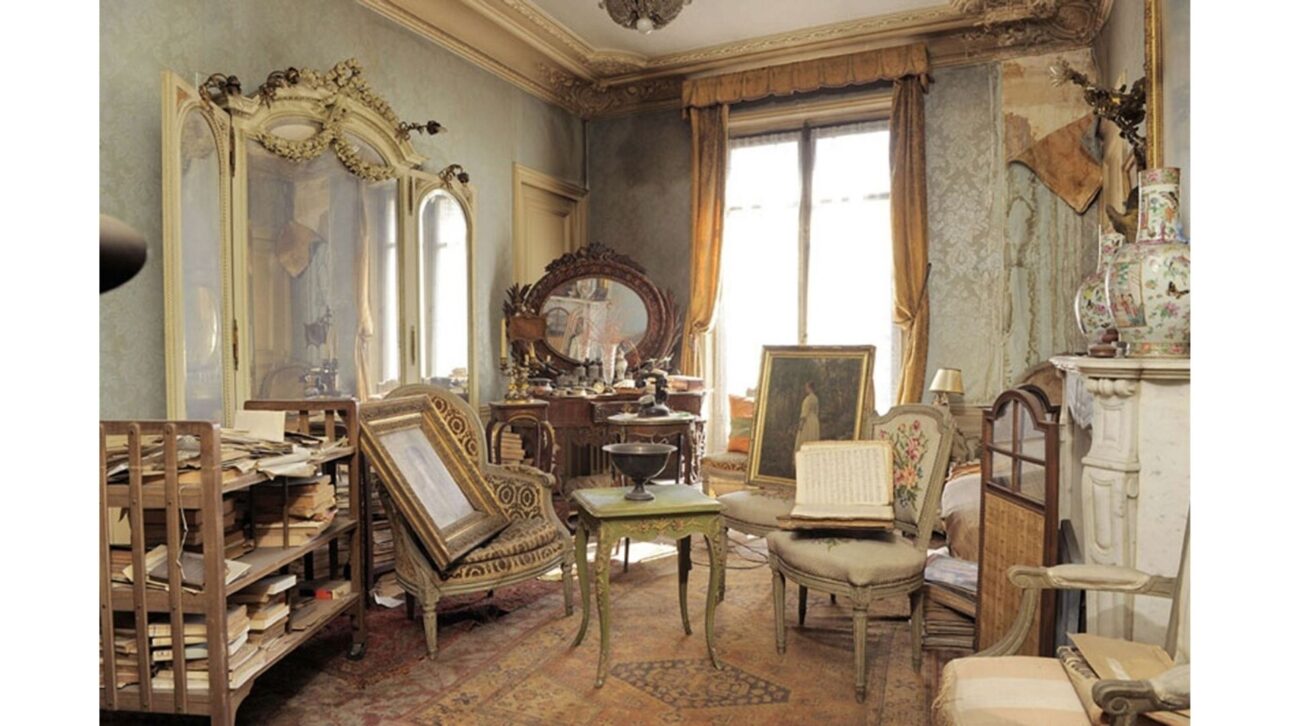
Everything changed when the heiress died. On a winter afternoon in December 2010, the apartment was finally opened after being sealed since 1942, without visits, renovations, or even a cleaning.
The first to enter was a professional accustomed to evaluating inheritances. Auctioneer Olivier Choppin-Janvry was responsible for opening and inventorying the property, a task that seemed routine but ended up becoming one of the most talked-about discoveries in the art world.
What he found was not just any abandoned apartment. It was, literally, a time capsule capturing the exact moment of the sudden escape the frozen portrait of a life interrupted by war.
A time capsule with 68 years of dust
The scene described is worthy of a novel. Among the luxurious, albeit dusty, furniture, there were mountains of objects of various types, accumulated over decades of absolute silence and covered by a thick layer of dust.
The inventory mixed eras and styles in an almost surreal way. There were taxidermied animals and antique dressing tables to Disney toys, a curious contrast between the refinement of the Belle Époque and more recent family memories.
Each object told a piece of the story. The environment preserved not only the furniture but the very interrupted routine of someone who left in a hurry thinking they would return soon — and never did.
Who was Marthe de Florian, the legendary grandmother
To understand the value of what was there, one must go back a generation. The actress and socialite Marthe de Florian was famous for her captivating beauty and for being one of the most talked-about figures in turn-of-the-century Paris.
Her life was always surrounded by rumors. She was rumored to have been the lover of several important men, including Georges Clemenceau, who would later become the Prime Minister of France, and the Italian painter Giovanni Boldini.
Born Mathilde Héloïse Beaugiron, she became one of the most celebrated women of the period. It was her apartment that would end up in the hands of the heiress and it was her personal story that transformed the property into something much more than just an address in Paris.
The hidden portrait: the woman in the pink dress
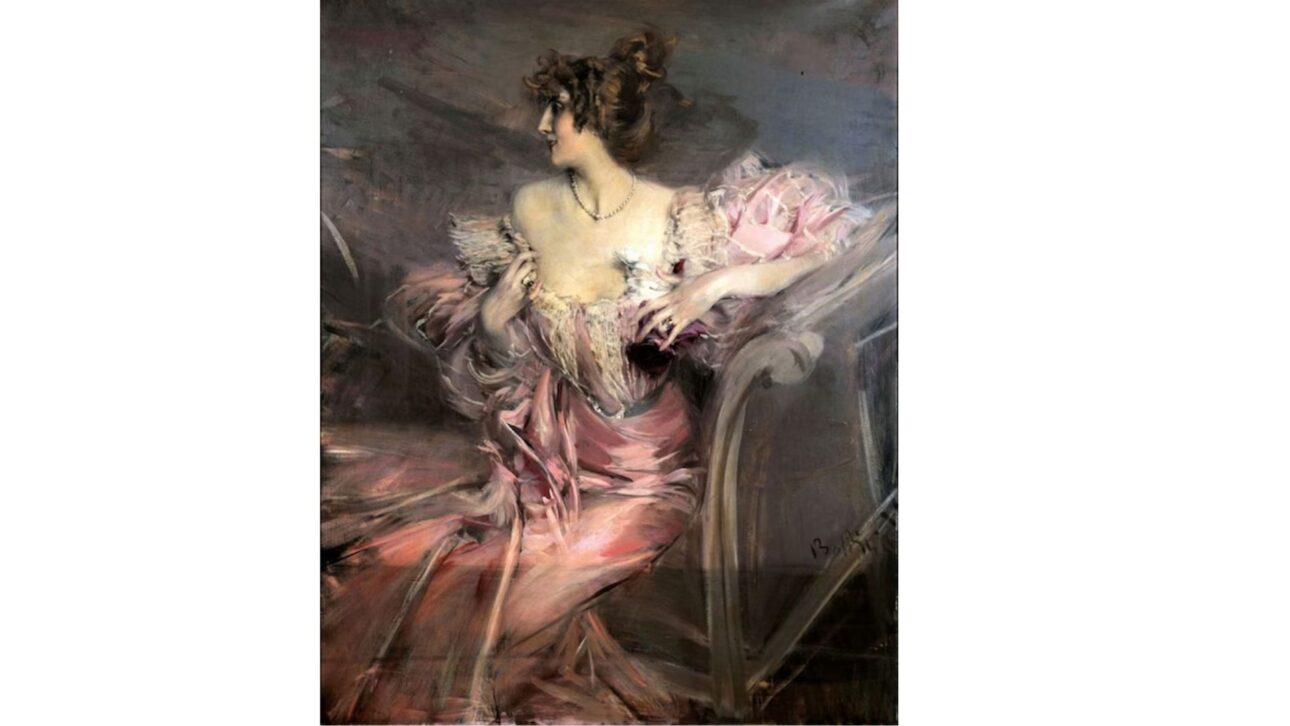
Amidst all that dusty clutter, one object caught the auctioneer’s attention. Choppin-Janvry came across a fascinating portrait signed by Boldini, showing a beautiful woman wearing a pink muslin dress, forgotten inside the apartment for decades.
The work was completely unknown to the art world. The painting had never been publicly exhibited and was not listed in catalogs, making it a rare discovery: an unpublished painting by a renowned artist, hidden in plain sight.
And it was not alone. Next to the portrait was a stack of love letters tied with ribbons, a detail that would completely change the understanding of who the woman in the portrait was.
The love letters that revealed the secret
It was the correspondence that tied all the threads of the story together. Among the letters found, there were some from Boldini himself, addressed to Marthe de Florian the material proof of a relationship that, until then, was just speculation.
The conclusion came almost immediately. It became clear that she was both his lover and the beauty depicted in the painting, which solved two mysteries at once: the identity of the model and the nature of the relationship between the two.
This is where the discovery gains historical weight. For decades, the connection between Marthe and Boldini was just another rumor surrounding the socialite until an apartment closed since the war revealed the answer tied in ribbons.
The detail in the painter’s wife’s records
The formal confirmation was still missing, and it came from an unexpected source. A reference found in the records of Boldini’s wife confirmed the identity of the portrayed woman, providing documentary support to what the letters already suggested.
The same record brought another valuable piece of information. The note allowed the work to be dated to 1898, placing the portrait at the height of the Belle Époque and during the period when Marthe shone in Parisian circles.
With identity and date confirmed, the painting ceased to be a curious find. It became a documented piece, with clear provenance exactly the type of guarantee the art market requires to turn a discovery into a fortune.
From 253 thousand to 2.1 million euros: the record auction
Authenticated, the work was taken to auction, and the result surprised even the most optimistic. The painting entered the auction with an asking price of about 253 thousand euros, a value considered high but reasonable for a previously unknown Boldini.
The bidding, however, got out of control. Ten interested parties engaged in a true bidding war, raising the value far above the initial estimate, in one of those moments that go down in the history of auction houses.
The hammer came down on an impressive number. The painting was sold for 2.1 million euros, becoming the most expensive Boldini work ever sold—that is, a painting forgotten in a dusty apartment broke the absolute record for the artist himself.
Where the apartment frozen in time was located
The address is an essential part of the charm of this story. The property was located on the right bank of the Seine, in the 9th arrondissement of Paris, a region that includes theaters, cafes, and the bohemian atmosphere that marked the French capital.
The exact location only reinforces the symbolism. The apartment was situated at number 2 of square La Bruyère, just a few steps from the Opéra Garnier and the Pigalle area, a traditional Parisian nightlife district.
It was the perfect setting for the life Marthe led. An elegant address, in the heart of Belle Époque Paris, which ended up serving as an involuntary vault for the memories and secrets of two generations of the same family.
The mystery that the family kept locked away
Despite the uproar caused by the discovery, the story was not fully disclosed to the public. The building remained in the hands of the Florian family, who preferred to maintain discretion even in the face of worldwide interest.
As a result, many questions remain unanswered. The mysteries of Marthe and the heiress remain tightly guarded, including the real reason for the escape and why the rent was paid for so long.
Perhaps it is precisely this silence that keeps the case alive. Without an official explanation, the apartment became a legend a story that each person can complete with their own imagination.
Why this story still fascinates the world
The case endures over time because it touches on something universal. The idea of a place untouched for almost 70 years fuels the desire to view the past exactly as it was, without retouching, renovations, or versions told by others.
And there is the final irony, almost poetic. An apparently senseless decision to pay for decades for an empty property was what saved a masterpiece from oblivion and returned to the world the portrait of a woman that history almost swallowed.
From a hasty escape in the midst of war to a millionaire auction, the story of the heiress who paid the rent for almost 70 years without ever returning shows that reality often surpasses any fiction.
And you, would you have the courage to open a door sealed for decades? Why do you think she never returned but kept paying? Share your theory in the comments and tag that friend who loves old stories and real mysteries.


