





 Portuguese
  English
  Spanish
  3 min of reading
  5 comments


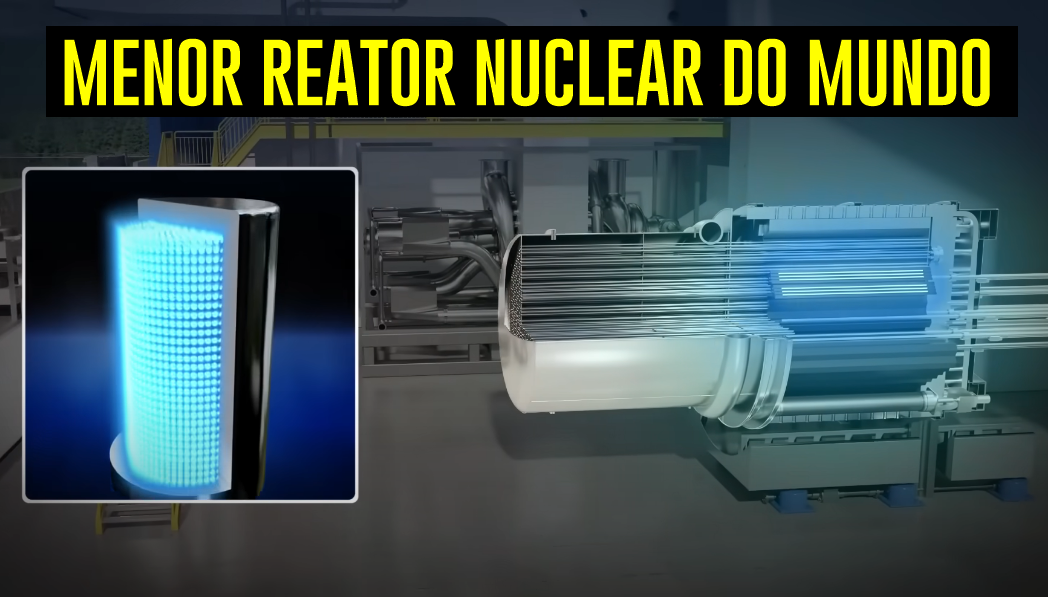

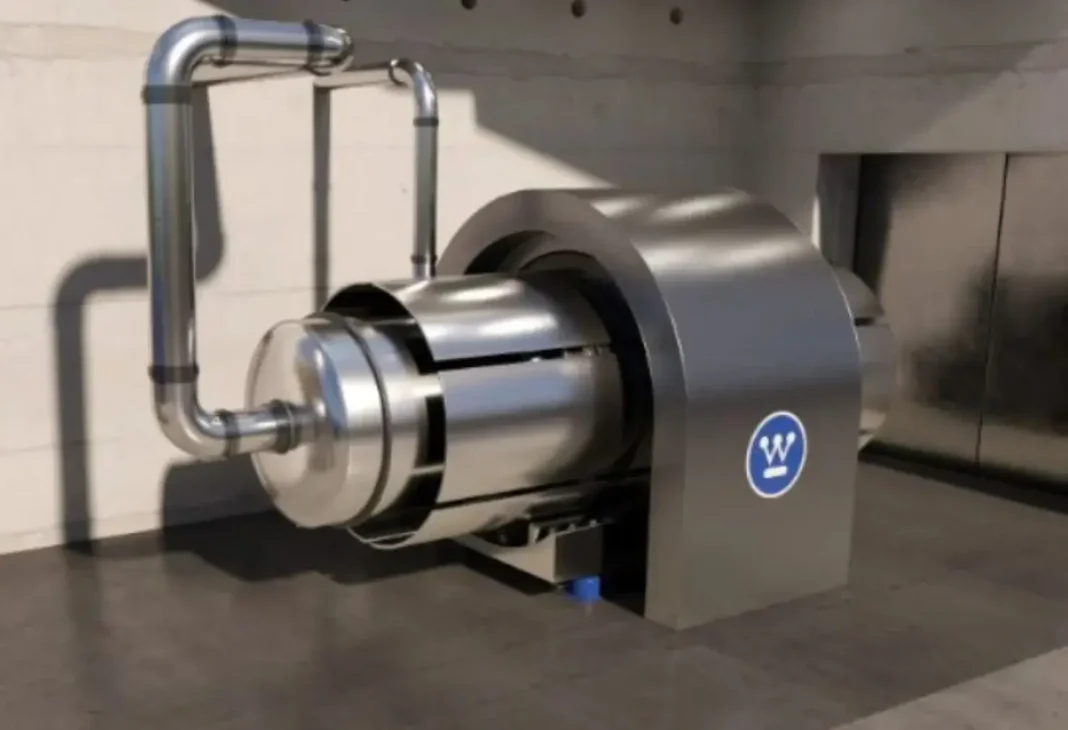
eVinci Nuclear Micro Reactor Promises Continuous Operation For Eight Years Without The Need For Water Cooling
In an innovative initiative that promises to reshape the energy landscape of Saskatchewan province in Canada, a compact and independent nuclear reactor using water is scheduled to start operations by 2029.
The government of Saskatchewan, in collaboration with Westinghouse and the Saskatchewan Research Council, announced the project with a budget of CAD$ 80 million to implement the eVinci micro reactor.
Premier Scott Moe expressed great optimism about the transformative impact of this project, highlighting the ability of the eVinci to meet Saskatchewan’s energy needs in a tailored and sustainable way.
-
The United States launched into the water the largest self-propelled dredger in its history, a giant ship that scoops up the seabed to restore beaches and ports.

-
A device that swings like a seesaw powered only by sunlight promises to extract lithium essential for batteries from seawater and also generate potable water as a byproduct, in an innovation by Chinese researchers that is still a prototype but could change the race for the most coveted metal of the energy transition.

-
Dust from dead stars has become a ruler to measure 30,000 years of ice in the Arctic: cosmic particles that have been falling for billions of years revealed that an area permanently covered in 1980 is now ice-free part of the year, with a 42% decline since 1979 putting the polar ocean on historical alert.

-
Technology inspired by armadillos transforms a soft surface into a rigid shield and creates an artificial shell capable of protecting flexible robots, delicate machines, and sensitive electronics against unexpected impacts.




“The micro reactors provide a customized solution for Saskatchewan’s unique energy needs,” Moe stated.
Share this story
The eVinci Micro Reactor Revolution
Westinghouse, the developer of eVinci, claims that this technology will not only revolutionize energy production but also significantly reduce pollutant emissions.
Each eVinci unit is designed to avoid emitting up to 55,000 tons of pollution per year, marking a significant step towards environmental sustainability.
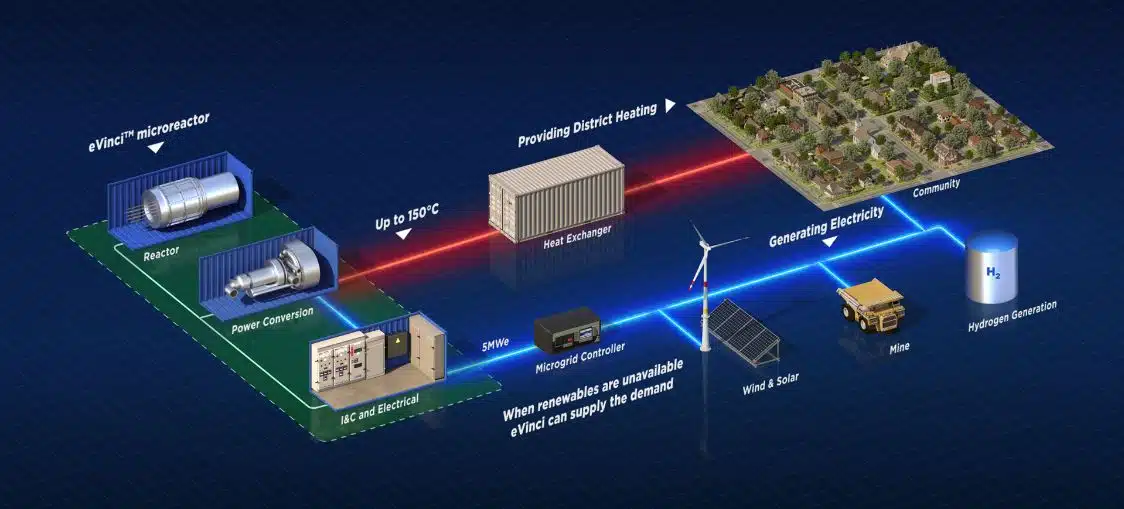
One of the standout features of the eVinci is its capacity. This micro reactor is capable of generating five megawatts of electricity or producing over 13 megawatts of high-temperature heat, with the possibility of combined operation.
According to the Saskatchewan Research Council, this capacity makes eVinci a promising and efficient alternative to meet different energy demands.
To put these numbers in perspective, the U.S. Nuclear Regulatory Commission estimates that just one megawatt of capacity in a conventional plant can meet the energy needs of approximately 400 to 900 residences over the course of a year.
Portability and Flexibility
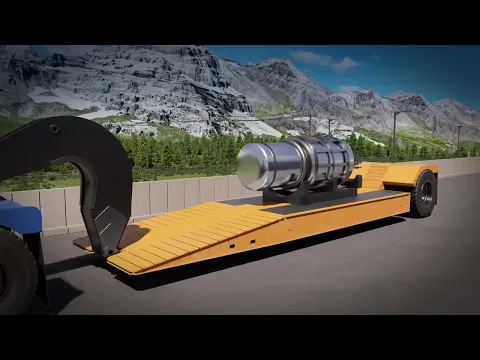
The innovation of micro reactors lies not only in their generating capacity but also in their portability and ability to serve remote locations and communities with less access to energy.
The U.S. Department of Energy confirms that types of micro reactors are under development, providing a practical solution for regions with limited energy infrastructure.
The physical design of the eVinci is also innovative: its installation occurs above ground and requires an area similar to that of a standard precision runway.
This compactness facilitates integration into existing electrical grids, as well as allowing for efficient pairing with renewable energy sources like solar and wind.
Heat Pipe Technology: The Key Differentiator
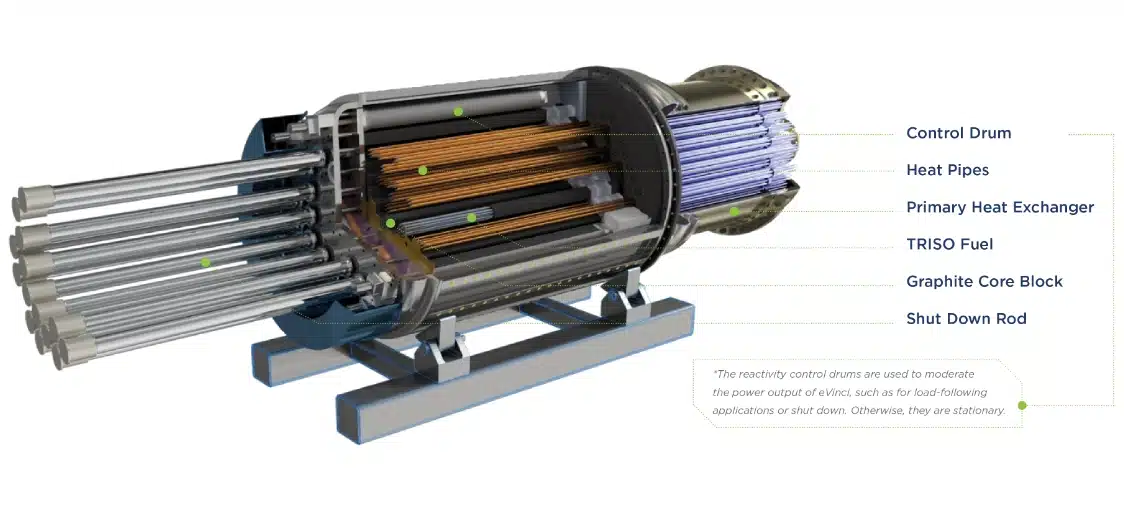
Unlike traditional nuclear reactors, which rely on large volumes of water for cooling, the eVinci uses a “heat pipe technology” that eliminates this dependency.
This feature is essential for sustainable operation in areas where water access is limited, as well as simplifying the installation and maintenance process.
After approximately eight years of service, the eVinci micro reactor can be removed for disposal, and a new unit can be installed in the same location.
This system, often compared to a battery, offers a practical and sustainable alternative, facilitating replacement and avoiding long-term waste generation.
The Current Reality of Nuclear Energy in North America
Currently, there are 54 commercial nuclear plants operating in the United States, while Canada has six nuclear plants, according to data from the Canadian government.
Despite the high energy generation capacity, traditional nuclear plants produce large amounts of waste: it is estimated that approximately 2,205 tons of nuclear waste are generated annually in the U.S., a volume equivalent to less than half of an Olympic swimming pool.
This micro reactor model may also be an attractive solution for other countries, including Brazil, which faces challenges related to dependence on hydroelectric and thermal energy sources.





Devia enfiar essas varetas de urânio no **** do filho da **** que inventou isso
Eu acho que os microreactores nucleares serão a solução para o futuro. Pois o aquecimento do clima está produzindo anomalias nos recursos hídricos. Assim as usinas hidrelétricas não são confiáveis.A contaminação não é pior ao produzido pelas usinas termoelétricas, ou outras.
Esses estadunidenses são loucos e doentes,uma usina nuclear tem centenas de cuidados e profissionais, um aparelho desse uma comunidade pode causar um desastre extremo tanto para as pessoas quanto pro meio ambiente isso é coisa de doente mental, tinha que vim do estadunidense,deveriam ter energia solar, aí vem um terrorista **** o aparelho e faz uma mini bomba nuclear maravilha 🤩 🙌 👌🤯