





 Portuguese
  English
  Spanish
  5 min of reading
  0 comments


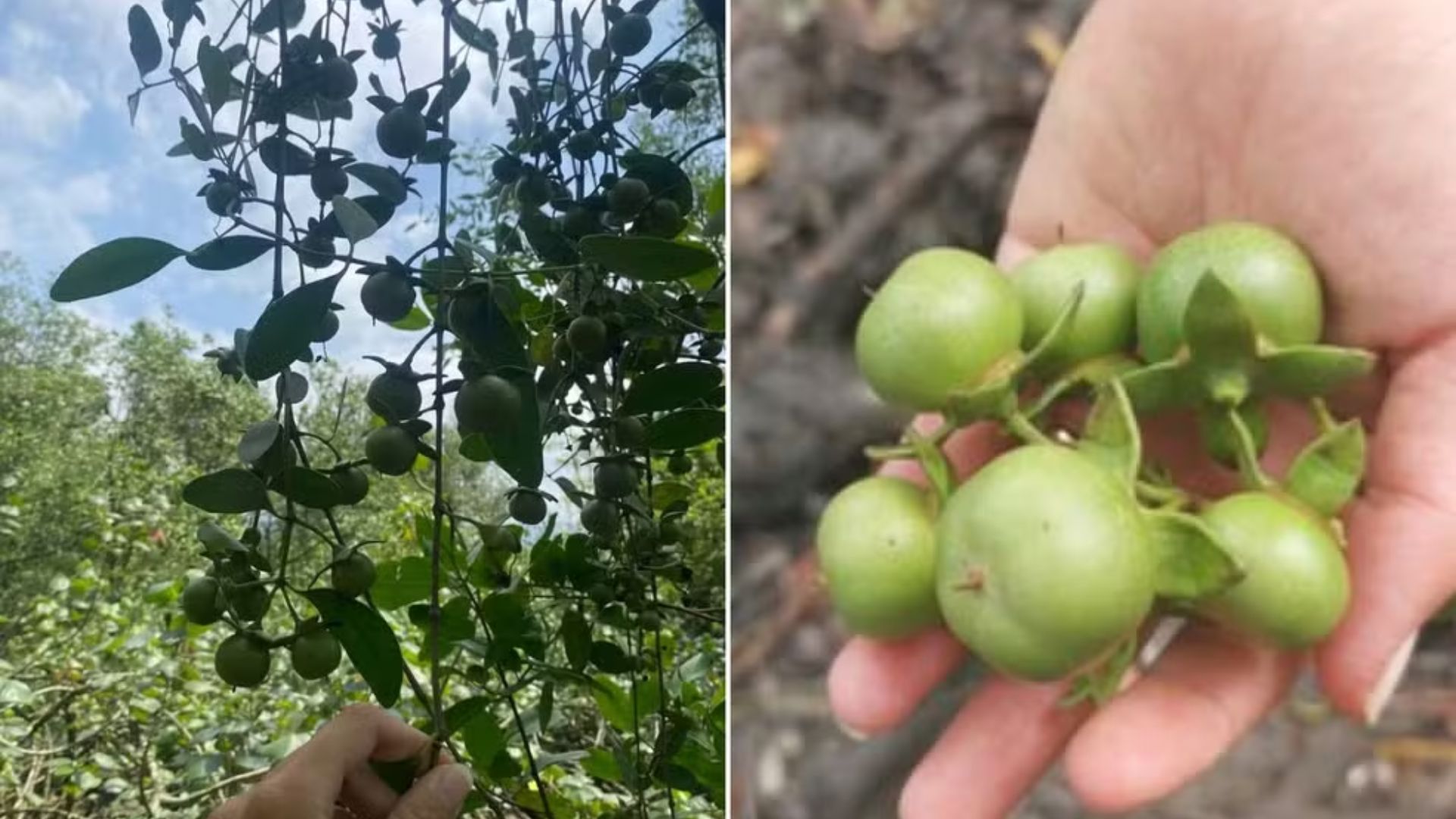
Silent expansion of an Asian species raises environmental alert on the Paulista coast, mobilizes task force with drones, and has already led to the removal of hundreds of trees in a sensitive mangrove area considered strategic for biodiversity and ecological balance.
An exotic fast-growing tree, capable of exceeding 12 meters and pointed out by environmental agencies as a direct threat to the balance of mangroves, mobilizes a task force in Cubatão, on the coast of São Paulo.
The apple mangrove, the common name for Sonneratia apetala, has already been identified in a critical area of about 20 hectares in the estuary and, given the risk of advance, has become the focus of an eradication operation led by Ibama and the Forest Foundation.
According to a report published by g1 this Monday (13), more than 700 adult individuals have already been removed from the Cubatão estuary in an attempt to contain a bioinvasion that experts still consider reversible.
-
Minha Casa Minha Vida for the elderly: the 80-year rule can double financing installments; see rules and age limit

-
A large part of the Netherlands lies below sea level and remains dry only because an invisible machine of dikes, pumps, and giant gates works nonstop, a system born from the tragedy of 1953, when the North Sea invaded the country and killed 1,836 people.

-
The largest bridge in Finland has just been inaugurated and cars simply cannot pass on it; only trams, bicycles, and pedestrians are allowed to cross the 1.2 km giant with a 135-meter pillar over the Baltic Sea.
-
Larger than Belgium and nestled at the mouth of the Amazon, Marajó Island is a giant that Brazil has forgotten, surrounded by water and energy on all sides, yet still isolated, poor, and dependent on diesel brought by barge.




The official assessment is that the scenario remains compatible with a rapid response, as long as control advances before the species spreads to new areas of the coast.
Invasive species threatens Brazilian mangroves

Originating from Southeast Asia, the apple mangrove is treated by Ibama as an exotic invasive species because it is not part of the native Brazilian flora and has a history of impact on ecosystems outside its natural area.
The agency highlights that the plant combines aggressive growth, high dispersal capacity, and recognized invasive potential, characteristics that increase the risk for mangrove forests with more limited tree composition, as occurs in Southeast Brazil.
According to an investigation by the newspaper g1, concern has increased because the specimens observed in the field tend to be larger than native species.
This structural gain may favor competition for space, light, and nutrients, altering the organization of the forest and putting pressure on associated biodiversity, with repercussions on the trophic chain and the functioning of the estuarine ecosystem itself.
In Cubatão, the presence of Sonneratia apetala gained scientific relevance as it represents the first record of the species in South America, according to a description published in the journal Biota Neotropica.
Technical documents related to management in São Paulo indicate that the first records in Brazil date back to February 2024, when dozens of specimens had already been identified in the monitored area.
Possible origin linked to maritime transport

The entry route of the species into the country has not yet been officially confirmed.
Ibama itself states that there is currently no proven introduction pathway, although monitoring vectors such as port activities and ballast water is treated as a necessary measure to prevent new episodes.
In an interview with the newspaper g1, biologist Edmar Hatamura pointed to ballast water from ships coming from Asia as a likely hypothesis for the arrival of the plant in the Cubatão estuary, due to the intense maritime flow associated with the port complex of Baixada Santista.
The hypothesis has already appeared in academic and institutional publications but remains unconfirmed by federal agencies.
This distinction has become central in addressing the case.
While researchers and technicians consider the connection to international maritime transport plausible, the official position avoids asserting the origin without conclusive evidence.
Operation with drones tries to contain the advancement of the species

The strategy adopted in São Paulo follows the principle of Early Detection and Rapid Response, a model used in combating invasive species when there is still a real chance of eradication.
In a report released in March 2026, Ibama reported that analysts from the agency and the Forest Foundation carried out activities for identification, quantification, and validation of plants using drones, aerial mapping, and technical field checks.
The newspaper also pointed out that the work in Cubatão is not limited to the suppression of already located specimens.
The operation involves mapping hotspots, continuous monitoring, and studies to improve species identification by image, which can enhance early detection capacity in other sections of the Paulista coast before new nuclei consolidate.
At the epicenter of the occurrence, the initial aerial survey detailed about 20 hectares and delineated 218 polygons of the species’ presence, each of which may contain one or more individuals.
The expansion of drone overflights was planned for a larger area in an attempt to qualify the spatial reading of the invasion and better assess the actual size of the problem.
Removal without chemicals seeks to preserve ecosystem

The management adopted by environmental agencies seeks to reduce additional impacts on an already sensitive environment.
Instead of herbicides or chemical inputs, removal occurs through clear-cutting of adult individuals and covering the stumps with the mangrove’s own mud, a procedure outlined in the technical protocol developed for the area.
The Forest Foundation also reported, in technical and institutional material, that the suppression considers the reproductive cycle of the species.
Whenever possible, the intervention seeks to avoid the fruiting period; when this does not happen, manual collection of the fruits comes into play to reduce seed dispersal and curb the emergence of new hotspots.
The urgency in this case arises not only from the number of trees already removed but also from the growth pattern of the species and the occupancy capacity observed in the mangroves.
In a statement about the case, Ibama emphasized that eradication is still viable precisely because the bioinvasion remains in its initial phase, which makes the field actions of this stage a decisive point to avoid broader losses in Baixada Santista.





Be the first to react!