Portuguese
  Spanish


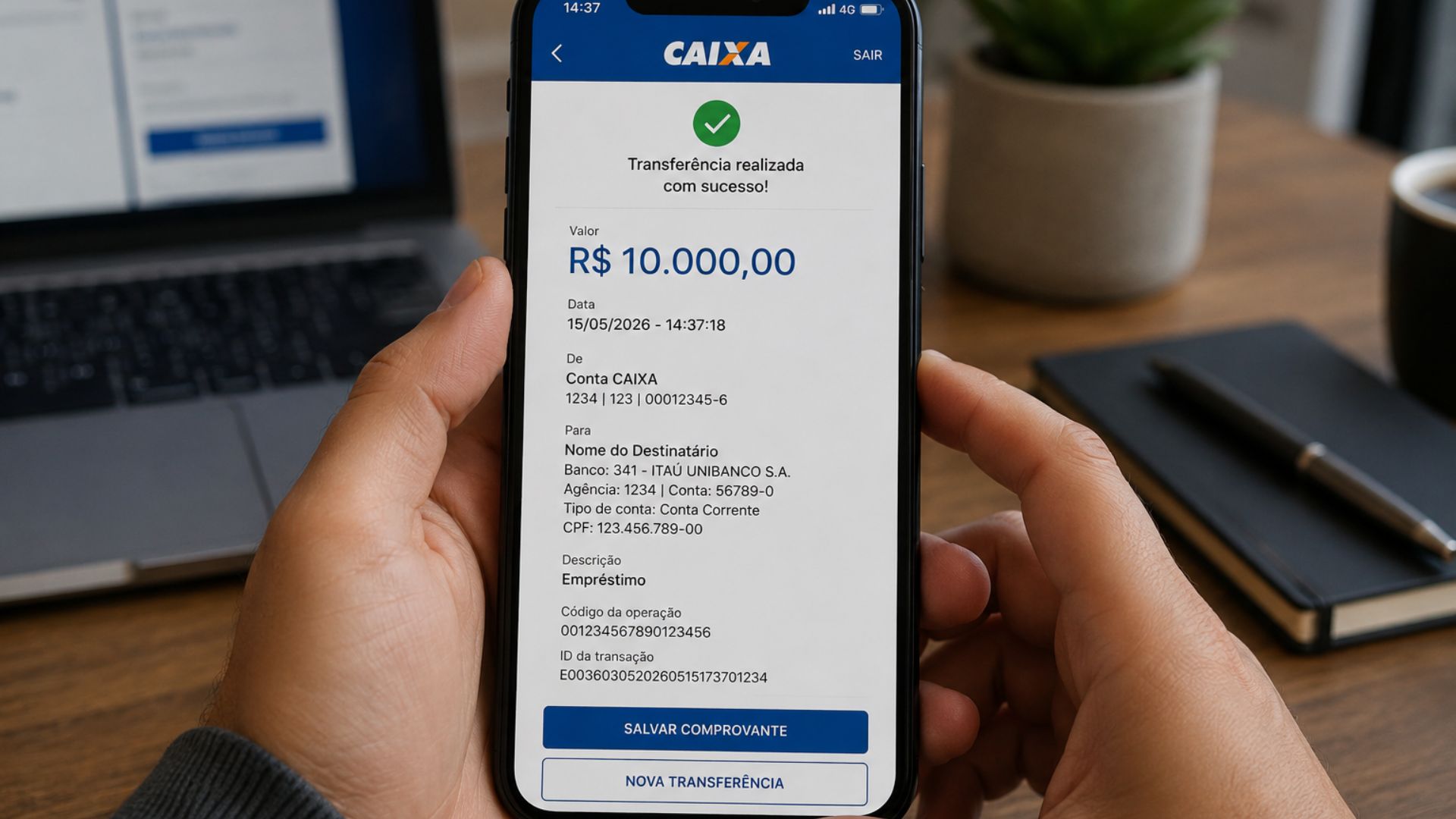

STJ’s understanding reinforces that loans between individuals can include interest, provided they respect legal limits and do not impose charges considered abusive by the Judiciary. Recent decisions also maintain the obligation to return the principal amount and allow judicial review of private contracts.
The consolidated understanding by the Superior Court of Justice establishes that loans between individuals with interest charges do not automatically constitute a crime, provided that the charges respect the limits set forth in Brazilian legislation and do not represent an advantage considered abusive by the Judiciary.
Even when there is a discussion about irregularity in the interest applied, the obligation to return the principal amount remains valid, while excessive charges can be judicially reduced after analyzing the documents, contracts, and other evidence presented by the involved parties.
Within this understanding, the STJ treats these operations as interest-bearing loan contracts (mútuo feneratício), a modality in which there is remuneration for lending money, differentiating the validity of the amount actually delivered from any illegality related only to the subsequently charged additions.
-
Brazil Approves Proposal to Cap Vehicle Tax at 1% of Car Value

-
Brazilian Senate Approves Bill to Automate Child Support Payments Directly from Debtors’ Accounts

-
Brazilian Congress Advances Bill to Ensure Full Pension Benefits for Families Receiving Reduced INSS Death Benefits
-
Unusual Traffic Signs in Brazil: Wheelbarrow Ban, Crosswind Warning, and Customs Stop


The central point is to separate the validity of the amount lent from any irregularity in the charges collected.
In practice, whoever received the money remains obligated to return the principal amount. However, interest considered excessive, disproportionate, or incompatible with legal parameters can be reduced by the Judiciary, according to the evidence presented in the process.
Loans Between Individuals Have Legal Limits
Although the Civil Code allows the charging of interest on loans made for economic purposes, the legislation establishes limits precisely to prevent undue enrichment and avoid charges considered incompatible with the parameters accepted by Brazilian courts.
In this scenario, private contracts, promissory notes, and debt acknowledgment terms serve as proof of the relationship between the parties, but they do not prevent the Judiciary from examining any excessive interest or other irregularities present in the negotiation.
When analyzing this type of process, the magistrate can verify whether the charges were agreed upon regularly and whether the amount demanded remains within the limits admitted by legislation and the consolidated jurisprudence of the STJ itself.
The existence of a written document helps to prove the relationship, but it does not validate an abusive charge.
The STJ has already decided that, even when there is usury, the consequence is not to annul the entire debt.
The guidance is to preserve the legal transaction in its lawful part and only remove clauses or charges considered usurious.
Abusive interest can be reduced by the Courts
When the interest charged exceeds limits considered reasonable by the Courts, the debtor can request a judicial review of the debt, ask for a reduction of the applied charges, and even seek a refund of amounts paid in a manner considered irregular.
This restitution depends on the analysis of the specific case, especially the proof of irregular payment or collection without legal basis.
Normally, this type of discussion involves accounting expert reports, receipts, bank transfers, messages exchanged between creditor and debtor, private contracts, and payment history throughout the negotiation.
These elements help to separate the amount actually lent from the additions applied after the initial negotiation.
There may also be discussion about compound interest, fines, monetary correction, and accumulated charges.
When the sum of these factors distorts the real value of the debt, the Courts can recalculate the obligation to prevent collection exceeding what is permitted.
Signed contract does not prevent debt review
Even with a signed debt confession, the debtor still has the right to judicially question the amounts charged, especially when there are indications of excessive interest or charges considered incompatible with legislation.
The STJ recognizes that the Judiciary can examine the origin of the debt, the method of calculation, and the eventual presence of illegal charges.
This means that a private document does not serve as authorization to charge any percentage.
The contract serves as proof, but it must respect the law, good faith, and the limits applicable to relationships between individuals who are not part of the financial system.
On the other hand, alleging abuse is not enough to dismiss the debt.
It is up to the challenger to demonstrate, through documents or other admitted means, that there was a charge above what is permitted or that the amount demanded does not correspond to the money received.
Difference between private loan and usury
The simple act of lending money with interest does not automatically characterize usury, as irregularity is usually recognized when there is an exaggerated advantage, excessive charging, or practices incompatible with Brazilian legislation.
Irregularity arises when the charge exceeds legal limits, involves an exaggerated advantage, or relies on practices incompatible with Brazilian legislation.
The so-called Usury Law and the Civil Code are important references in this debate.
In contracts between private individuals, the topic is usually analyzed based on the percentage charged, the agreed-upon conditions, and proof of any excess.
Therefore, the legal conclusion depends on the specific case.
An informal loan between acquaintances can be valid, while a charge with very high interest, constant debt renewal, and an artificial increase in the balance can be judicially reviewed.
Obligation to return the principal amount continues
Among the main points reinforced by the STJ is the maintenance of the obligation to return the principal amount received, even when the Courts identify irregularities related to the interest or charges collected by the creditor.
The debt remains for the principal amount, but abusive additions can be excluded or reduced.
This distinction seeks to avoid two opposite effects: allowing the creditor to profit from illegal collection or authorizing the debtor to keep the borrowed amount without restitution.
In these cases, the Judiciary seeks to preserve only the valid part of the relationship.
Thus, whoever lends must document the operation clearly, indicating amounts, terms, and charges, in addition to respecting legal limits.
Whoever takes the loan, in turn, can seek review when the charge deviates from these parameters.
Judicial review can alter the balance charged
Depending on how interest has been applied over time, judicial review can significantly alter the balance charged and reduce the debt to values compatible with what the legislation allows.
In some cases, recalculation reduces the debt to the principal amount, plus only the charges permitted by law.
When an overpayment has already occurred, the debtor can request compensation or restitution.
The refund, however, depends on proof of the excess and the manner in which the collection occurred, without automatic application in every discussion about interest.
The STJ’s understanding reinforces that loans outside the banking system must also observe rules.
The informality of the negotiation does not authorize unlimited collection, but it also does not eliminate the obligation to return the money actually received.