






 Portuguese
  Spanish


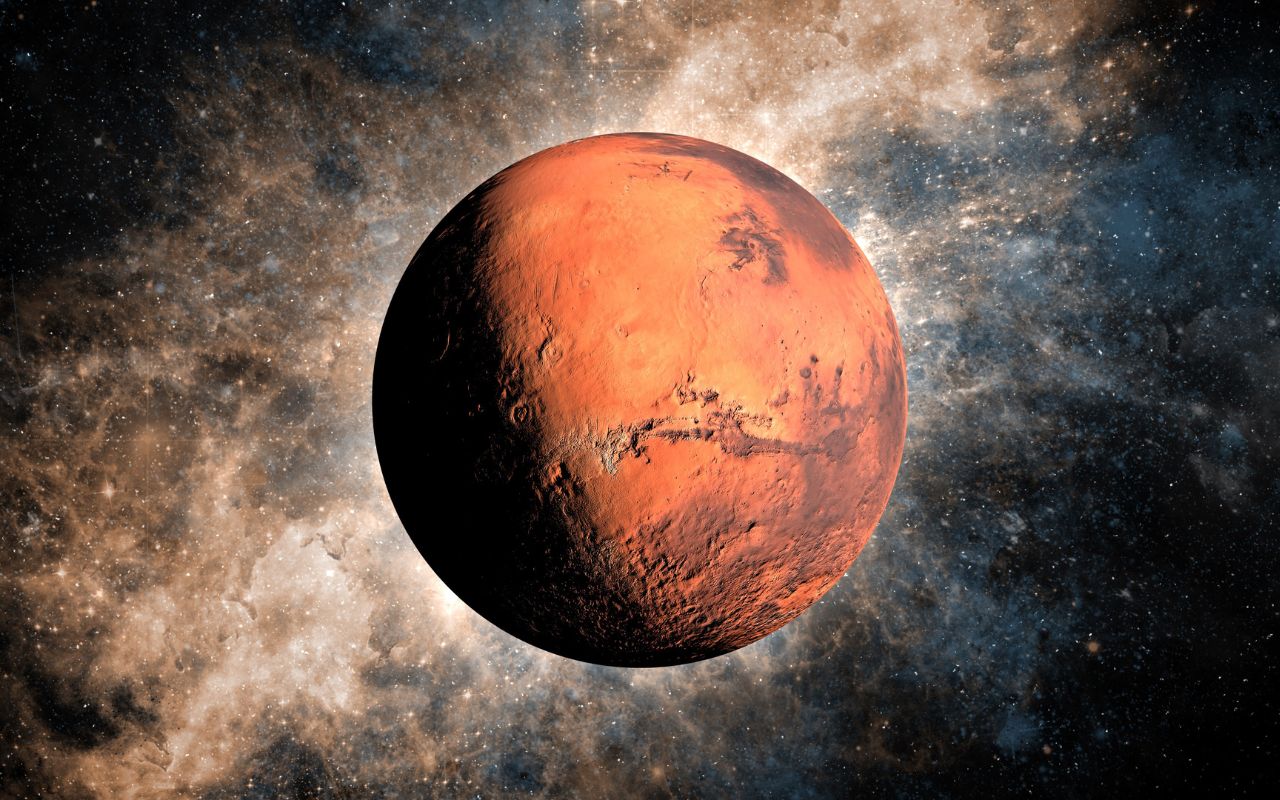


Up to 50 Million Years Preserved: Mars Ice May Hide Intact Signs of Ancient Life, Say NASA Scientists.
Researchers point out that Mars ice may act as a true natural vault, preserving signs of ancient life for up to 50 million years. The discovery changes the perspective on where to search for biological traces on the red planet and indicates that ice deposits may be more promising than rocks or soil.
The possibility of finding intact organic molecules on Mars reinforces the importance of ice in space exploration.
Experiments in the lab have shown that amino acids and other essential life compounds can survive for millions of years, even when exposed to the intense cosmic radiation on the Martian surface.
-
Qatar Commissions World’s Largest Gas Ship, a 344-Meter Giant Now Under Construction

-
Expert Challenges Alarmism Over El Niño in Brazil: Atmosphere Yet to Respond to Warm Pacific, Advises Farmers Against Selling Cattle or Delaying Planting Before September
-
In a Degraded Atlantic Forest Area, a São Gonçalo Resident Transforms Land into a Living Eco-Museum, Now a Model for Environmental Education

-
World’s First Lithium-Sulfur Battery Factory Launches, Promising to Double Range Without Relying on China


After Tests with Frozen Bacteria, Scientists Reinforce: Searching for Clean Ice on Mars May Be Key to Discovering Extraterrestrial Life
To test the resilience of organic molecules, researchers from NASA Goddard Space Flight Center and Penn State University froze Escherichia coli bacteria and subjected them to radiation equivalent to millions of years on the Martian surface.
The results were surprising: over 10% of the amino acids remained intact, indicating that pure ice functions as an extremely stable environment for preserving life.
The research also revealed that the purity of the ice is crucial. Samples containing soil or sediment particles degraded the amino acids up to ten times faster.
This suggests that clean ice deposits or water-rich permafrost should be priority targets for probing and drilling.
In other words, clean ice better protects traces of life against the effects of cosmic radiation, while the presence of soil accelerates the degradation of organic compounds.
Promising Locations on Mars
Large amounts of ice are distributed beneath the surface of Mars, especially in polar regions and craters like Korolev, which hosts permanent deposits of frozen water.
These locations function as biological time capsules, preserving ancient molecules or traces of organisms that may have existed billions of years ago.
Moreover, missions like NASA’s Perseverance have already identified organic traces in rocks, reinforcing the idea that Mars may have preserved fragments of life in various environments, with ice being one of the safest for natural storage.

Implications for Future Missions
The findings suggest that the search for life on Mars should prioritize clean ice deposits, rather than just focusing on rocks or soil.
Preserved organic molecules may provide clues about how life could have arisen and persisted in the extreme conditions of the red planet.
The study also reinforces the need for more advanced probes and drills, capable of accessing deep layers of ice where traces of ancient life may be better protected and less degraded.
Based on these studies, researchers indicate that Mars ice is not just a geological resource, but a true natural archive of the biological history of the red planet.
By focusing on clean deposits, future missions will have a greater chance of discovering ancient traces of life, transforming the way we explore Mars.
Source: Adventures in History


Your dedication is amazing