






 Portuguese
  Spanish


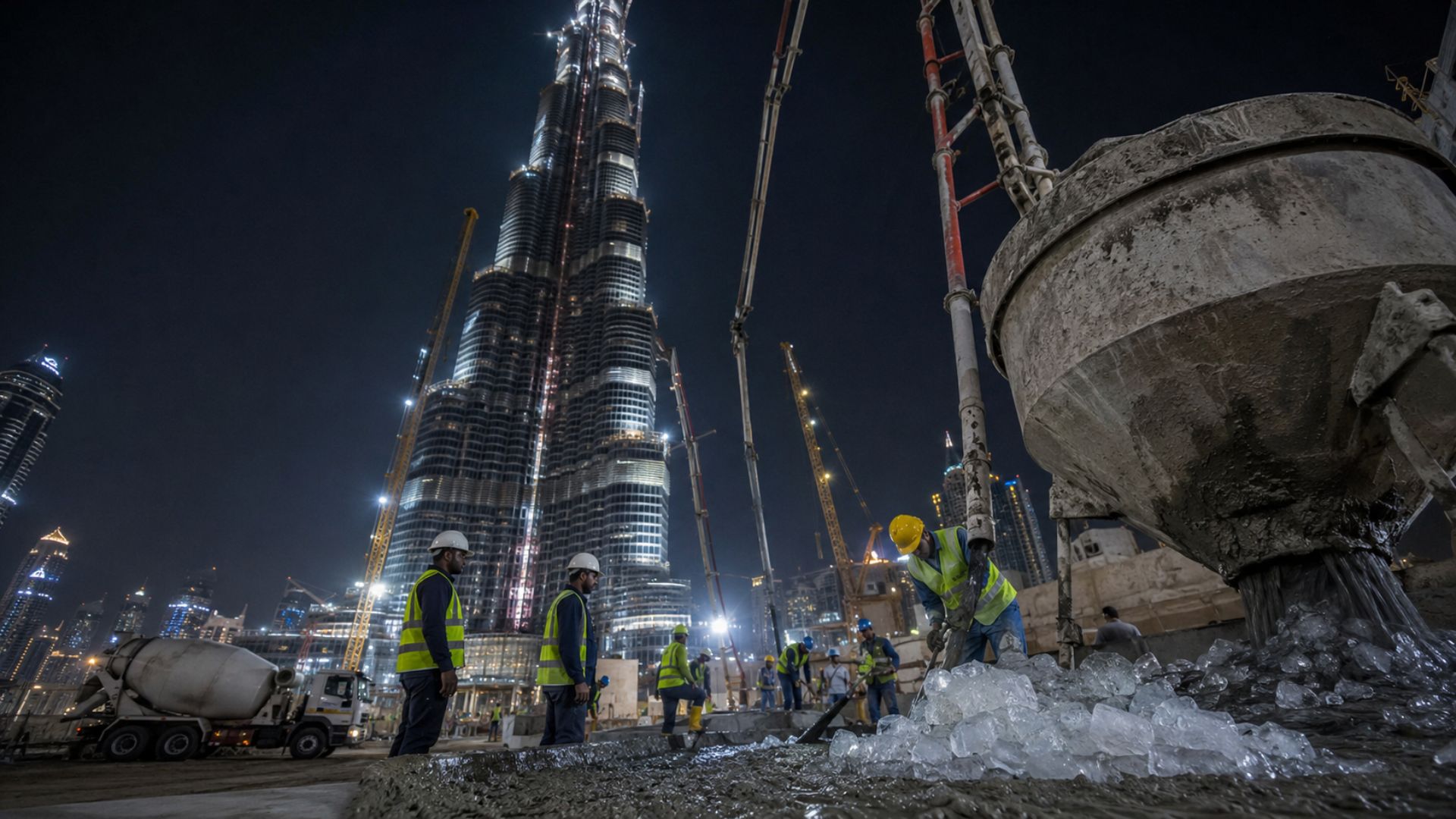


The Burj Khalifa, standing at 828 meters tall with 163 floors, required engineering solutions that defied physics to function as a vertical city in the middle of the Dubai desert. The concrete was mixed with ice and poured exclusively at night to prevent the 50°C heat from hardening it inside the pipes before reaching the top. The tower consumes 946 thousand liters of water per day pumped through seven independent zones, produces tons of ice every night to cool itself during the day, and transports 35 thousand people with 57 elevators organized like a vertical road network.
The Burj Khalifa should not work. Everything we know about building cities assumes that the ground is flat: water, sewage, electricity, and air conditioning systems were designed to operate horizontally. When engineers tried to force these systems to work vertically over 828 meters, every rule of urban engineering was inverted. Water does not want to go up. If you push too hard, the pipes burst. Dubai’s heat turns glass panels into greenhouses. And the concrete, the material that should be the backbone of the structure, turned to stone inside the pipes before reaching its destination.
The solution to each problem generated a new problem, and the solution to that new problem generated another. It is this cascade of ingenuity that makes the Burj Khalifa not only the tallest building in the world but one of the most complex works ever executed by humanity. The concrete was mixed with ice and poured only during early mornings in the desert so that it would not harden before reaching the necessary heights. Water rises in stages through seven mechanical zones so that the pressure does not destroy the piping. And the air conditioning works by melting 13 thousand tons of ice produced every night.
How water rises 828 meters without bursting the pipes

For comparison, the pressure at a house faucet is approximately 50 PSI. At 1,200 PSI, the pipe joints wouldn’t leak, they would explode, creating geysers in the corridors and flooding entire apartments.
-
Giant Robots Build Entire Neighborhood of 100 3D-Printed Homes in the U.S., Showcasing Technology’s Impact on Construction Industry

-
Helsinki Residents Receive Water That Travels 120 Kilometers Through a Hidden Rock Tunnel from a Lake Before Treatment

-
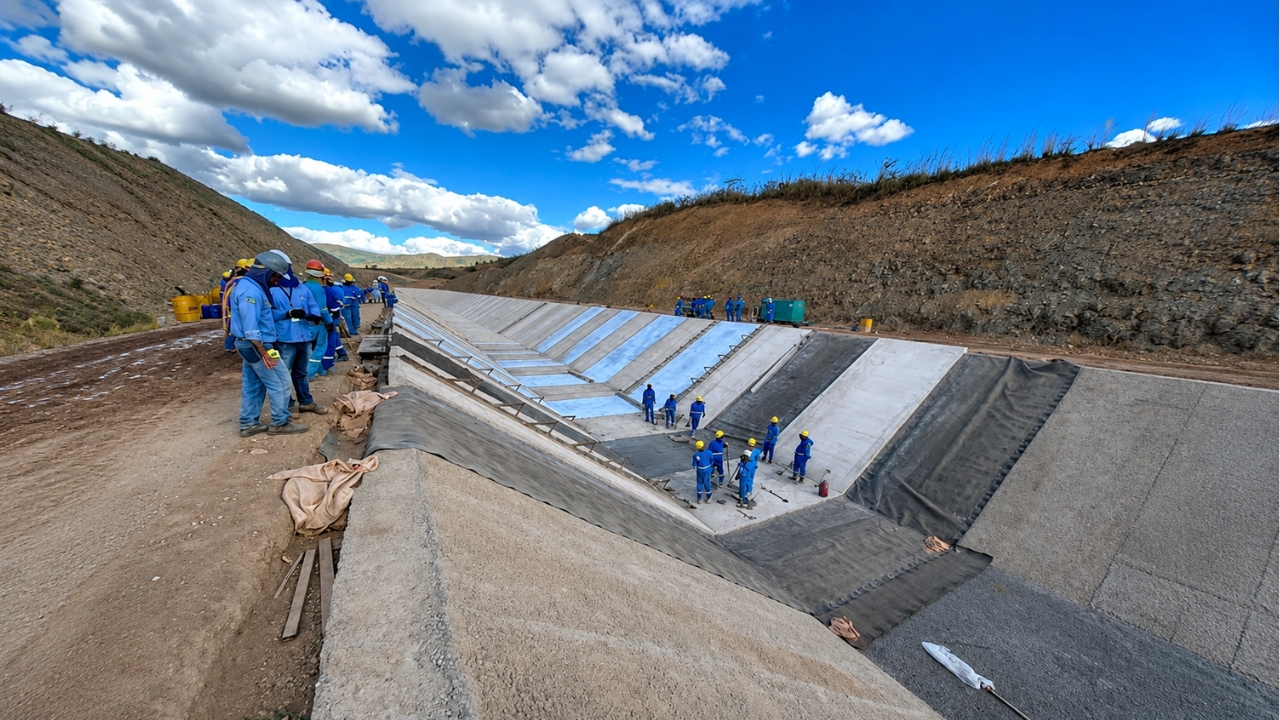
Brazil’s Sertão Region Nears Completion of Latin America’s Longest Artificial River, Transforming Water Access in Drought-Prone Ceará
-
Pre-mixed stabilized mortar set to revolutionize construction in 2026: extends usability to 36 or 72 hours, boosts productivity, and minimizes waste in building projects.



The solution was to divide the Burj Khalifa into seven mechanical zones, each with approximately 30 floors. The water starts in the basement, is pumped to a tank on the 40th floor, from where a second pump pushes it to the next tank, and so on up to the top. Each pump fights gravity for only 30 floors, keeping the pressure at safe levels. If a pipe bursts on the 80th floor, the zones above and below continue operating normally.
The concrete that needed ice to survive the journey

When concrete hardens too quickly due to temperature, some areas set before others, creating cracks and weak points. The risk at the Burj Khalifa was even worse: the concrete could harden inside the pumping pipes before reaching the destination floor, clogging the entire piping hundreds of meters high.
The engineers developed a custom high-performance concrete formula, grades C50 and C80, and mixed each load with large amounts of ice. The mixture was cooled to near-zero temperatures before entering the pipes. Even so, ice alone wasn’t enough: all concrete pouring at the Burj Khalifa was done at night, when the desert temperature dropped to between 29°C and 35°C. Compared to the daytime furnace of 50°C, the night air was the ally that kept the concrete fluid enough to reach the top.
The 26 thousand glass panels that block the heat before it enters


The Burj Khalifa is clad with more than 26,000 specialized glass panels covering 139,000 square meters of surface. Each panel received a high-performance reflective coating designed to send solar radiation back to the sky, drastically reducing heat gain before the air conditioning systems need to kick in.
But the reflective glass alone doesn’t solve the problem on a 50°C day in the desert. The second line of defense is a nighttime ice production system. During the early morning hours, when electricity is cheaper and the city’s demand is low, a cooling plant in the basement of the Burj Khalifa produces tons of ice slurry. During the day, when the sun hits the panels, the ice melts and the chilled water circulates through 76-centimeter diameter pipes to the heat exchangers on each floor. At peak times, the system is equivalent to melting 13,000 tons of ice in a single day.
The elevator system that works like a highway
With 35,000 people circulating daily, the Burj Khalifa couldn’t use conventional elevators that stop at every floor. The engineers were inspired by the highway model: express elevators function like interstate highways, taking passengers non-stop to intermediate lobbies on floors 43, 76, and 123. From these points, local elevators complete the journey to the destination floor.
The system includes 57 elevators and eight escalators. A passenger needing to reach the 55th floor boards an express elevator to the 43rd-floor lobby, disembarks, and takes a local elevator that goes up 12 more floors. The entire journey takes less than two minutes. Without this model, the elevators would be crowded starting from the 40th floor and the waiting time on the ground floor would be hours during peak times.
The question the Burj Khalifa left unanswered
The Burj Khalifa proved that it is possible to build a vertical city of 828 meters in the desert of Dubai, but each solution created a chain of complexity that would be unthinkable in a conventional building. The Jeddah Tower in Saudi Arabia plans to surpass 975 meters. The Mukaab Tower projects 6,500 feet. Each new tower will have to solve the same problems at higher altitudes, with greater risks and higher costs. The remaining question is not whether humanity can build taller than the 828 meters of the Burj Khalifa in Dubai, but how hard we are willing to fight to get a glass of water to the 300th floor.
What impresses you most about the Burj Khalifa: the concrete with ice poured at dawn, the 946,000 liters of water pumped daily, or the 13,000 tons of melted ice used to cool the building? Tell us in the comments.





Wow, wonderful piece of architecture, hope these ambitious acts may not in future become dangerous to humanity
wonderful. good knowledge
Nice article, getting more information about Burj Khalifa.