Portuguese
  Spanish


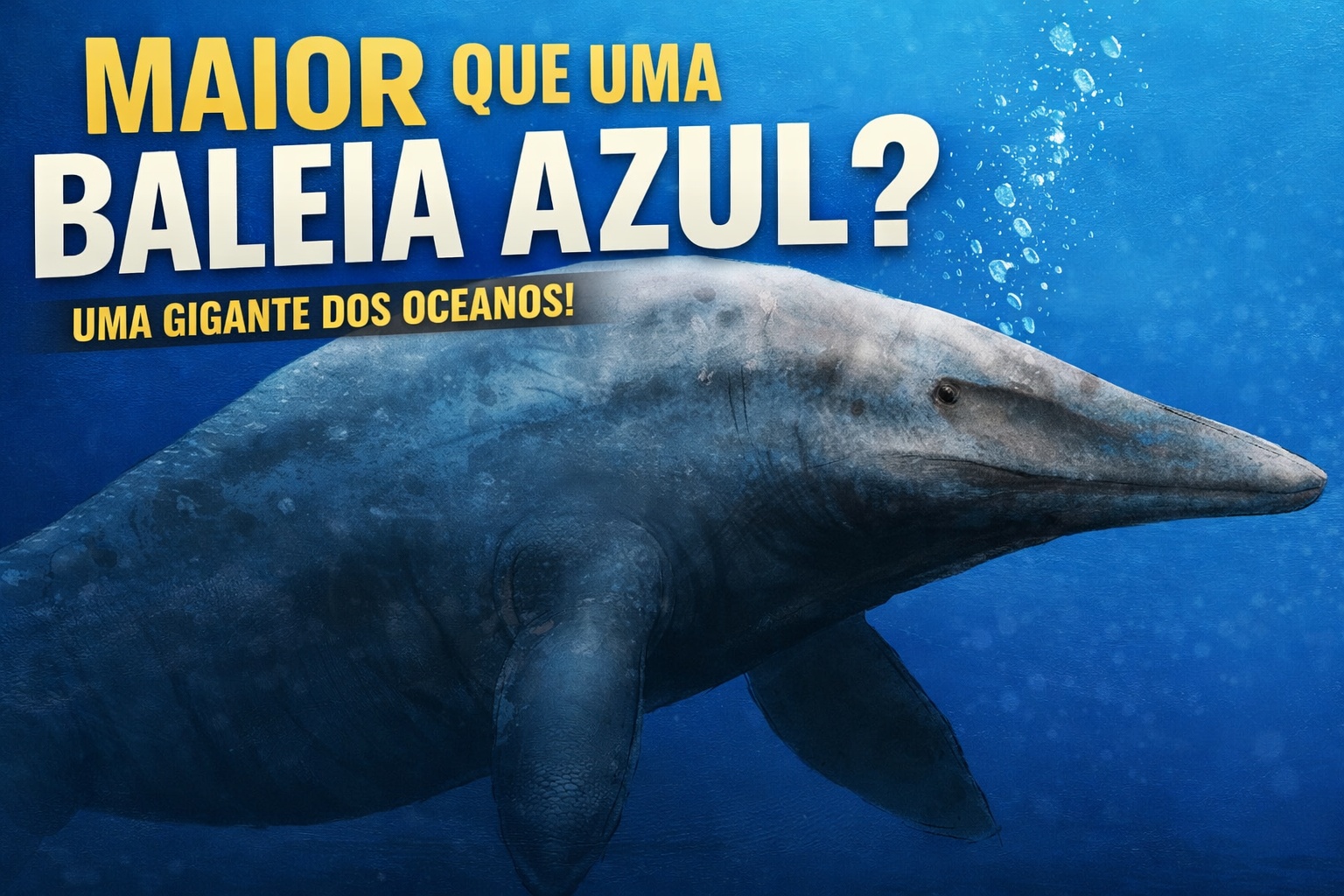


Giant Jaw Indicates That Ichthyotitan Severnensis May Have Been The Largest Marine Reptile In History, Surpassing All Triassic Giants.
The discovery of giant bone fragments along the coast of the United Kingdom reignited one of the biggest disputes in modern paleontology: what was the largest marine reptile to ever exist on Earth. In 2024, researchers officially announced the description of Ichthyotitan Severnensis, an ichthyosaur so colossal that its fossilized remains surpass, in scale, everything that has been documented among past marine predators.
Though known only from parts of the jaw, the size of these bones is so outside the norm that it placed the animal at the center of a global scientific debate and at the outer limits of what vertebrate biology has produced in the oceans.
Where And How Ichthyotitan Severnensis Was Identified
The fossils attributed to Ichthyotitan Severnensis were found in rock layers of the Upper Triassic, about 202 million years ago, in the estuarine region of the River Severn, between England and Wales. The fragments mainly belong to the surangular bone, the back part of the lower jaw — a critical area for estimating the total size of the skull and, consequently, the body.
-
Spain Launches World’s Largest Floating Dry Dock: 56-Meter Giant Produces Massive Concrete Structures in A Coruña Using Technology Proven in Brazil

-
AI-powered toys that talk, recognize faces, and collect data face scrutiny from Brazilian government over children’s privacy concerns

-
4,000-Year-Old Child’s Skull Unveils Ancient Burial in 7,500-Year-Old Norwegian Rock Shelter, Impressing Archaeologists

-
Norway Defeats Brazil in World Cup but Invests Billions to Preserve the Amazon, Strengthens Amazon Fund, and Joins Brazil in Leading Global Effort Against Tropical Deforestation


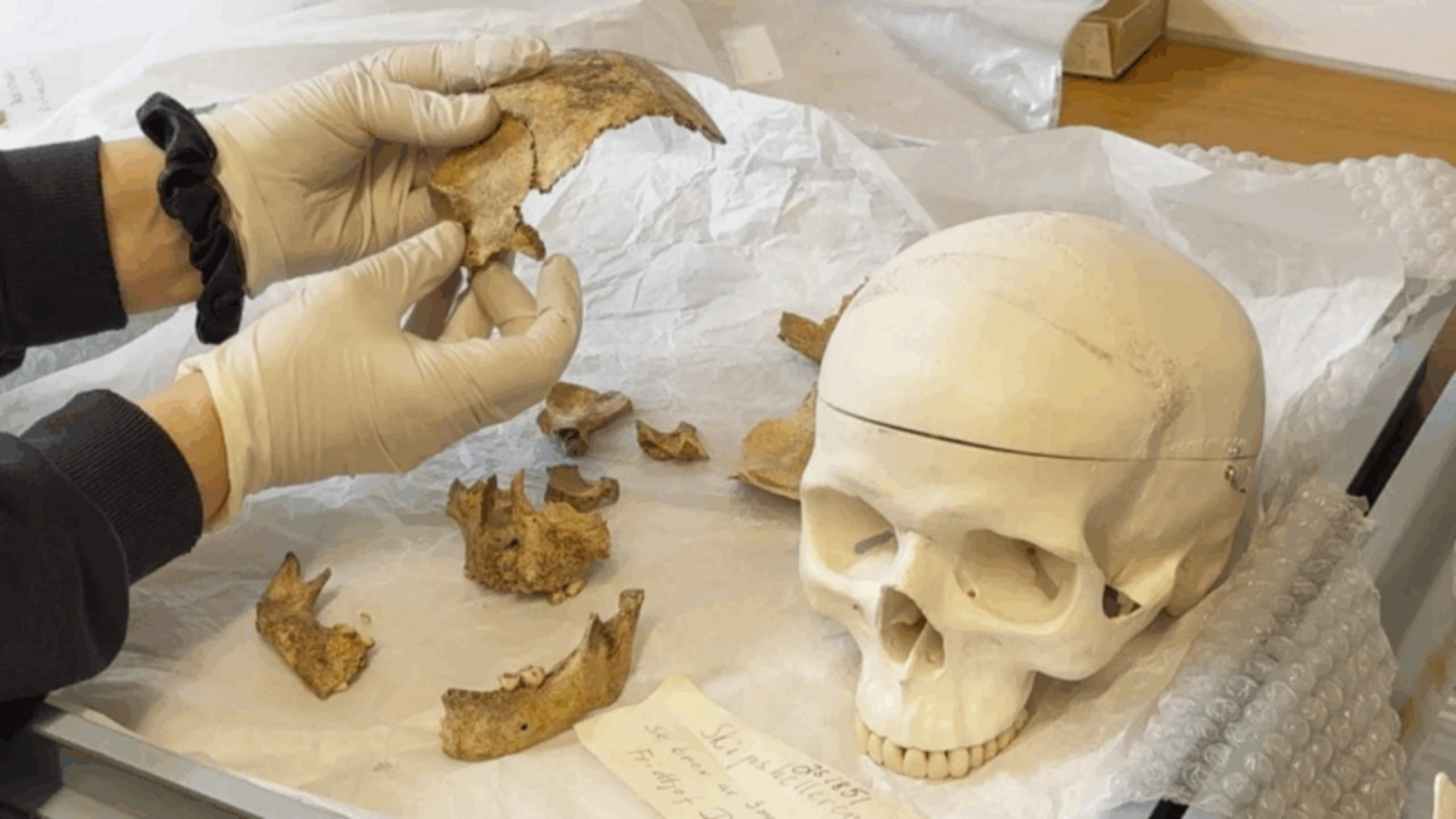

What immediately caught researchers’ attention was the absolute scale of these bones. Even when fragmented, they are significantly larger than the equivalent bones of Shonisaurus Sikanniensis, previously considered the largest known ichthyosaur based on well-preserved skeletons.
The fossils were analyzed by an international team and described in a scientific paper published in PLOS ONE, one of the world’s most respected journals.
Colossal Jaw And Extreme Size Estimates
The main evidence of Ichthyotitan’s gigantism lies in the size of the jaw. Reconstructions based on the ratio between the surangular and body length in other giant ichthyosaurs suggest an animal over 25 meters long, potentially reaching even greater lengths in more extreme scenarios.
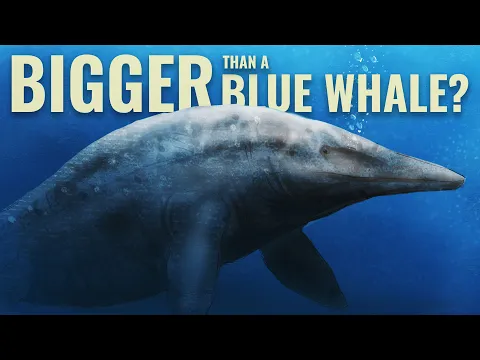

For comparison, this would place Ichthyotitan:
– Well above the Shonisaurus Sikanniensis, estimated at around 21 meters
– Larger than any confirmed marine reptile ever described
– Competing in length with some of the largest modern whales, although with completely different anatomy
The authors of the study themselves use terms like “probably the largest marine reptile that ever existed” and “among the largest animals to have ever lived”, making it clear that the inference is robust, but still cautious.
Ichthyotitan Versus Shonisaurus: The Battle For The Ultimate Title
Until the description of Ichthyotitan, the informal title of largest marine reptile was attributed to Shonisaurus Sikanniensis, a giant ichthyosaur from Canada, known for relatively complete skeletons displayed in museums like the Royal Tyrrell Museum. Shonisaurus is, to this day, the largest marine reptile proven by abundant skeletal material, with weight estimates between 25 and 30 tons.
The crucial difference between the two is the level of evidence. While Shonisaurus possesses vertebrae, ribs, a partial skull, and well-established body proportions, Ichthyotitan is known only from jaw fragments. Even so, these fragments are so large that they exceed the limits of what would be expected even for the largest known ichthyosaurs.
Scientifically, this places Ichthyotitan as a strong contender for the ultimate title, but still not as a definitive champion.
What Were The Giant Ichthyosaurs Of The Triassic
Ichthyotitan belongs to a group of highly specialized ichthyosaurs that dominated the oceans shortly after the greatest mass extinction in Earth’s history, at the end of the Permian.
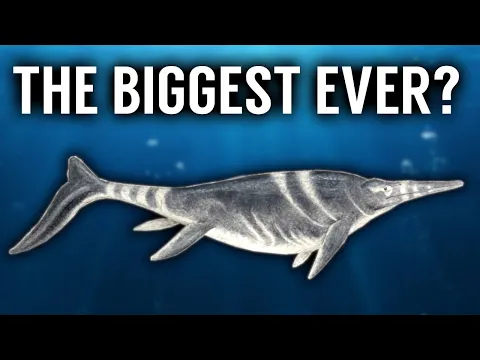
Unlike the popular image of fierce predators, many of these giants likely had a diet based on cephalopods, such as squids and ammonites, exploring extremely productive food chains.
These animals exhibited:
– Hydrodynamic bodies similar to dolphins
– Long skulls and powerful jaws
– Rapid growth and high metabolism
– Ability to occupy gigantic ecological niches in deep seas
Extreme gigantism suggests that the oceans of the Late Triassic were highly productive ecosystems, capable of sustaining animals of almost unimaginable size.
Why Did Only Fragments Survive
One of the most common questions is why such a large animal did not leave complete skeletons. The answer lies in the biology itself and the marine environment.
Bones of giant ichthyosaurs were relatively light, and the carcasses of animals of this size tended to dismember quickly after death, scattering bones across the seafloor before burial.
Moreover, the fossilization of giant marine animals is statistically rare. The fact that we have found any fragment of Ichthyotitan is already considered extraordinary by researchers.
The Impact Of The Discovery On Modern Paleontology
The description of Ichthyotitan Severnensis forced the scientific community to reassess the maximum limits of gigantism in marine vertebrates before the emergence of whales. Until recently, it was believed that only modern mammals had surpassed certain size thresholds.
Now, the evidence suggests that marine reptiles had already reached comparable dimensions, millions of years earlier, in very different environmental conditions than today.
This discovery also reinforces the idea that the fossil record is still far from complete — and that the largest animals in history may have left only fragmented clues of their true size.
A Giant Wrapped In Mystery
Ichthyotitan Severnensis remains one of the greatest enigmas of paleontology. It is not only a gigantic animal but a symbol of the limits of scientific knowledge, where few bones are enough to challenge certainties established for decades.
If new fossils emerge in the future, the title of largest marine reptile in history may finally be confirmed. Until then, Ichthyotitan occupies a unique place: the largest candidate ever found, a colossus that has redefined what was believed possible in prehistoric oceans.